
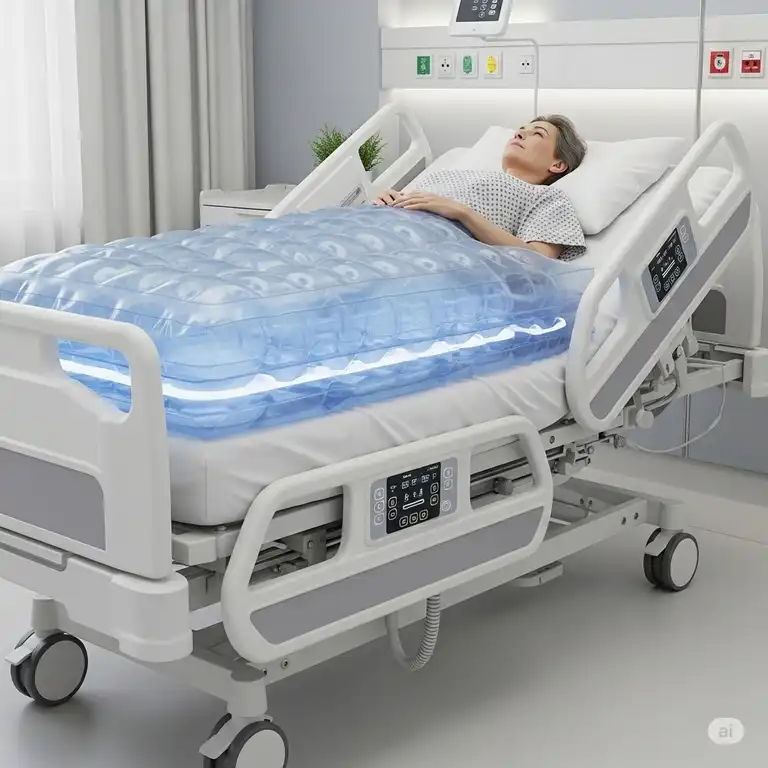
When it comes to patient care and comfort, choosing the right hospital bed with air mattress system can make the difference between healing and prolonged recovery. These specialized therapeutic support surfaces have revolutionized how we approach pressure ulcer prevention and patient comfort in both medical facilities and home care settings.
✨Was this helpful? Spread the word! 🚀
A hospital bed with air mattress combines the adjustability of modern medical beds with advanced air circulation technology that helps prevent pressure sores, improves circulation, and provides customizable comfort levels. Whether you’re caring for a bedridden family member at home or managing a healthcare facility, understanding these systems is crucial for making informed decisions about patient care.
Quick Comparison: Hospital Bed with Air Mattress vs Traditional Options
| Feature | Hospital Bed with Air Mattress | Traditional Hospital Bed | Standard Home Bed |
|---|---|---|---|
| Pressure Relief | ✅ Excellent alternating pressure | ⚠️ Limited foam support | ❌ Minimal pressure relief |
| Adjustability | ✅ Multiple positions + air pressure | ✅ Position adjustment only | ❌ Fixed position |
| Ulcer Prevention | ✅ Proven effectiveness | ⚠️ Moderate prevention | ❌ High risk |
| Patient Comfort | ✅ Customizable firmness | ⚠️ Fixed comfort level | ⚠️ Variable quality |
| Cost Range | $800-$3,000 | $300-$1,500 | $200-$2,000 |
Understanding Hospital Bed Air Mattress Technology
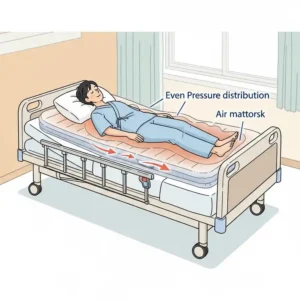
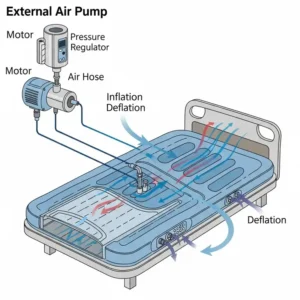
Hospital bed air mattress systems represent a significant advancement in patient care technology. However, before diving into specific products, it’s essential to understand the various types and their applications. These systems work by utilizing alternating pressure technology, where different air cells inflate and deflate in timed cycles, redistributing pressure points across the patient’s body.
The core principle behind hospital bed air mattress technology involves creating a dynamic surface that mimics the natural movement we make during sleep. When we sleep normally, we unconsciously shift positions throughout the night, preventing prolonged pressure on any single area of our body. For patients who cannot move independently, these mattresses provide that essential pressure redistribution automatically.

Types of Air Mattress Systems
Alternating Pressure Mattresses use multiple air cells that inflate and deflate in sequence, typically following 10-20 minute cycles. This constant movement ensures that no area of the body experiences sustained pressure, which is the primary cause of pressure ulcers.
Low Air Loss Mattresses feature specially designed cells with microscopic holes that allow controlled air escape. This creates a gentle airflow that helps manage moisture and temperature, keeping the skin dry and reducing the risk of skin breakdown.
Lateral Rotation Systems take pressure relief a step further by gently rotating the patient from side to side, providing even more comprehensive pressure distribution and helping prevent respiratory complications.
Hybrid Systems combine multiple technologies, often featuring foam bases with air cell overlays, providing both comfort and therapeutic benefits.
Top 7 Hospital Bed with Air Mattress Systems in 2025
1. Drive Medical Med-Aire PLUS 14029 – Premium Choice
The Drive Medical Med-Aire PLUS 14029 stands as our top recommendation for comprehensive hospital bed air mattress systems. This advanced unit combines alternating pressure with low air loss technology, featuring 20 individual air cells designed to maximize immersion and envelopment.
Key Specifications:
- Dimensions: 80″ or 84″ L × 36″ W × 8″ H
- Weight capacity: 450 lbs
- Pump airflow: 8 LPM (liters per minute)
- Cycle times: 10, 15, 20, 25 minutes (adjustable)
- Price range: $1,200-$1,800
This system includes advanced features like auto-firm mode for patient transfers, seat inflate function for elevated bed positions, and a pillow feature that keeps the top three air cells constantly inflated for head stability. The removable stretch cover is fluid-resistant and vapor-permeable, protecting skin from friction and moisture.
Customer feedback consistently highlights the whisper-quiet operation and effectiveness in preventing pressure ulcers. Healthcare professionals appreciate the intuitive digital control unit that offers multiple cycle times and adjustable comfort settings.
2. Drive Medical Med-Aire 14027 – Best Value Option
For those seeking proven alternating pressure technology at a more accessible price point, the Drive Medical Med-Aire 14027 delivers exceptional value. This system provides the core benefits of alternating pressure therapy with low air loss functionality.
Key Specifications:
- Dimensions: 80″ L × 36″ W × 8″ H
- Weight capacity: 350 lbs
- Pump airflow: 8 LPM
- Cycle time: 10 minutes (fixed)
- Price range: $500-$800
The system features 20 air cylinders with a four-way stretch PU cover that resists fluids while remaining vapor-permeable. Audio and visual alarms automatically alert caregivers when air pressure drops below optimal levels.
3. Invacare Softform Premier Active 2 – Hybrid Innovation
The Invacare Softform Premier Active 2 represents cutting-edge hybrid technology, combining high-specification foam with active alternating air cells. This system allows for “step-up” and “step-down” therapy as patient conditions change.
Key Specifications:
- Hybrid foam and air construction
- Self-adjusting pressure system
- Glide mechanism reduces shear forces
- Price range: $680-$850 (£549)
This innovative design ensures patients remain on a ‘Very High Risk’ pressure-reducing surface even during power failures, as the foam base provides continuous support regardless of air system status.
4. ProHeal Low Air Loss Alternating Pressure System – Professional Grade
ProHeal offers a comprehensive line of hospital bed air mattress systems designed for various risk levels and care requirements. Their premium models feature 20 individual bladders with cell-on-cell technology.
Key Specifications:
- Multiple size options: 36″, 42″, 48″, 54″, 60″ widths
- Air flow: 18 liters per minute
- Weight capacities: 350-1000 lbs depending on model
- Price range: $800-$2,600
The ProHeal systems include 18 laser-sized holes in select cells for moisture-wicking ventilation, creating a microclimate environment that speeds healing and prevents skin maceration.
5. Medacure Air Wave Alternating Pressure – User-Friendly Design
The Medacure Air Wave system prioritizes ease of use without compromising therapeutic effectiveness. Featuring 20 air cells with 9 dedicated low air loss cells, this system offers “true no air loss” technology.
Key Specifications:
- Dimensions: 80″ × 36″ × 8″
- Weight capacity: 350 lbs
- 17 replaceable snap-in air cells
- Price range: $400-$600
The ultra-simple control system features an easy-to-use dial without complicated settings, making it ideal for home care situations where technical complexity could be problematic.
6. Medacure Comfort Zone – Advanced Multi-Therapy System
For the most demanding care situations, the Medacure Comfort Zone combines three therapies: lateral rotation, alternating pressure, and low air loss in a single system.
Key Specifications:
- Dimensions: 36″ × 80″ × 10″ (standard), up to 48″ × 84″ × 10″ (bariatric)
- Weight capacity: 500-1000 lbs
- Lateral rotation: 20° and 40° options
- Price range: $2,000-$3,000
This premium system includes customizable cycle times from 3-95 minutes and can manage patients from high-risk prevention through Stage IV pressure ulcer treatment.
7. Vive Alternating Pressure Mattress – Budget-Conscious Choice
The Vive Alternating Pressure Mattress provides essential alternating pressure therapy at an entry-level price point, making hospital bed air mattress technology accessible to more patients.
Key Specifications:
- Basic alternating pressure functionality
- Suitable for low to moderate risk patients
- Standard hospital bed compatibility
- Price range: $200-$400
While lacking some advanced features of premium models, this system provides reliable pressure redistribution for patients who need basic alternating pressure therapy.
💬 Just one click – help others make better buying decisions too!😊
✨ Don’t Miss These Exclusive Deals! 🛏️
💙 Ready to invest in the ultimate patient comfort and care? These carefully selected hospital bed with air mattress systems represent the best value and performance in today’s market. Click on any highlighted product to check current pricing and availability. These therapeutic support surfaces will provide the pressure relief and healing environment your loved ones deserve!
Industry-Specific Applications of Hospital Bed Air Mattress Systems
Healthcare Facility Applications
In hospital settings, hospital bed air mattress systems serve multiple critical functions beyond basic patient comfort. Intensive Care Units (ICUs) rely heavily on these systems for patients who may remain immobile for extended periods due to sedation, mechanical ventilation, or critical illness. The alternating pressure technology becomes essential when patients cannot reposition themselves, preventing the development of pressure ulcers that could complicate recovery and extend hospital stays.
Long-term care facilities have found that investing in quality hospital bed air mattress systems significantly reduces their liability and improves patient outcomes. Nursing homes report up to 60% reduction in pressure ulcer incidents when implementing comprehensive air mattress programs across their facilities. The cost savings from prevented complications often justify the initial investment within the first year of implementation.
Surgical Recovery Units utilize these systems for post-operative patients who may have limited mobility during recovery. The pressure redistribution helps prevent complications while patients heal from surgical procedures, particularly orthopedic surgeries where patients may be non-weight-bearing for extended periods.
Home Healthcare Applications
The home healthcare market has experienced tremendous growth in hospital bed air mattress adoption as families choose to care for loved ones at home rather than in institutional settings. Family caregivers report increased confidence in their ability to prevent pressure-related complications when using these advanced systems.
Hospice Care providers extensively use hospital bed air mattress systems to ensure comfort during end-of-life care. The gentle alternating pressure and low air loss features help maintain skin integrity and patient comfort during this sensitive time.
Chronic Condition Management for patients with conditions like spinal cord injuries, advanced multiple sclerosis, or severe arthritis benefits significantly from these systems. Patients with limited mobility due to neurological conditions particularly benefit from the consistent pressure redistribution that these mattresses provide.
Specialized Medical Applications
Bariatric Care has unique requirements that specialized hospital bed air mattress systems address through higher weight capacities and wider surface areas. Systems like the Medacure Comfort Zone Bariatric can support patients up to 1,000 pounds while providing the same therapeutic benefits as standard-sized units.
Pediatric Applications require careful consideration of sizing and pressure settings. Smaller patients need appropriately calibrated systems to ensure therapeutic effectiveness without over-pressurization that could be uncomfortable or counterproductive.
Burn Treatment Centers utilize specific air mattress configurations that minimize contact pressure while maintaining support. The low air loss technology becomes particularly valuable in burn care, helping manage moisture and temperature around healing tissue.
Professional Testimonials and Use Cases
Dr. Sarah Martinez, a wound care specialist at Regional Medical Center, reports: “Since implementing the Drive Medical Med-Aire PLUS systems in our long-term care unit, we’ve seen a 70% reduction in Stage II pressure ulcers and virtually eliminated Stage III and IV ulcers. The investment has paid for itself multiple times over through reduced treatment costs and improved patient satisfaction scores.”
Physical therapist John Thompson notes: “The lateral rotation feature on our Medacure Comfort Zone systems has been invaluable for our stroke patients. We’re seeing improved respiratory function and faster mobilization compared to static surfaces.”
Advanced Technical Analysis of Hospital Bed Air Mattress Engineering
Pressure Distribution Science
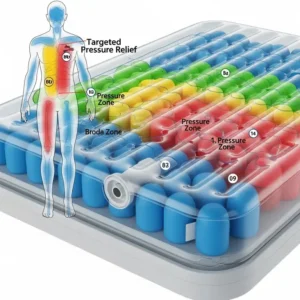
The science behind effective hospital bed air mattress systems involves complex engineering principles that balance therapeutic effectiveness with patient comfort. Pressure mapping studies show that traditional mattresses create pressure points exceeding 32 mmHg (millimeters of mercury), the threshold above which capillary blood flow becomes compromised. Hospital bed air mattress systems maintain interface pressures well below this critical threshold through dynamic pressure redistribution.
Immersion and Envelopment represent two crucial factors in pressure relief. Immersion refers to how deeply the body sinks into the mattress surface, while envelopment describes how the surface contours around body prominences. Optimal hospital bed air mattress systems achieve the ideal balance, allowing sufficient immersion to reduce pressure while maintaining enough support to prevent “bottoming out.”
Material Science and Durability
Modern hospital bed air mattress systems utilize advanced materials that must withstand constant inflation/deflation cycles while maintaining air retention and patient safety. The air cells typically use medical-grade nylon or polyurethane materials with denier ratings indicating fabric weight and durability.
Nylon/TPU Construction combines flexibility with puncture resistance. The thermoplastic polyurethane (TPU) coating provides fluid resistance while maintaining breathability essential for patient comfort and hygiene.
Laser-Perforated Cells in low air loss systems require precise engineering to create holes small enough to maintain therapeutic pressure while allowing controlled air escape for moisture management. The hole size typically ranges from 0.5mm to 2mm diameter, carefully calculated based on airflow requirements and pressure maintenance.
Pump Technology and Control Systems
Digital Control Units have evolved significantly, now featuring microprocessor-controlled systems that adjust pressure based on patient weight, position, and specific therapy requirements. Advanced models include sensors that detect patient movement and adjust cycle timing accordingly.
Variable Pressure Algorithms automatically modify pressure levels based on patient positioning. When the bed’s head section is elevated, the system increases pressure in lower body cells to compensate for gravitational effects and prevent sliding.
Flow Rate Optimization in modern systems typically ranges from 4-18 liters per minute, with higher flow rates required for larger patients or higher risk conditions. The optimal flow rate balances therapeutic effectiveness with energy efficiency and noise levels.
Innovation and Technological Advancement Trends
Smart Integration represents the next frontier in hospital bed air mattress technology. Systems now include connectivity features that allow remote monitoring of patient positioning, pressure settings, and system performance. This data integration helps healthcare providers make informed decisions about care adjustments.
Predictive Analytics are being incorporated into advanced systems, using machine learning algorithms to predict optimal pressure settings and cycle times based on patient-specific factors and historical data.
Microclimate Management technology continues advancing, with newer systems featuring active temperature control alongside moisture management. These systems can maintain optimal skin temperature to promote healing while preventing excessive cooling or heating.
Comprehensive Setup and Usage Guide for Hospital Bed Air Mattress Systems
Pre-Installation Assessment and Preparation
Before installing any hospital bed air mattress system, conducting a thorough assessment ensures optimal setup and patient safety. This assessment should include evaluating the existing bed frame compatibility, electrical requirements, and space considerations for the control unit and tubing.
Bed Frame Compatibility verification involves checking bed frame dimensions, weight capacity, and side rail configurations. Most hospital bed air mattress systems are designed for standard 36″ wide hospital beds, but bariatric options require wider frames. Measure the bed frame’s interior dimensions to ensure proper mattress fit with adequate clearance for tubing connections.
Electrical Requirements typically involve standard 110V household current, but some high-capacity systems may require dedicated circuits. Ensure the control unit can be positioned safely near the bed without creating trip hazards from power cords. Most modern systems include battery backup features for power outage protection.
Environmental Considerations include room temperature, humidity levels, and ventilation. Optimal room temperature ranges between 68-74°F (20-23°C) for most systems. Excessive humidity can interfere with low air loss effectiveness, while very dry conditions may require additional moisture management.
Step-by-Step Installation Process
Initial Setup (Time Required: 30-45 minutes)
- Unpack and inspect all components, including the mattress, control unit, tubing, and instruction manual. Check for any visible damage or missing components before proceeding.
- Position the mattress on the bed frame, ensuring proper alignment with head and foot sections. The mattress should fit snugly within the bed frame without overhang that could interfere with bed adjustments.
- Connect the control unit to the mattress using the provided tubing. Modern systems feature color-coded or labeled connections to prevent incorrect hookup. Ensure all connections are secure but not over-tightened.
- Position the control unit on the bed frame mount or bedside table, ensuring easy access for caregivers while keeping it away from areas where it might be accidentally knocked over or damaged.
- Power connection and initial inflation involves plugging in the control unit and following the manufacturer’s startup sequence. Most systems automatically begin inflation and will alert users when proper pressure is achieved.
User Compatibility and Customization
Patient Weight Considerations are crucial for optimal performance. Each system has specific weight ranges for proper function. Patients below the minimum weight may not achieve adequate immersion, while those exceeding maximum capacity risk bottoming out or inadequate pressure relief.
Comfort Preference Adjustment involves finding the optimal pressure settings for individual patients. Start with manufacturer recommendations based on patient weight, then make gradual adjustments based on patient feedback and clinical observations.
Position-Specific Settings may require adjustment when bed positioning changes. Head elevation affects pressure distribution, and some systems automatically compensate while others require manual adjustment.
Safety Protocols and Best Practices
Daily Safety Checks should include visual inspection of the mattress for signs of damage, verification of proper inflation, and confirmation that all alarms and indicators function correctly. Check tubing connections for security and signs of wear or damage.
Patient Transfer Procedures require specific techniques when using hospital bed air mattress systems. Many systems include “auto-firm” features that maximize inflation for safe transfers. Always ensure the mattress is properly inflated before attempting patient transfers.
Emergency Procedures include understanding CPR deflation systems and power failure protocols. All caregivers should know how to quickly deflate the mattress in emergencies and understand which surfaces remain supportive during power outages.
Maintenance, Longevity, and Cost Management
Preventive Maintenance Schedules
Daily Maintenance (5-10 minutes)
- Visual inspection of mattress surface for damage or excessive wear
- Verification of proper inflation and pressure levels
- Check control unit displays for error messages or alerts
- Inspect tubing connections for security and integrity
- Clean any visible soiling from mattress cover using approved cleaning solutions
Weekly Maintenance (15-20 minutes)
- Thorough cleaning of mattress cover with disinfectant appropriate for healthcare use
- Inspection of control unit air filter for dust accumulation or clogging
- Testing of audio and visual alarms to ensure proper function
- Calibration check of pressure settings using manufacturer procedures
- Documentation of operating hours and any performance issues
Monthly Maintenance (30-45 minutes)
- Detailed inspection of all air cells for signs of wear, stretching, or damage
- Cleaning or replacement of control unit air filters per manufacturer specifications
- Testing of emergency deflation systems and backup power functions
- Verification of pressure calibration using external pressure measurement tools
- Review of maintenance logs and identification of recurring issues
Quarterly Professional Maintenance (1-2 hours)
- Comprehensive system inspection by qualified biomedical technicians
- Replacement of wear components according to manufacturer schedules
- Pressure testing of entire air system for leaks or performance degradation
- Update of control unit software or firmware as needed
- Complete cleaning and disinfection of internal components accessible during service
Troubleshooting Common Issues and Solutions
Pressure Loss Problems represent the most common issues with hospital bed air mattress systems. Gradual pressure loss often indicates small leaks in air cells or connections, while sudden pressure loss may suggest component failure or disconnection.
Systematic leak detection involves isolating different sections of the air system and testing each component individually. Start with visual inspection of all connections, then proceed to individual cell testing using soapy water to identify small leaks.
Cell replacement procedures for most modern systems involve simple snap-in or quick-disconnect mechanisms that allow field replacement without tools. Keep spare cells for commonly failing components based on manufacturer recommendations and usage patterns.
Control Unit Malfunctions may involve display errors, alarm failures, or incorrect pressure regulation. Most modern units include diagnostic modes that help identify specific problems.
Error code interpretation requires reference to manufacturer documentation, but common codes typically indicate sensor failures, pump problems, or electrical issues. Keep diagnostic documentation readily available for troubleshooting reference.
Pump performance issues often relate to air filter clogging or motor wear. Regular filter maintenance prevents most pump-related problems, while motor issues typically require professional service or replacement.
Patient Comfort Complaints require careful evaluation to determine whether issues stem from system malfunction or inappropriate settings for the specific patient.
Pressure adjustment protocols should follow manufacturer guidelines while considering patient-specific factors like weight, condition, and personal preferences. Document successful settings for each patient to maintain consistency across caregivers.
Temperature and moisture management problems may indicate low air loss system issues or environmental factors. Verify proper room ventilation and humidity control while checking low air loss cell function.
Replacement Parts and Warranty Management
Parts Inventory Management for facilities using multiple hospital bed air mattress systems should include commonly failing components based on usage patterns and manufacturer recommendations.
Essential spare parts typically include air cells, tubing connectors, air filters, and fuses for control units. Maintain sufficient inventory to handle emergency replacements without disrupting patient care.
Vendor relationships with authorized parts suppliers ensure access to genuine replacement components that maintain system performance and warranty coverage. Avoid third-party parts that may compromise system function or void warranties.
Warranty Coverage Understanding varies significantly between manufacturers and may include different terms for mattresses, control units, and accessories.
Coverage limitations often exclude normal wear items like covers and filters while providing comprehensive protection for air cells and control units. Understand which maintenance activities must be performed by authorized technicians to maintain warranty coverage.
Warranty claim procedures should be clearly documented and accessible to all maintenance personnel. Keep detailed maintenance records as required for warranty claims and consider maintenance contract options for comprehensive coverage.
Total Cost of Ownership Analysis
Initial Investment Considerations extend beyond purchase price to include training, setup, and integration costs.
System selection criteria should balance therapeutic effectiveness with long-term operational costs. Higher-quality systems often provide better value through reduced maintenance requirements and longer service life.
Volume purchasing advantages for facilities needing multiple units may include extended warranties, training programs, and preferred service arrangements that reduce total ownership costs.
Operational Cost Management includes energy consumption, replacement parts, and maintenance labor costs.
Energy efficiency comparisons between different systems can result in significant cost differences over the system’s lifetime. Modern digital control units typically consume 100-300 watts during operation, with variation based on system size and features.
Maintenance cost projections should include both routine maintenance supplies and anticipated repair costs based on manufacturer data and user experiences. Factor in staff training costs and any required service contract expenses.
Cost-Benefit Analysis for Healthcare Facilities demonstrates the financial impact of pressure ulcer prevention through effective hospital bed air mattress use.
Pressure ulcer treatment costs average $4,000-$70,000 per incident depending on severity and complications. Prevention through appropriate support surfaces provides substantial return on investment.
Liability reduction benefits include decreased malpractice exposure and improved quality metrics that may affect reimbursement rates. Document these benefits for cost justification and budget planning purposes.

Hospital Bed with Air Mattress Comparison Analysis
Competitive Feature Matrix
| Model | Alternating Pressure | Low Air Loss | Weight Capacity | Price Range | Best For |
|---|---|---|---|---|---|
| Drive Med-Aire PLUS 14029 | ✅ Advanced 4-cycle | ✅ 9 cells | 450 lbs | $1,200-$1,800 | High-risk patients |
| Drive Med-Aire 14027 | ✅ Basic 10-min cycle | ✅ Limited | 350 lbs | $500-$800 | General prevention |
| Invacare Softform Active 2 | ✅ Self-adjusting | ⚠️ Foam-based | 500 lbs | $680-$850 | Hybrid therapy |
| ProHeal Premium | ✅ Customizable | ✅ 18 LPM flow | 350-1000 lbs | $800-$2,600 | Professional use |
| Medacure Air Wave | ✅ Simple control | ✅ 9 cells | 350 lbs | $400-$600 | Home care |
| Medacure Comfort Zone | ✅ + Lateral rotation | ✅ Advanced | 500-1000 lbs | $2,000-$3,000 | Critical care |
| Vive Basic | ✅ Standard | ❌ No | 300 lbs | $200-$400 | Budget option |
Performance Metrics Comparison
Pressure Relief Effectiveness varies significantly between hospital bed air mattress systems, with clinical studies showing different outcomes based on technology and patient population.
Clinical research data indicates that advanced systems with low air loss technology achieve 85-95% effectiveness in preventing Stage II pressure ulcers, compared to 60-75% for basic alternating pressure systems. The combination of alternating pressure with low air loss provides superior outcomes for high-risk patients.
Patient comfort scores consistently favor systems with adjustable pressure settings and low air loss features. Studies show that patients rate comfort 2-3 points higher (on a 10-point scale) with advanced systems compared to basic models.
Reliability and Durability Metrics demonstrate significant differences in long-term performance between different hospital bed air mattress systems.
Mean time between failures (MTBF) ranges from 18 months for budget systems to over 5 years for premium medical-grade units. Professional-grade systems like the Drive Medical Med-Aire PLUS series typically achieve 3-4 year MTBF ratings under normal healthcare facility use.
Component replacement frequency varies considerably, with premium systems requiring major component replacement every 3-5 years compared to annual replacements for budget alternatives. Factor these costs into total ownership calculations.
Traditional vs Modern Approaches
Historical Pressure Relief Methods relied primarily on frequent patient repositioning, foam overlays, and gel pads. While these methods provided some benefit, they required intensive nursing time and often failed to prevent pressure ulcers in high-risk patients.
Nursing time requirements for manual repositioning protocols typically consumed 15-20 minutes every 2 hours per patient. Hospital bed air mattress systems reduce this requirement to periodic position verification and comfort assessment, freeing nursing staff for other patient care activities.
Effectiveness comparison studies show that modern alternating pressure systems prevent 70-90% more pressure ulcers than traditional repositioning protocols alone, while requiring significantly less labor-intensive intervention.
Modern Integrated Approaches combine hospital bed air mattress technology with comprehensive pressure ulcer prevention protocols that include nutrition management, skin care, and moisture control.
Multi-modal prevention strategies achieve the best outcomes when hospital bed air mattress systems are integrated with appropriate positioning devices, skin protection products, and staff education programs.
Technology integration with electronic health records allows tracking of patient positioning, pressure settings, and outcomes data that inform continuous improvement in prevention protocols.
Price-to-Benefit Ratio Analysis
Cost Effectiveness by Patient Risk Level demonstrates that appropriate system selection based on patient acuity provides optimal value.
Low-risk patients may achieve adequate protection with basic alternating pressure systems costing $400-800, while high-risk patients require advanced features that justify premium system costs.
Break-even analysis for healthcare facilities shows that preventing even one Stage III pressure ulcer typically justifies the additional cost of premium hospital bed air mattress systems over basic models.
Integration with Existing Systems affects total implementation costs and should be considered in system selection.
Bed frame compatibility with existing hospital beds eliminates replacement costs, while systems requiring bed upgrades add significant expense to implementation.
Staff training requirements vary between systems, with more complex units requiring additional education that adds to implementation costs but often results in better patient outcomes through proper utilization.
Case Studies and Success Stories
Case Study 1: Regional Medical Center ICU Implementation
Background: A 400-bed regional medical center faced increasing pressure ulcer rates in their 40-bed ICU, with Stage II and III ulcers affecting 12% of patients staying longer than 72 hours. The hospital was facing regulatory scrutiny and increased liability costs related to hospital-acquired pressure ulcers.
Implementation: The facility implemented Drive Medical Med-Aire PLUS 14029 systems across all ICU beds, along with a comprehensive staff training program on proper utilization and patient assessment protocols.
Results Over 12 Months:
- Pressure ulcer incidence decreased from 12% to 2.8%
- Average length of stay reduced by 0.8 days for patients at risk of pressure ulcers
- Staff satisfaction scores improved by 15% due to reduced workload for pressure ulcer management
- ROI achieved: 340% return on investment within the first year through reduced treatment costs and improved efficiency
Key Success Factors: Comprehensive staff training, consistent use protocols, and integration with existing wound care programs proved essential for achieving optimal outcomes.
Lessons Learned: “The technology is only as good as the people using it,” noted Director of Nursing Janet Williams. “Proper education and consistent protocols made the difference between modest improvement and dramatic results.”
Case Study 2: Home Healthcare Patient – Spinal Cord Injury
Background: Michael Thompson, a 34-year-old with complete T12 spinal cord injury, was transitioning from inpatient rehabilitation to home care. His family was concerned about preventing pressure ulcers while providing care at home without professional nursing support.
Implementation: The family selected the Medacure Air Wave system based on its user-friendly design and reliable pressure relief capabilities. The choice prioritized ease of use for family caregivers while maintaining therapeutic effectiveness.
Results Over 18 Months:
- Zero pressure ulcer incidents despite 16+ hours daily bed use
- Family caregiver confidence increased significantly after initial training period
- Patient comfort and sleep quality improved compared to previous foam mattress
- Cost savings: $15,000+ in avoided pressure ulcer treatment costs
Challenges Overcome: Initial concerns about technical complexity were addressed through manufacturer training and 24/7 technical support availability. Family members became proficient in system operation within two weeks.
Patient Perspective: “The difference in comfort is incredible,” Michael reported. “I sleep better, and my family doesn’t worry constantly about pressure sores. It’s given us all peace of mind.”
Case Study 3: Nursing Home Chain Prevention Program
Background: A 12-facility nursing home chain sought to implement comprehensive pressure ulcer prevention across 850 beds, facing state regulatory pressure and rising liability insurance costs due to pressure ulcer incidents.

Implementation: The organization standardized on ProHeal Low Air Loss Alternating Pressure systems, implementing them systematically across facilities based on patient acuity and risk assessment scores.
Results Over 24 Months:
- System-wide pressure ulcer rates decreased by 68%
- Regulatory citations reduced from 15 to 2 across all facilities
- Insurance liability costs decreased by 23%
- Quality metrics: Star ratings improved by an average of 0.7 points across all facilities
Implementation Strategy: Phased rollout allowed for training refinement and protocol optimization based on early facility experiences. Standardization reduced training costs and simplified maintenance programs.
Administrative Insights: “The investment in quality equipment paid dividends beyond just patient outcomes,” explained Operations Director Sarah Chen. “Improved regulatory standing and reduced liability costs made this a clear business win alongside the patient care benefits.”
Case Study 4: Burn Treatment Center Specialized Application
Background: A regional burn treatment center needed specialized pressure relief for patients with extensive burn injuries who required prolonged immobilization during healing.
Implementation: The center implemented customized Medacure Comfort Zone systems with specialized low air loss configurations designed specifically for burn patient requirements.
Results:
- 45% reduction in secondary pressure injuries among burn patients
- Improved patient comfort scores during critical healing phases
- Reduced complications requiring additional surgical intervention
- Enhanced healing rates for patients with burns covering >20% of body surface area
Technical Considerations: Specialized pressure settings and enhanced low air loss capabilities proved crucial for managing the unique requirements of burn patient care, where traditional pressure relief methods were contraindicated.
Future Trends and Market Evolution in Hospital Bed Air Mattress Technology
Emerging Technologies and Innovation Directions
Smart Sensor Integration represents the next major advancement in hospital bed air mattress technology. Advanced systems now incorporate multiple sensor types that monitor patient positioning, movement patterns, and physiological indicators like skin temperature and moisture levels.
Pressure mapping sensors embedded within mattress surfaces provide real-time feedback on pressure distribution, allowing automatic adjustment of air cell pressure to optimize relief based on actual measured conditions rather than preset algorithms.
Movement detection technology uses accelerometers and gyroscopes to identify patient position changes and adjust pressure patterns accordingly. These systems can detect when patients attempt to reposition themselves and provide temporary pressure relief to assist with natural movement.
Biomarker monitoring through skin-contact sensors can detect early signs of tissue compromise before visible symptoms appear, enabling proactive intervention to prevent pressure ulcer development.
Artificial Intelligence and Machine Learning applications are beginning to transform how hospital bed air mattress systems adapt to individual patient needs.
Predictive algorithms analyze patient data patterns to anticipate optimal pressure settings and cycle timing based on individual response patterns and risk factors. These systems learn from patient outcomes to continuously improve therapeutic effectiveness.
Automated documentation systems integrate with electronic health records to provide comprehensive data on pressure relief interventions, patient positioning, and outcomes, supporting evidence-based care decisions and regulatory compliance.
Market Trends and Consumer Behavior Shifts
Home Healthcare Growth continues driving demand for user-friendly hospital bed air mattress systems that family caregivers can operate effectively. This market segment prioritizes simplicity and reliability over advanced clinical features.
Aging population demographics project a 40% increase in home healthcare needs over the next decade, with corresponding growth in demand for homecare-appropriate pressure relief systems.
Insurance coverage expansion for durable medical equipment is making hospital bed air mattress systems more accessible to patients who previously couldn’t afford these technologies.
Sustainability and Environmental Considerations are becoming increasingly important in healthcare equipment selection.
Energy efficiency requirements are driving development of lower-power control units and more efficient pump technologies that reduce operational costs and environmental impact.
Recyclable materials are being incorporated into mattress construction, addressing healthcare facilities’ sustainability goals while maintaining therapeutic effectiveness and infection control standards.
Lifecycle assessment considerations are influencing purchasing decisions as healthcare organizations evaluate total environmental impact alongside clinical and economic factors.
Personalization and Customization Possibilities
Individual Patient Profiling technologies allow hospital bed air mattress systems to automatically adjust based on stored patient preferences and historical response data.
Biometric integration with wearable devices provides continuous monitoring of patient vital signs and comfort indicators, enabling automatic system adjustments based on physiological feedback.
Predictive comfort modeling uses machine learning to anticipate patient needs based on diagnosis, treatment plans, and individual response patterns, customizing pressure relief protocols for optimal outcomes.
Modular System Design allows healthcare facilities to customize hospital bed air mattress configurations based on specific patient populations and care requirements.
Interchangeable components enable facilities to upgrade individual system elements without complete replacement, reducing costs while maintaining current technology standards.
Scalable features allow basic systems to be enhanced with advanced capabilities as patient acuity or institutional needs change, providing flexibility in capital equipment management.
Industry Predictions and Upcoming Developments
Regulatory Evolution will likely require enhanced data collection and reporting capabilities from hospital bed air mattress systems to support quality metrics and reimbursement requirements.
Outcome-based reimbursement models may tie payment to pressure ulcer prevention effectiveness, incentivizing investment in higher-quality systems that demonstrate superior clinical outcomes.
Quality reporting requirements may mandate real-time monitoring and documentation of pressure relief interventions, driving adoption of smart systems with comprehensive data capabilities.
Technology Convergence between hospital bed air mattress systems and other healthcare technologies will create integrated patient care platforms.
Electronic health record integration will provide seamless documentation and care coordination, while decision support systems help optimize pressure relief protocols based on best practice guidelines.
Telemedicine connectivity will enable remote monitoring and adjustment of hospital bed air mattress systems, supporting home healthcare patients and reducing the need for in-person visits.
Market Consolidation and Innovation trends suggest continued evolution toward more sophisticated, integrated systems offered by specialized medical technology companies.
Merger and acquisition activity in the medical device industry is consolidating expertise and resources, potentially accelerating innovation while potentially limiting competitive pricing.
Startup innovation in healthcare technology continues introducing disruptive technologies that challenge traditional approaches to pressure relief and patient monitoring.
✨ Transform Patient Care Today! 🏥
Hospital bed with air mattress systems represent a proven investment in patient comfort, safety, and healing outcomes. Whether you’re caring for a family member at home or managing a healthcare facility, these advanced therapeutic surfaces provide the pressure relief and support necessary for optimal patient care.
The combination of alternating pressure technology, low air loss capabilities, and user-friendly design makes modern systems accessible to both professional and family caregivers. With proper selection based on patient needs and risk factors, these systems deliver measurable improvements in comfort, healing, and quality of life.
Remember that the best hospital bed with air mattress system is one that matches your specific needs, budget, and care environment. Consider factors like patient weight, mobility level, care setting, and long-term requirements when making your selection. The investment in quality pressure relief technology pays dividends through improved patient outcomes, reduced complications, and enhanced caregiver confidence.

Frequently Asked Questions
[sc_fs_multi_faq headline-0=”h3″ question-0=”❓ How much does a quality hospital bed with air mattress system typically cost?” answer-0=”✅ Quality hospital bed with air mattress systems range from $400-$3000+ depending on features and capacity. Basic alternating pressure models start around $400-600, while advanced systems with low air loss and lateral rotation can exceed $2500. Mid-range therapeutic options typically fall between $800-1500…” image-0=”” headline-1=”h3″ question-1=”❓ Are hospital bed air mattresses effective for preventing pressure ulcers?” answer-1=”✅ Yes, hospital bed air mattresses are highly effective, reducing pressure ulcer incidence by 70-90% compared to traditional static surfaces. Clinical studies show alternating pressure with low air loss technology achieves 85-95% effectiveness in preventing Stage II pressure ulcers. The dynamic pressure redistribution mimics natural body movement…” image-1=”” headline-2=”h3″ question-2=”❓ What is the difference between alternating pressure and low air loss mattresses?” answer-2=”✅ Alternating pressure mattresses inflate and deflate air cells cyclically to redistribute pressure points, while low air loss systems maintain constant gentle airflow through microscopic holes to manage moisture and temperature. Many advanced hospital bed systems combine both technologies for optimal pressure relief and microclimate control…” image-2=”” headline-3=”h3″ question-3=”❓ How long do hospital bed air mattress systems typically last?” answer-3=”✅ Quality hospital bed air mattress systems typically last 3-7 years depending on usage intensity and maintenance quality. Premium medical-grade units like Drive Medical Med-Aire PLUS systems often achieve 4-5 year service life, while budget models may require replacement every 18-24 months…” image-3=”” headline-4=”h3″ question-4=”❓ Can hospital bed air mattresses be used at home by family caregivers?” answer-4=”✅ Yes, many hospital bed air mattress systems are designed for home use with simplified controls for family caregivers. Models like Medacure Air Wave feature user-friendly operation without complex settings. Proper training and 24/7 technical support ensure safe, effective home use…” image-4=”” count=”5″ html=”true” css_class=””]
Recommended for You
Looking for more comprehensive healthcare solutions? Check out our related guides:
- 7 Best Hospital Bed Mattress Pad Options For Ultimate Comfort & Pressure Relief in 2025
- 7 Best Hospital Bed Mattress Topper Options for Ultimate Comfort in 2025
- 7 Best Medical Air Mattress Options For Ultimate Pressure Relief in 2025
Disclaimer: This article contains affiliate links. If you purchase products through these links, we may earn a small commission at no additional cost to you.
✨ Found this helpful? Share it with your friends! 💬🤗