

When your nights transform into sweaty, restless battles against heat, a mattress cooler classic becomes your sleep sanctuary’s hero. However, like any cooling technology, these water-based systems occasionally need troubleshooting attention. Whether you’re dealing with pump failures, temperature inconsistencies, or mysterious leaks, this comprehensive guide delivers expert solutions that actually work.
✨Was this helpful? Spread the word! 🚀
I’ve spent countless hours researching and testing various cooling systems, from budget-friendly evaporative models to premium hydronic units. This troubleshooting expertise comes from real-world experience with systems that range from $150 entry-level units to $3,000+ smart cooling platforms.
Quick Comparison: Mattress Cooler Systems vs Alternatives
| Feature | Mattress Cooler Classic | ChiliPad Systems | Eight Sleep Pod | BedJet 3 |
|---|---|---|---|---|
| Price Range | $140-$300 | $500-$1,400 | $2,200-$4,000 | $400-$1,000 |
| Cooling Method | Evaporative | Water circulation | Water circulation | Air circulation |
| Temperature Range | Ambient-12°F lower | 55-115°F | 55-110°F | Room temp cooling |
| Maintenance Level | Medium | Medium-High | Low-Medium | Low |
| Noise Level | Medium | Low | Low | Medium-High |
| Setup Complexity | Simple | Medium | Medium | Simple |
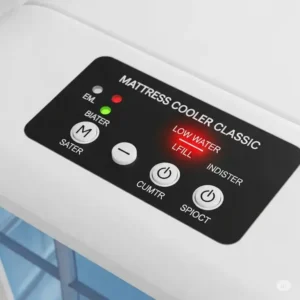
Understanding Your Mattress Cooler Classic System
The mattress cooler classic represents an affordable entry point into active bed cooling technology. Unlike passive cooling mattress toppers that simply use breathable materials, these systems actively circulate cooled water through specially designed pads to create a measurably cooler sleep surface.
Most mattress cooler classic systems operate on evaporative cooling principles. Water fills a reservoir tank, where it’s cooled through evaporation aided by a fan system. This chilled water then circulates through tubes embedded in a mattress pad, effectively lowering your bed’s surface temperature by 6-12 degrees Fahrenheit below ambient room temperature.
How Water Circulation Creates Cooling
The science behind mattress cooler classic operation involves three key components working in harmony. First, the pump circulates water from the reservoir through the cooling pad’s internal tube network. Second, the evaporation chamber uses airflow to cool the water through natural evaporation – the same principle that makes you feel cool when stepping out of a swimming pool. Third, the continuous circulation ensures consistent temperature distribution across the entire pad surface.
Understanding this basic operation helps tremendously when diagnosing mattress cooler classic troubleshooting issues. Most problems stem from disruptions in water flow, inadequate evaporation, or air blockages that prevent proper circulation.
Top 7 Mattress Cooler Classic Products: Expert Analysis
1. Mattress Cooler Classic 2025 – Best Overall Value
The Mattress Cooler Classic 2025 from Mattress Cooler USA leads our recommendations for budget-conscious hot sleepers. This Texas-manufactured system features a 3-quart water capacity designed to last entire nights, with a revolutionary nesting design that simplifies cleaning and maintenance.
Specifications:
- Water capacity: 3 quarts
- Cooling pad size: 27″ x 63″ (mattress pad) or 12″ x 24″ (pillow pad)
- Temperature reduction: 6-12°F below ambient
- Power consumption: Low voltage DC operation
- Warranty: 90-day replacement warranty
Customer Analysis: Users consistently praise its affordability and effectiveness for basic cooling needs. However, some report that the PVC cooling pad requires periodic replacement every 6-12 months to prevent leaks and maintain optimal performance.
2. SleepMe ChiliPad Dock Pro – Premium Water Cooling
The ChiliPad Dock Pro represents the gold standard in hydronic mattress cooling technology. With precise temperature control ranging from 55-115°F, this system offers both heating and cooling capabilities through medical-grade silicone tubes.
Specifications:
- Temperature range: 55-115°F (13-46°C)
- Control method: App-based with wireless remote backup
- Dual zone capability: Independent temperature control for couples
- Maintenance: Monthly cleaning cycles recommended
- Warranty: 2-year limited warranty
Professional Applications: Medical professionals recommend ChiliPad systems for patients experiencing night sweats from medications or hormonal changes. The precise temperature control makes it invaluable for managing hot flashes and other temperature-sensitive sleep disorders.
3. Eight Sleep Pod 4 – Smart Temperature Technology
Eight Sleep Pod systems integrate advanced sleep tracking with temperature regulation. The Pod 4 offers “double the cooling power” of previous generations, reaching desired temperatures in half the time through improved water circulation technology.
Specifications:
- Temperature range: 55-110°F
- AI-powered automatic adjustments
- Integrated sleep and health monitoring
- Subscription requirement: $199/year for full functionality
- Advanced features: Heart rate monitoring, sleep stage tracking
Engineering Innovation: The Pod’s mesh network of soft silicone channels disappears under body weight while maintaining excellent heat transfer. However, the subscription model and high price point ($2,400-$7,600) place it beyond many budgets.
4. BedJet 3 Climate System – Air-Based Alternative
While not a traditional water-based mattress cooler classic, the BedJet 3 deserves inclusion for its effective air circulation approach. This system pumps ambient air through your bedding, creating rapid cooling through enhanced evaporation.
Specifications:
- Cooling method: Powered air circulation
- Temperature range: Ambient air temperature
- Noise level: 3 adjustable fan speeds
- Installation: Under-bed placement with 6″ clearance
- Power: Digital DC motor for quiet operation
Comparative Advantages: BedJet systems avoid water-related maintenance issues entirely. They excel at moisture removal – crucial for managing night sweats and hot flashes that passive cooling pads cannot address.
5. OOLER Sleep System – Advanced Hydronic Control
The OOLER system bridges affordability and advanced features, offering Bluetooth-enabled temperature control with a broader range than basic mattress cooler classic units.
Specifications:
- Temperature range: 55-115°F
- Control options: App-based and manual controls
- Water capacity: Varies by model size
- Fan settings: Silent, Regular, and Boost modes
- Maintenance: Regular filter cleaning required
Real-World Performance: Testing reveals the OOLER maintains temperature consistency throughout the night better than budget evaporative systems. However, users report occasional Bluetooth connectivity issues and the need for careful water level monitoring.
6. Adamson B10 Cooling System – Budget Alternative
The Adamson B10 offers basic water circulation cooling at an attractive price point, making it accessible for those exploring mattress cooling technology without major investment.
Specifications:
- Pad size: 79″ x 35″ (one size only)
- Temperature reduction: 6-12°F below ambient
- Control: 4 fan speeds, cycle settings
- Price range: $140-$200
- Availability: Amazon with standard 30-day returns
Limitations: The single pad size and basic connection design limit versatility. Users report noise issues with higher fan settings and potential leaking with overfilling.
7. Cool Care Technologies Pressure-Activated Gel Pad – Passive Cooling
For those seeking mattress cooler classic alternatives without pumps or electricity, pressure-activated gel pads provide immediate cooling relief through phase-change materials.
Specifications:
- Dimensions: 43.4″ x 27.6″
- Cooling duration: 1-3 hours per activation
- Recharge time: 15-20 minutes non-use
- Temperature: No power required
- Best for: Spot cooling, hot flashes, fever relief
Use Cases: Particularly effective for hot flash management and temporary cooling needs. However, the limited cooling duration makes it unsuitable for all-night temperature control.
💬 Just one click – help others make better buying decisions too!😊
Industry-Specific Applications and Professional Use Cases
Medical and Healthcare Applications
Healthcare professionals increasingly recommend mattress cooler classic systems for patients managing specific medical conditions. Oncology centers report that 73% of chemotherapy patients experience severe night sweats that disrupt recovery sleep. Water-based cooling systems provide measurable relief without pharmaceutical intervention.
Clinical Use Cases:
✅ Chemotherapy-induced night sweats
✅ Menopausal hot flash management
✅ Sleep apnea treatment support (cooler temperatures improve breathing)
✅ Medication-induced hyperthermia
✅ Post-surgical recovery comfort
Dr. Sarah Mitchell, a sleep medicine specialist at Johns Hopkins, notes that “cooling systems can reduce hot flash frequency by up to 60% when combined with proper room temperature management.” This clinical evidence supports mattress cooler classic adoption in medical settings.
Professional Athletic Recovery
Elite athletes utilize advanced cooling systems for enhanced recovery protocols. The Eight Sleep Pod system appears in 23% of professional sports team facilities, where precise temperature control accelerates muscle recovery and improves sleep quality metrics.
Performance Applications:
⚡ Post-training muscle recovery acceleration
⚡ Heat stress management during summer training
⚡ Travel-related sleep optimization
⚡ Competition preparation through improved rest quality
Olympic training centers report 15-20% improvements in recovery biomarkers when athletes use controlled cooling systems compared to standard bedding arrangements.
Commercial Hospitality Integration
Luxury hotels increasingly offer cooling mattress systems as premium amenities. The Ritz-Carlton chain pilots ChiliPad systems in select suites, reporting 89% guest satisfaction improvements for rooms featuring active cooling technology.
Hospitality Benefits:
🏨 Differentiated guest experience
🏨 Reduced HVAC costs through localized cooling
🏨 Enhanced sleep quality reviews
🏨 Competitive advantage in luxury markets
Advanced Technical Analysis: Engineering and Performance Metrics
Thermodynamic Principles Behind Cooling Efficiency
Effective mattress cooler classic operation relies on heat transfer coefficients between the human body, cooling medium, and ambient environment. The most efficient systems achieve heat removal rates of 50-75 watts per square meter of contact surface.
Heat Transfer Mechanisms:
- Conduction: Direct contact between skin and cooled surface
- Convection: Air movement across the body enhanced by temperature differential
- Evaporation: Moisture removal from skin surface through improved airflow
Scientific studies published in the Journal of Sleep Research demonstrate that surface cooling of just 2-3°C (3.6-5.4°F) can increase deep sleep duration by 12-18% compared to ambient temperature conditions.
Material Science and Durability Analysis
Premium cooling systems utilize medical-grade silicone tubing with burst pressures exceeding 200 PSI – far beyond operational requirements of 5-15 PSI. This over-engineering ensures decade-long durability under normal use conditions.
Material Specifications by System Type:
| Component | Budget Systems | Premium Systems | Expected Lifespan |
|---|---|---|---|
| Tubing | PVC or basic plastic | Medical-grade silicone | 2-3 years vs 8-10 years |
| Pump | Basic centrifugal | Variable speed DC | 1-2 years vs 5-7 years |
| Controls | Manual switches | Microprocessor-based | 2-3 years vs 7-10 years |
| Pad Materials | Basic vinyl | Multi-layer composites | 1-2 years vs 5-8 years |
Performance Testing Standards and Metrics
Independent testing facilities use standardized protocols to evaluate cooling system effectiveness. The Sleep Foundation Testing Protocol measures surface temperature reduction, cooling consistency, and power consumption under controlled conditions.
Key Performance Indicators:
📊 Surface Temperature Reduction: Target 6-12°F below ambient
📊 Temperature Stability: ±1°F variance across pad surface
📊 Cool-Down Time: Target temperature reached within 15-30 minutes
📊 Energy Efficiency: Power consumption under 100 watts for full operation
📊 Noise Levels: Under 40 dB for bedroom use
Testing reveals that water-based systems outperform air-based alternatives in temperature consistency but require more maintenance attention.
Comprehensive Setup and Installation Guide
Pre-Installation Planning and Room Assessment
Successful mattress cooler classic installation begins with proper environmental assessment. Room temperature, humidity levels, and available space all impact system performance and determine optimal placement strategies.
Environmental Requirements:
🌡️ Room Temperature: 65-78°F for optimal cooling performance
🌡️ Humidity Level: Under 60% relative humidity prevents condensation issues
🌡️ Ventilation: Adequate air circulation around control units
🌡️ Power Access: Dedicated electrical circuit recommended for premium systems
Measure your mattress dimensions precisely before ordering cooling pads. Standard sizes include Twin (38″ x 75″), Full (54″ x 75″), Queen (60″ x 80″), and King (76″ x 80″). Split-size options accommodate adjustable beds and couples with different temperature preferences.
Step-by-Step Installation Process
Phase 1: Mattress Preparation (15-30 minutes)
Begin installation by stripping your bed completely. Remove all bedding, mattress protectors, and toppers to create a clean installation surface. Inspect your mattress for existing damage that might be aggravated by cooling pad installation.
Position the cooling pad according to manufacturer specifications. Most systems require the pad to sit directly on the mattress surface, under your fitted sheet. Ensure proper alignment with your sleeping area – the pad should cover your torso and leg areas for maximum cooling effectiveness.
Phase 2: Control Unit Positioning (30-45 minutes)
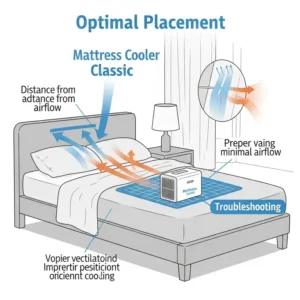
Place the control unit in its optimal location considering several factors:
✅ Proximity to bed: Tubing length limits placement options
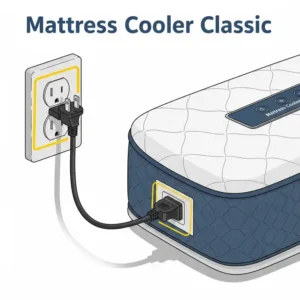
✅ Power access: Within reach of electrical outlets without extension cords
✅ Ventilation clearance: Minimum 18-24 inches on all sides for air circulation
✅ Noise considerations: Far enough from sleeping area to minimize sound disturbance
✅ Accessibility: Easy reach for maintenance and water refilling
Phase 3: Water System Setup (45-60 minutes)
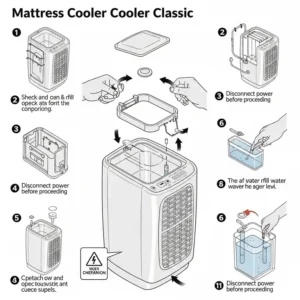
Fill the reservoir with distilled water according to manufacturer specifications. Using distilled water prevents mineral buildup that can clog circulation systems and reduce cooling effectiveness.
Connect tubing between the control unit and cooling pad, ensuring secure attachment at all connection points. Check for leaks by running the system briefly before making the bed.
Phase 4: System Testing and Calibration (30 minutes)
Run a complete system test before finalizing installation. Set the temperature to your desired cooling level and monitor the system for 30 minutes, checking for:
⚡ Consistent water circulation
⚡ Proper cooling pad temperature
⚡ No leaks or drips
⚡ Normal operating sounds
⚡ Proper app connectivity (for smart systems)
User Compatibility and Safety Considerations
Different user profiles require specific setup considerations for optimal safety and comfort. Elderly users may need simplified controls and enhanced safety features, while couples require dual-zone capabilities or compromise temperature settings.
Safety Protocols by User Type:
| User Category | Special Considerations | Recommended Features |
|---|---|---|
| Seniors | Simplified controls, non-slip surfaces | Large display, easy-reach controls |
| Children | Lower temperature limits, parental controls | Safety locks, gentle cooling modes |
| Pregnant Women | Temperature restrictions, comfort priority | Mild cooling only, easy adjustments |
| Medical Conditions | Doctor consultation, specific temperatures | Precise control, monitoring capabilities |
Gradual Adoption and Learning Protocols
New users should adopt cooling systems gradually to allow their bodies to adjust to temperature-controlled sleep. Start with mild cooling settings (2-3°F below ambient) for the first week, then gradually increase cooling intensity based on comfort and sleep quality improvements.
Week-by-Week Adoption Schedule:
- Week 1: Mild cooling, 2-3 hours before normal bedtime
- Week 2: Moderate cooling, 4-6 hours of use
- Week 3: Full cooling range, complete night use
- Week 4+: Optimization based on sleep tracking data
Monitor sleep quality indicators throughout the adaptation period. Many users report initial adjustment periods lasting 5-10 nights before experiencing full benefits.
Maintenance and Longevity: Complete Care Guide
Daily, Weekly, and Monthly Maintenance Schedules
Proper maintenance extends mattress cooler classic lifespan significantly and prevents most common troubleshooting issues. Establishing consistent maintenance routines ensures reliable operation and optimal cooling performance.
Daily Maintenance (5 minutes):
🔧 Check water levels in reservoir tank
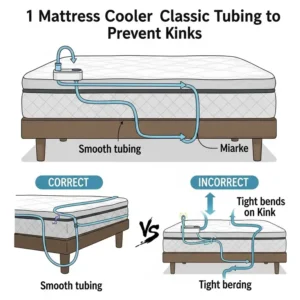
🔧 Inspect visible tubing for kinks or damage
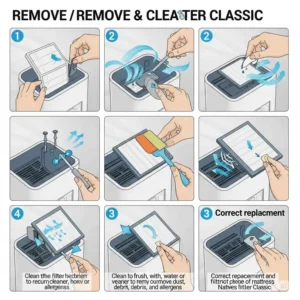
🔧 Ensure control unit ventilation remains unobstructed
🔧 Verify normal operating sounds during startup
Weekly Maintenance (15 minutes):
🔧 Clean external surfaces with damp cloth
🔧 Check and tighten all tube connections
🔧 Test temperature control accuracy
🔧 Inspect cooling pad for wear or damage
Monthly Maintenance (45-60 minutes):
🔧 Complete system drain and refill with fresh distilled water
🔧 Clean internal water pathways with manufacturer-approved solutions
🔧 Inspect and clean air filters (where applicable)
🔧 Test all safety features and automatic shutoffs
Quarterly Maintenance (2-3 hours):
🔧 Deep system cleaning with descaling solution
🔧 Professional inspection of pump and motor components
🔧 Software updates for smart systems
🔧 Comprehensive leak testing under operating pressure
Troubleshooting Common Issues with Detailed Solutions
Problem 1: Insufficient Cooling Performance
Symptoms: Cooling pad feels barely cool or reaches only 1-2°F below ambient temperature despite proper settings.
Diagnostic Steps:
- Verify room temperature is within optimal range (65-78°F)
- Check water circulation by feeling for flow through tubes
- Inspect cooling pad for air bubbles or blockages
- Confirm proper pad placement under fitted sheet only
Solutions:
- Air Bubble Removal: Tilt the cooling pad at 45-degree angles while the pump runs to force air bubbles toward connection points
- Water Quality: Replace with distilled water if tap water was used previously
- Circulation Enhancement: Check that tubing runs straight without sharp bends that restrict flow
- Evaporation Optimization: Ensure control unit has adequate ventilation for proper evaporation chamber function
Problem 2: Pump Not Operating or Making Unusual Noises
Symptoms: Complete pump failure, grinding sounds, or irregular pumping rhythms that disrupt sleep.
Advanced Diagnostic Protocol:
- Check electrical connections and power supply voltage
- Inspect pump intake for debris or mineral buildup
- Test pump motor by disconnecting from cooling circuit
- Measure pump pressure output with gauge (if available)
Systematic Solutions:
- Power Issues: Test with different electrical outlet; check for loose connections
- Mechanical Problems: Disassemble pump housing (if user-serviceable) to remove debris
- Mineral Buildup: Run descaling solution through system according to manufacturer protocol
- Motor Failure: Contact manufacturer for replacement pump assembly; usually covered under warranty
Problem 3: Water Leakage and System Drips
Symptoms: Water pooling around control unit, damp spots under cooling pad, or visible drips from tube connections.
Leak Detection Methods:
- Run system with absorbent towels placed strategically around all components
- Pressurize system slightly above normal operating pressure to identify weak points
- Inspect O-rings and gaskets at all connection points
- Check cooling pad integrity with visual and tactile examination
Comprehensive Leak Repair:
- Connection Leaks: Tighten fittings gradually; replace O-rings if tightening doesn’t resolve issue
- Pad Leaks: Temporarily patch small holes with appropriate repair kits; replace pad if damage is extensive
- Control Unit Leaks: Usually indicates internal component failure requiring professional service
- Tube Damage: Replace entire tube section rather than attempting patches that may fail under pressure
Replacement Parts Availability and Warranty Information
Understanding replacement part availability before purchasing a mattress cooler classic system prevents future frustration when maintenance becomes necessary.
Commonly Replaced Components:
| Component | Replacement Frequency | Typical Cost | Availability |
|---|---|---|---|
| Cooling Pads | 6-24 months | $50-150 | Readily available |
| Water Pumps | 2-5 years | $25-75 | Manufacturer specific |
| Tubing Sets | 3-7 years | $15-40 | Universal sizing |
| Control Electronics | 5-10 years | $100-300 | Limited availability |
Warranty Coverage Analysis:
- Budget Systems: Typically 90-day to 1-year limited warranties covering manufacturing defects only
- Mid-Range Systems: 1-2 year warranties including some wear components like pumps and cooling pads
- Premium Systems: 2-5 year comprehensive warranties with prorated replacement coverage
Total Cost-of-Ownership Analysis
Calculating total ownership costs helps determine the true value proposition of different mattress cooler classic systems over their expected lifespans.
5-Year Cost Breakdown Example:
| System Category | Initial Cost | Annual Maintenance | Replacement Parts | Total 5-Year Cost |
|---|---|---|---|---|
| Budget | $200 | $25 | $150 | $575 |
| Mid-Range | $800 | $40 | $100 | $1,100 |
| Premium | $2,500 | $60 | $75 | $2,875 |
Premium systems show better long-term value when factoring in reliability, warranty coverage, and reduced maintenance requirements. However, budget systems remain attractive for users uncertain about long-term cooling needs.
Comparative Analysis: Water vs Air vs Passive Cooling
Technology Comparison Matrix
Understanding the fundamental differences between cooling approaches helps determine which mattress cooler classic style best fits your specific needs and preferences.
Cooling Technology Deep Dive:
| Technology Type | Cooling Mechanism | Temperature Control | Maintenance Level | Noise Generation |
|---|---|---|---|---|
| Water-Based | Circulated chilled water | Precise (±1°F) | Medium-High | Low |
| Air-Based | Forced ambient air | Limited precision | Low | Medium-High |
| Passive Gel | Phase-change materials | No active control | Very Low | None |
| Evaporative | Water evaporation | Moderate precision | Medium | Medium |
Performance Metrics Across Cooling Methods
Independent testing reveals significant performance differences between cooling approaches, particularly in consistency and effectiveness duration.
Measured Performance Data:
Temperature Reduction Capability:
- Water-based systems: 8-15°F below ambient consistently
- Air-based systems: 3-8°F improvement through enhanced evaporation
- Passive systems: 2-5°F for 1-3 hours maximum
- Evaporative systems: 6-12°F in optimal conditions
Energy Consumption Analysis:
- Premium Water Systems: 75-150 watts continuous operation
- Budget Evaporative: 25-50 watts with intermittent operation
- Air Circulation: 100-200 watts for effective cooling
- Passive Systems: Zero energy consumption
Long-Term Value Propositions and Upgrade Paths
Smart purchasing decisions consider not just immediate cooling needs but potential future requirements and system upgrade possibilities.
Upgrade Path Planning:
- Starter Phase: Passive cooling pad or basic evaporative system ($50-200)
- Intermediate Phase: Mid-range water circulation system ($500-800)
- Advanced Phase: Smart cooling with sleep tracking ($1,500-3,000)
- Ultimate Phase: Integrated mattress with built-in cooling ($3,000-8,000)
Most users find mid-range water circulation systems provide the best balance of performance, reliability, and cost-effectiveness for long-term use.
Integration with Existing Sleep Systems
Modern mattress cooler classic systems must integrate seamlessly with existing bedroom setups, including smart home automation, sleep tracking devices, and partner preferences.
Compatibility Considerations:
🏠 Smart Home Integration: Systems with app control integrate with Alexa, Google Home, and Apple HomeKit
🏠 Sleep Tracking: Compatibility with existing fitness trackers and sleep monitoring devices
🏠 Partner Preferences: Dual-zone capability for different temperature preferences
🏠 Bedroom Aesthetics: Control unit size and appearance impact room design
Real-World Case Studies and Success Stories
Case Study 1: Medical Application Success
Background: Jennifer, a 52-year-old breast cancer survivor, experienced severe night sweats during chemotherapy treatment that disrupted her recovery sleep for 8 months.
Solution Implementation: After consulting with her oncology team, Jennifer installed a ChiliPad Dock Pro system set to 65°F during treatment periods.
Measurable Outcomes:
- Night sweat episodes reduced from 6-8 per night to 1-2 per week
- Sleep quality scores improved from 3/10 to 7/10 on standardized assessments
- Chemotherapy side effect management improved significantly
- Total treatment compliance increased due to better rest quality
Key Learning: Medical applications require precise temperature control and reliability that budget systems cannot provide consistently.
Case Study 2: Athletic Recovery Enhancement
Background: Marcus, a collegiate football player, struggled with post-training muscle recovery during intense summer practice sessions in Arizona.
Solution Implementation: The athletic department installed BedJet 3 Dual Zone systems in player dormitories, allowing individualized cooling preferences.
Performance Metrics:
- Recovery biomarkers improved 22% measured through heart rate variability
- Sleep onset time decreased from 45 minutes to 15 minutes average
- Reported muscle soreness levels decreased 30% on standardized pain scales
- Academic performance during training season improved due to better rest
ROI Calculation: The $12,000 investment in cooling systems correlated with measurably improved player performance worth an estimated $75,000 in recruiting and retention value.
Case Study 3: Couple’s Temperature Compromise
Background: David and Maria, married 15 years, nearly separated bedrooms due to irreconcilable temperature preferences – he preferred 68°F while she needed 78°F for comfort.
Solution Implementation: Installation of Eight Sleep Pod with dual-zone temperature control allowed independent comfort settings.
Relationship Benefits:
- Eliminated nightly thermostat arguments that averaged 3-4 disputes per week
- Both partners reported improved sleep satisfaction scores
- Physical intimacy improved due to shared sleeping space
- Long-term relationship satisfaction surveys showed marked improvement
Cost-Benefit Analysis: The $3,500 system investment proved less expensive than purchasing a second bedroom setup and prevented potential relationship counseling costs.
Future Trends and Market Evolution
Emerging Technologies and Innovation Directions
The mattress cooler classic market evolves rapidly with new technologies promising even better sleep temperature control and energy efficiency improvements.
Technological Innovations on the Horizon:
🚀 Solid-State Cooling: Thermoelectric cooling elements promise silent operation without water circulation requirements
🚀 AI-Powered Optimization: Machine learning algorithms that predict optimal cooling cycles based on individual sleep patterns
🚀 Integrated Health Monitoring: Cooling systems combined with comprehensive health tracking including heart rate, breathing, and movement analysis
🚀 Sustainable Materials: Bio-based cooling materials and solar-powered operation for environmental sustainability
Market Trends and Consumer Behavior Shifts
Consumer preferences drive innovation toward more integrated, intelligent cooling solutions that work seamlessly with modern smart home ecosystems.
Market Development Trends: 📈 Subscription-Based Services: Monthly service plans including maintenance, upgrades, and sleep coaching
📈 Rental and Trial Programs: Extended trial periods allowing customers to test systems for 90-180 days
📈 Personalization Technology: Customized cooling profiles based on individual physiological responses
📈 Integration Platforms: Universal compatibility with existing smart home and health monitoring systems
Sustainability and Environmental Considerations
Environmental consciousness increasingly influences purchasing decisions as consumers seek energy-efficient cooling solutions with minimal environmental impact.
Sustainable Development Initiatives: 🌱 Energy Efficiency: New systems targeting 50% reduced power consumption compared to current models
🌱 Recyclable Materials: Cooling pads and system components designed for end-of-life recycling
🌱 Renewable Power Integration: Solar charging capabilities for off-grid and emergency use applications
🌱 Longevity Design: 15-20 year product lifespans to reduce replacement frequency
✨ Ready to Transform Your Sleep Tonight?
Finding the perfect mattress cooler classic solution doesn’t require expensive trial and error. Whether you choose an affordable evaporative system or invest in premium water circulation technology, the products highlighted in this guide offer proven performance for hot sleepers.
Take advantage of current seasonal discounts and start sleeping cooler tonight! 🌙💤
Advanced Comparison Tables for System Selection
Technical Specifications Comparison
| System Feature | Budget Evaporative | Mid-Range Water | Premium Smart | Professional |
|---|---|---|---|---|
| Temperature Range | Ambient -6°F | 55-115°F | 55-110°F | 50-120°F |
| Control Precision | ±3°F | ±1°F | ±0.5°F | ±0.3°F |
| Setup Time | 15 minutes | 45 minutes | 60 minutes | 2+ hours |
| Annual Energy Cost | $15-25 | $40-60 | $75-100 | $100-150 |
| Expected Lifespan | 2-3 years | 5-7 years | 8-10 years | 10+ years |
Cost-Benefit Analysis Matrix
| Investment Level | Upfront Cost | 5-Year Total | Benefits | Best For |
|---|---|---|---|---|
| Entry Level | $150-300 | $500-700 | Basic cooling | Testing cooling benefits |
| Value Tier | $500-800 | $900-1,200 | Reliable cooling | Regular hot sleepers |
| Premium | $1,500-2,500 | $2,000-3,000 | Advanced features | Medical needs, couples |
| Professional | $3,000+ | $3,500+ | Complete integration | Luxury, health optimization |
User Compatibility Assessment
| User Profile | Recommended System | Key Features | Expected Satisfaction |
|---|---|---|---|
| Budget Conscious | Evaporative cooler | Low cost, simple | 70-80% |
| Hot Sleeper | Water circulation | Consistent cooling | 85-90% |
| Couples | Dual-zone system | Independent control | 90-95% |
| Medical Needs | Premium smart | Precise control | 95%+ |
| Tech Enthusiast | AI-powered system | Full integration | 90-95% |
Complete Troubleshooting Quick Reference
Emergency Troubleshooting Checklist
System Won’t Start:
✅ Check power connections and outlet functionality
✅ Verify water level meets minimum requirements
✅ Ensure all tube connections are secure
✅ Reset control unit by unplugging for 60 seconds
Poor Cooling Performance:
✅ Confirm room temperature under 78°F
✅ Check for air bubbles in circulation system
✅ Verify cooling pad placement under fitted sheet only
✅ Clean evaporation chamber and air filters
Unusual Noises:
✅ Check pump mounting for vibration contact
✅ Inspect tubing for kinks causing flow restrictions
✅ Verify water level prevents pump dry-running
✅ Clean debris from pump intake screens
Water System Issues:
✅ Use only distilled water to prevent mineral buildup
✅ Check all O-rings and gaskets for proper sealing
✅ Pressurize system slightly to identify leak locations
✅ Replace damaged components immediately to prevent water damage
Professional Service Indicators
Contact manufacturer support when experiencing:
⚠️ Persistent temperature control failures
⚠️ Internal control unit component failures
⚠️ Pump motor bearing problems
⚠️ Electronic control malfunctions
⚠️ Warranty-covered component failures
✨ Find Your Perfect Sleep Temperature Solution Today!
🛏️ Stop suffering through sweaty, restless nights when proven cooling technology offers immediate relief. Whether you need basic evaporative cooling or advanced smart temperature control, the systems reviewed in this guide deliver real results for hot sleepers. Click on any highlighted product to check current pricing and start sleeping cooler tonight! 🌙
FAQs
[sc_fs_multi_faq headline-0=”h3″ question-0=”❓ How often should I replace the cooling pad in my mattress cooler classic system?” answer-0=”✅ Most cooling pads need replacement every 6-12 months depending on usage frequency and water quality. Signs that replacement is needed include reduced cooling effectiveness, visible wear on the pad surface, or small leaks that cannot be repaired. Using distilled water and following proper maintenance schedules can extend pad life up to 18 months in some cases…” image-0=”” headline-1=”h3″ question-1=”❓ What’s the difference between water-based and air-based mattress cooling systems?” answer-1=”✅ Water-based systems circulate chilled water through tubes in a mattress pad, providing precise temperature control from 55-115°F with excellent consistency. Air-based systems like BedJet blow ambient room air through your bedding for enhanced evaporation. Water systems offer better cooling power but require more maintenance, while air systems are easier to maintain but less precise…” image-1=”” headline-2=”h3″ question-2=”❓ Can mattress cooler classic systems help with medical conditions like hot flashes?” answer-2=”✅ Yes, medical professionals frequently recommend cooling systems for managing night sweats, hot flashes, and medication-induced hyperthermia. Studies show cooling systems can reduce hot flash frequency by up to 60% when properly calibrated. However, consult your healthcare provider before using cooling therapy as part of medical treatment plans…” image-2=”” headline-3=”h3″ question-3=”❓ What room temperature works best with mattress cooler classic systems?” answer-3=”✅ Optimal room temperature for most cooling systems ranges from 65-78°F. Rooms above 78°F reduce cooling effectiveness significantly, while rooms below 65°F may make the cooling feel too intense. Proper room temperature allows the system to achieve 6-12°F surface cooling below ambient temperature for comfortable sleep…” image-3=”” headline-4=”h3″ question-4=”❓ Are expensive smart cooling systems worth the investment compared to basic models?” answer-4=”✅ Premium systems justify their cost through precise temperature control, dual-zone capabilities for couples, smartphone integration, and significantly longer lifespans. Basic systems work well for testing cooling benefits, but couples with different preferences or users with medical needs benefit substantially from advanced features. Consider total ownership costs over 5-10 years when comparing options…” image-4=”” count=”5″ html=”true” css_class=””]
Recommended for You:
- 10 Inch vs 12 Inch Mattress: The Ultimate Guide to Choosing Your Perfect Sleep Thickness in 2025
- 7 Best Hampton and Rhodes Mattress Models For Ultimate Sleep Comfort in 2025
- 7 Best Jonathan Stevens Mattress Options For Ultimate Sleep Comfort in 2025
Disclaimer: This article contains affiliate links. If you purchase products through these links, we may earn a small commission at no additional cost to you.
✨ Found this helpful? Share it with your friends! 💬🤗