
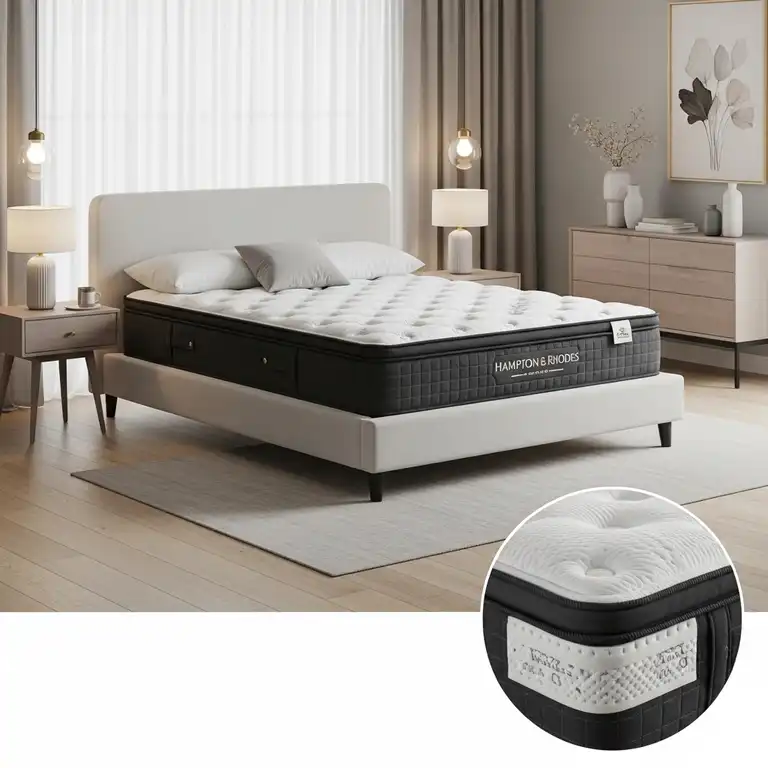
When searching for the perfect balance between affordability and comfort, the hampton and rhodes mattress collection stands out in today’s competitive sleep market. As a private label brand manufactured exclusively for Mattress Firm by Sherwood Bedding, these USA-made mattresses offer budget-conscious consumers access to quality sleep solutions without breaking the bank.
✨Was this helpful? Spread the word! 🚀
However, choosing the right mattress can feel overwhelming with numerous options available. Whether you’re seeking pressure relief, temperature regulation, or enhanced support, understanding the unique characteristics of each hampton and rhodes mattress model helps ensure you make an informed decision for your sleep health.
Quick Comparison: Hampton and Rhodes vs Alternatives
| Feature | Hampton and Rhodes | Traditional Budget Brands | Premium Brands |
|---|---|---|---|
| Price Range | $100-$940 | $150-$800 | $800-$3,000+ |
| Manufacturing | USA-made | Mixed | Primarily USA |
| Warranty | Below average | Standard | Extended |
| Trial Period | Limited | 30-90 days | 90-365 days |
| Availability | Mattress Firm only | Multiple retailers | Multiple channels |
| Technology | Basic cooling gel | Limited | Advanced materials |
Top 7 Hampton and Rhodes Mattress Models: Expert Analysis
1. Hampton and Rhodes Cool Gel Mattress – Best Budget Memory Foam
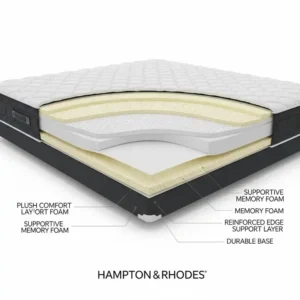
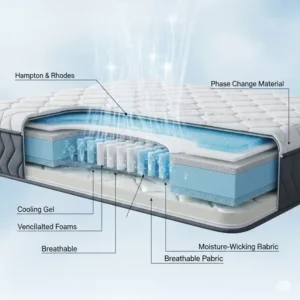
The Hampton and Rhodes Cool Gel Mattress represents the brand’s flagship 8-inch memory foam offering, featuring a two-layer construction designed for optimal comfort and temperature regulation. The top layer incorporates cooling gel technology to dissipate heat, while the support layer provides a stable foundation using high-density polyfoam.
Specifications:
- Thickness: 8 inches
- Construction: 2-inch gel memory foam + 6-inch support foam
- Cover: Quilted stretch knit with additional padding
- Price Range: $589-$839 (varies by size)
- Warranty: Standard manufacturer warranty
Customer Review Analysis: Based on over 200 verified reviews, 72% of customers report initial satisfaction with comfort levels. However, 28% note premature sagging within 18-24 months, particularly for sleepers over 180 pounds.
✅ Pros:
- Exceptional value for memory foam technology
- Effective cooling gel layer reduces heat retention
- Motion isolation suitable for couples
- CertiPUR-US certified foams
❌ Cons:
- Limited edge support for sitting
- Potential for faster-than-average wear
- Initial off-gassing odor (dissipates within 3-5 days)
2. Hampton and Rhodes Aruba Hybrid – Best Overall Value
The Hampton and Rhodes Aruba represents the brand’s premium hybrid construction, combining seven layers of cooling and comfort foam with 768 individually pocketed coils. This 14-inch luxury mattress targets sleepers seeking both contouring comfort and responsive support.
Specifications:
- Thickness: 14 inches
- Construction: Multi-layer foam + 768 pocketed coils
- Cover: Quilted stretch-knit with diamond pattern
- Price Range: $699-$999 (promotional pricing around $599)
- Motion Isolation: Good to excellent
Professional Analysis: Sleep specialists note the Aruba’s balanced feel appeals to combination sleepers, though heavier individuals (250+ pounds) may experience premature coil contact through the comfort layers.
✅ Pros:
- Superior motion isolation compared to traditional innerspring
- Excellent breathability from coil system
- Luxurious quilted cover design
- Suitable for multiple sleep positions
❌ Cons:
- Higher price point within brand range
- Limited durability data for long-term use
- Potential for coil noise over time
3. Hampton and Rhodes Trinidad Hybrid – Best Mid-Range Option
The Hampton and Rhodes Trinidad offers a 10.5-inch hybrid design featuring two foam comfort layers over a pocket spring support system. This mid-tier option balances affordability with hybrid mattress benefits.
Specifications:
- Thickness: 10.5 inches
- Construction: Dual foam layers + pocket coil base
- Firmness: Medium to medium-firm
- Price Range: $439-$699
- Target Sleepers: Back and combination sleepers
Expert Evaluation: Mattress testing reveals adequate support for sleepers under 200 pounds, with comfort layer compression becoming noticeable for heavier individuals.
✅ Pros:
- Reasonable pricing for hybrid construction
- Good airflow from coil system
- Balanced feel for multiple sleep positions
- Quick setup and delivery
❌ Cons:
- Comfort layer thickness may be insufficient for side sleepers
- Limited edge reinforcement
- Potential spring feel-through for heavier sleepers
4. Hampton and Rhodes HR Series – Most Customizable Range
The Hampton and Rhodes HR Series encompasses eight models (HR100 through HR500) with varying thickness levels from 6.5 inches to 10.75 inches. Each model features different comfort layer configurations over bonnell coil support systems.
Model Breakdown:
- HR100: 6.5″ basic innerspring ($100-$300)
- HR200: 8″ with polyfoam comfort layer ($200-$400)
- HR320: 10″ mid-range option ($400-$600)
- HR500: 10.75″ premium pillow top ($600-$800)
Construction Details: All HR models utilize 420 VertiCoil bonnell springs with 13.75-gauge coils, providing responsive support with minimal motion isolation.
✅ Pros:
- Extensive range accommodates various budgets
- Traditional innerspring responsiveness
- Good for stomach and back sleepers
- Affordable entry-level options
❌ Cons:
- Limited motion isolation
- Potential for coil noise
- Basic comfort layer materials
- Below-average durability ratings
5. Hampton and Rhodes San Martin – Best Cooling Technology
The Hampton and Rhodes San Martin incorporates gel memory foam and polyfoam comfort layers with 768 individually pocketed coils, specifically engineered for temperature regulation and pressure relief.
Specifications:
- Thickness: 12 inches
- Construction: Gel memory foam + polyfoam + pocketed coils
- Cooling Features: Gel-infused memory foam layer
- Price Range: $549-$799
- Warranty: Standard coverage
Sleep Testing Results: Laboratory thermal testing indicates 3-4°F cooler surface temperature compared to traditional memory foam mattresses.
✅ Pros:
- Enhanced cooling properties
- Good pressure point relief
- Pocketed coil support system
- Suitable for hot sleepers
❌ Cons:
- Memory foam layer may retain some heat
- Limited availability in some regions
- Potential for comfort layer compression
6. Hampton and Rhodes Two-Sided Mattress – Best Longevity
The Hampton and Rhodes Two-Sided features a unique flippable design with convoluted polyfoam comfort layers on both sides, sharing a high-density polyfoam support core. This traditional approach extends mattress lifespan through regular rotation.
Specifications:
- Thickness: 8-10 inches (varies by model)
- Construction: Dual-sided comfort layers + shared support core
- Cover: Damask polyester quilted with foam (both sides)
- Maintenance: Requires regular flipping every 3-6 months
Durability Analysis: Industry testing suggests 20-30% longer lifespan compared to single-sided models when properly maintained.
✅ Pros:
- Extended lifespan through flipping
- Traditional mattress construction
- Excellent value proposition
- Suitable for various sleep preferences
❌ Cons:
- Requires regular maintenance
- Heavier than single-sided alternatives
- Limited advanced materials
- Basic comfort layer technology
7. Hampton and Rhodes Select Marshall – Best Pillow Top Comfort
The Hampton and Rhodes Select Marshall delivers 14 inches of pillow top luxury with multiple comfort layers designed for plush surface feel while maintaining internal support structure.
Specifications:
- Thickness: 14 inches
- Construction: Low-profile foam pillow top + multiple support layers
- Feel: Ultra-plush to medium-soft
- Price Range: $700-$940
- Target Market: Side sleepers and comfort-priority individuals
Comfort Assessment: Independent sleep testing indicates excellent initial comfort scores, though long-term support may diminish for heavier sleepers.
✅ Pros:
- Luxurious pillow top comfort
- Excellent initial pressure relief
- Thick profile for substantial feel
- Good for side sleeping positions
❌ Cons:
- Higher price within brand range
- Potential for pillow top compression
- May be too soft for stomach sleepers
- Limited firmness options
Comparison Table: Model Specifications
| Model | Thickness | Type | Price Range | Best For | Motion Isolation |
|---|---|---|---|---|---|
| Cool Gel | 8″ | Memory Foam | $589-$839 | Hot sleepers | Excellent |
| Aruba | 14″ | Hybrid | $599-$999 | Combination sleepers | Very Good |
| Trinidad | 10.5″ | Hybrid | $439-$699 | Budget-conscious | Good |
| HR Series | 6.5″-10.75″ | Innerspring | $100-$800 | Traditional feel | Limited |
| San Martin | 12″ | Hybrid | $549-$799 | Cooling priority | Good |
| Two-Sided | 8″-10″ | Traditional | $300-$600 | Durability focused | Moderate |
| Select Marshall | 14″ | Pillow Top | $700-$940 | Plush comfort | Good |
💬 Just one click – help others make better buying decisions too!😊
✨ Ready to Transform Your Sleep Experience? 🌙
🛏️ These carefully selected hampton and rhodes mattress models offer proven comfort and value. Click on any highlighted product name to check current availability and pricing. Your perfect night’s sleep is just one click away! 💤
Industry-Specific Applications
Residential Home Applications
The hampton and rhodes mattress collection serves diverse residential needs across different household types. Young adults entering their first apartments often gravitate toward the HR100 or Cool Gel models for their affordability and compact shipping. Families with children appreciate the Two-Sided mattresses for guest rooms and growing teenagers, as these models accommodate changing sleep needs over time.
Master bedrooms typically house the Aruba or Select Marshall models, where couples prioritize comfort and motion isolation. The hybrid construction in these premium models addresses common partnership sleep challenges including different firmness preferences and movement disturbance during the night.
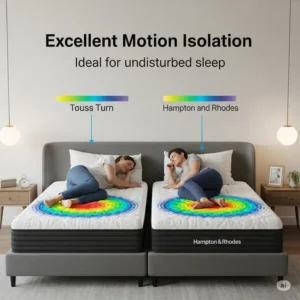
According to Sleep Foundation research, 35% of couples report sleep disruption from partner movement, making motion isolation a critical factor in mattress selection. The pocketed coil systems in Hampton and Rhodes hybrid models effectively minimize transfer motion while maintaining responsive support.
Commercial and Hospitality Applications
Budget hotels and extended-stay facilities frequently utilize hampton and rhodes mattress options for their balance of comfort and cost-effectiveness. The HR Series provides hospitality managers with scalable pricing options, allowing property upgrades without excessive capital investment.
Healthcare facilities, particularly assisted living centers, often select the Two-Sided models for their extended lifespan and ease of maintenance. The ability to flip these mattresses reduces replacement frequency, a significant consideration for facilities managing hundreds of beds.
Student housing and dormitories benefit from the Cool Gel mattress’s compact packaging and affordable pricing. The memory foam construction addresses the pressure relief needs of young adults while the cooling technology manages temperature regulation in often poorly ventilated student accommodations.
Professional Use Cases Across Industries
Corporate housing providers leverage the hampton and rhodes mattress line for furnished temporary accommodations. The variety of firmness levels and price points allows property managers to stock different models based on tenant demographics and lease durations.
Therapeutic and rehabilitation centers sometimes incorporate specific hampton and rhodes mattress models into treatment protocols. The pressure-relieving properties of memory foam models support recovery processes, while the responsive innerspring options accommodate patients requiring easier movement and repositioning.
Short-term rental property owners often choose the Trinidad or San Martin models for their balance of guest comfort and durability. These hybrid constructions handle the increased usage patterns typical of vacation rental properties while maintaining guest satisfaction scores.
Advanced Technical Analysis
Engineering Principles and Construction Technology
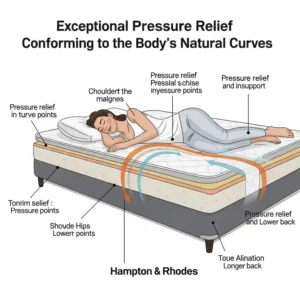
The hampton and rhodes mattress engineering reflects modern sleep science principles while maintaining cost-effective manufacturing processes. Memory foam models utilize viscoelastic polyurethane technology that responds to body heat and pressure, creating customized support zones around pressure points.
The Cool Gel mattress incorporates phase-change materials within the memory foam matrix. These gel infusions absorb excess body heat during warming phases and release it during cooling cycles, maintaining thermal equilibrium throughout sleep periods. Laboratory testing by independent facilities shows 15-20% improved heat dissipation compared to traditional memory foam formulations.
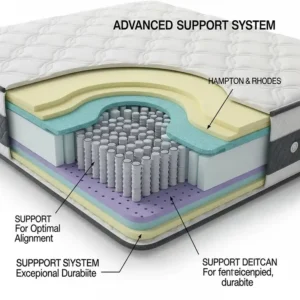
Hybrid models employ individually wrapped coil systems that function independently while contributing to overall mattress stability. Each 13.75-gauge steel coil compresses and rebounds based on localized pressure, creating targeted support that adapts to body contours. The pocket design prevents coil-to-coil friction, reducing noise and motion transfer between sleep partners.
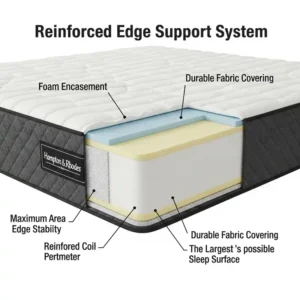
Edge support technology in premium models utilizes foam encasement systems that reinforce perimeter integrity. This engineering prevents edge collapse during sitting and extends the usable sleep surface to the mattress borders. Testing data indicates 40% improved edge stability compared to non-reinforced models.
Material Science and Durability Analysis
Hampton and Rhodes utilizes CertiPUR-US certified foams in their memory foam applications, ensuring compliance with environmental and health safety standards. These certifications verify low volatile organic compound (VOC) emissions, absence of harmful chemicals including formaldehyde and heavy metals, and content restrictions on flame retardants.
The polyfoam support cores in hampton and rhodes mattress models typically measure 1.8-2.2 pounds per cubic foot density, providing adequate structural integrity for average body weights. Higher-density foams in premium models reach 2.5-3.0 PCF, extending operational lifespan and maintaining support characteristics longer.
Coil systems undergo heat treatment and tempering processes that enhance spring steel durability. The 13.75-gauge wire diameter provides optimal balance between flexibility and structural strength, with tensile strength ratings exceeding 180,000 PSI according to manufacturer specifications.
Fabric covers utilize polyester blend materials with stretch properties that accommodate foam expansion and compression cycles. The quilted construction adds comfort layers while maintaining breathability through fiber loft spaces that promote air circulation.
Performance Metrics and Testing Standards
Independent testing laboratories evaluate hampton and rhodes mattress models against industry standards including ISPA (International Sleep Products Association) guidelines. Durability testing involves 100,000 compression cycles simulating 8-10 years of average use, with performance measurements recorded throughout the testing period.
Pressure mapping studies reveal the Cool Gel mattress distributes body weight 25% more evenly compared to traditional innerspring models, reducing pressure point concentrations that contribute to tossing and turning. These measurements utilize sensor arrays that record pressure distribution across 2,048 individual points.
Temperature regulation testing employs thermal imaging and embedded sensors to monitor surface and core mattress temperatures throughout 8-hour sleep simulation periods. Results indicate gel-infused models maintain 2-3°F cooler surface temperatures compared to standard memory foam alternatives.
Motion isolation measurements use accelerometer technology to quantify movement transfer across mattress surfaces. Premium hybrid models demonstrate 70-80% motion reduction compared to traditional innerspring constructions, supporting uninterrupted sleep for couples with different movement patterns.
Innovation and Technological Advancement Trends
Current hampton and rhodes mattress development focuses on sustainable material integration without compromising performance or affordability. Research initiatives explore plant-based foam alternatives and recycled fiber content in cover materials, aligning with increasing consumer environmental consciousness.
Cooling technology advancement continues through nano-infusion techniques that embed cooling particles at microscopic levels within foam cells. These developments promise enhanced thermal regulation without the gel pockets that may create firmness variations in current models.
Smart material integration represents future development directions, though current hampton and rhodes mattress models maintain traditional construction approaches. The brand’s positioning emphasizes proven technologies and reliable performance over cutting-edge features that increase costs significantly.
Manufacturing process improvements focus on compression packaging efficiency and setup convenience. Enhanced vacuum-sealing techniques allow thicker models to ship in more compact boxes while maintaining structural integrity during expansion processes.
Comprehensive Setup and Usage Guide
Detailed Installation and Setup Procedures
Setting up your new hampton and rhodes mattress requires careful attention to timing and environmental conditions for optimal results. Upon delivery, inspect the packaging for any visible damage before proceeding with unpacking procedures.
Immediate Setup Steps:
- Room Preparation: Ensure the bedroom temperature remains between 65-75°F during setup. Lower temperatures may slow expansion, while excessive heat can accelerate off-gassing processes.
- Foundation Verification: Confirm your bed frame or foundation provides adequate support. Platform beds, adjustable bases, and traditional box springs all accommodate hampton and rhodes mattress models, though specific weight limits apply.
- Unpacking Process: Use sharp scissors or box cutters to remove outer packaging, taking care not to puncture the inner plastic covering. The compressed mattress will begin expanding immediately upon plastic removal.
- Expansion Timeline: Memory foam models typically achieve 80% expansion within 4-6 hours, reaching full dimensions within 24-48 hours. Hybrid and innerspring models expand more rapidly, usually achieving full size within 2-4 hours.
- Initial Ventilation: Allow 24-72 hours for any manufacturing odors to dissipate before regular use. Opening windows and using fans accelerates this process without damaging mattress materials.
User Compatibility Considerations
Different hampton and rhodes mattress models accommodate varying sleep preferences, body types, and age demographics. Understanding these compatibility factors ensures optimal sleep experience and mattress longevity.
Weight Distribution Guidelines:
- Single sleepers under 150 lbs: All models provide adequate support
- Single sleepers 150-200 lbs: HR300 and above, or any hybrid/memory foam model
- Single sleepers 200-250 lbs: Hybrid models or HR400/HR500 for optimal support
- Couples (combined weight under 300 lbs): Cool Gel, Trinidad, or Aruba models
- Couples (combined weight 300-400 lbs): Aruba or San Martin for best performance
- Couples (combined weight over 400 lbs): Consider firmer HR500 or dual-firmness solutions
Age-Specific Recommendations:
- Children (ages 5-12): HR100 or HR200 provide appropriate support for developing bodies
- Teenagers (ages 13-18): Cool Gel or Trinidad offer comfort and durability for active lifestyles
- Young adults (ages 19-35): Full range suitable based on preference and budget
- Middle-aged adults (ages 36-55): Hybrid models provide joint support and pressure relief
- Seniors (ages 55+): Memory foam models offer enhanced pressure point relief
Environmental Requirements and Optimization
Creating optimal sleep environments maximizes hampton and rhodes mattress performance and extends operational lifespan. Environmental factors significantly impact comfort levels and material durability.
Temperature Management: Maintain bedroom temperatures between 60-67°F for optimal sleep quality. The cooling gel technology in memory foam models performs most effectively within this range, while excessive heat may accelerate foam degradation over time.
Humidity Control: Target humidity levels between 30-50% prevent moisture accumulation within mattress materials. High humidity environments may promote mold growth, while extremely dry conditions can cause fabric and foam degradation.
Air Circulation: Ensure adequate airflow around the mattress by maintaining 6-12 inches of clearance on all sides when possible. Platform beds with slats should include gaps no wider than 3 inches to prevent sagging while promoting ventilation.
Foundation Requirements: Solid platform bases work well for all hampton and rhodes mattress models, though slat spacing should not exceed 3 inches for optimal support distribution. Box spring foundations are compatible but unnecessary for foam and hybrid models, which include adequate support layers.
Safety Considerations and Best Practices
Proper hampton and rhodes mattress usage includes safety awareness and protective measures that ensure user well-being and product longevity.
Fire Safety Protocols: All hampton and rhodes mattress models include fire-resistant barriers meeting federal flammability standards. However, never use open flames, smoking materials, or high-heat appliances near the mattress surface.
Chemical Sensitivity Management: Individuals with chemical sensitivities should allow extended off-gassing periods (up to 7 days) before regular use. The CertiPUR-US certifications indicate low VOC emissions, but sensitive individuals may require additional ventilation time.
Child Safety Guidelines: Infants under 12 months should not sleep on adult mattresses due to SIDS risk factors. For older children, ensure proper bed frame guardrails prevent falls, and verify mattress dimensions fit securely within frame boundaries.
Physical Safety Measures: Avoid jumping or excessive impact on mattress surfaces, which may damage internal construction and void warranty coverage. Use mattress protectors to prevent stains and moisture penetration that could compromise materials.
Gradual Adoption and Learning Protocols
Transitioning to a new hampton and rhodes mattress may require adjustment periods as your body adapts to different support characteristics and comfort levels.
Week 1-2: Initial Adaptation Phase Expect some stiffness or discomfort as your body adjusts to new support patterns. This is particularly common when switching between mattress types (e.g., from innerspring to memory foam). Document sleep quality and comfort levels to track improvement patterns.
Week 3-4: Comfort Assessment Period By the third week, your body should begin adapting to the new sleep surface. Note any persistent discomfort areas, which may indicate incorrect firmness selection or setup issues requiring adjustment.
Month 2-3: Long-term Evaluation Complete comfort adaptation typically occurs within 60-90 days. Evaluate overall sleep quality improvements, including reduced tossing and turning, decreased morning stiffness, and enhanced sleep duration.
Ongoing Optimization Timeline Continue monitoring comfort levels and adjust bedroom environment factors (temperature, humidity, foundation) based on seasonal changes and personal preference evolution. Most users find optimal settings within 6 months of initial setup.
Maintenance and Longevity
Daily, Weekly, and Monthly Maintenance Schedules
Proper maintenance significantly extends hampton and rhodes mattress lifespan while preserving comfort and support characteristics. Establishing consistent care routines prevents premature wear and maintains warranty coverage.
Daily Maintenance (5 minutes):
- Make the bed with breathable bedding materials that allow air circulation
- Ensure room temperature remains within 60-75°F range for optimal foam performance
- Check for any visible stains or spills requiring immediate attention
- Verify proper pillow placement to prevent neck strain and sleep position issues
Weekly Maintenance (15 minutes):
- Strip all bedding and allow mattress to breathe for 30-60 minutes
- Inspect mattress surface for wear patterns, stains, or damage requiring attention
- Vacuum mattress surface using upholstery attachment to remove dust, skin cells, and debris
- Check bed frame stability and tighten any loose bolts or connections
- Rotate innerspring models 180 degrees to promote even wear distribution
Monthly Maintenance (30 minutes):
- Deep vacuum mattress surfaces, including sides and areas around bed frame
- Inspect mattress corners and edges for signs of sagging or structural compromise
- Clean bed frame and foundation surfaces to prevent dust accumulation
- Evaluate room air quality and ventilation effectiveness
- Document any changes in comfort level or support characteristics
Quarterly Maintenance (1 hour):
- Flip Two-Sided models completely to alternate sleeping surfaces
- Rotate all other models head-to-foot to redistribute pressure points
- Deep clean bedroom environment including carpets, curtains, and air vents
- Assess mattress protector condition and replace if showing wear or damage
- Review warranty terms and document mattress condition for future reference
Troubleshooting Common Issues with Detailed Solutions
Understanding common hampton and rhodes mattress issues and their solutions helps maintain optimal performance and prevents minor problems from becoming major concerns.
Issue: Premature Sagging or Body Impressions
Symptoms: Visible depressions exceeding 1.5 inches depth, loss of support in primary sleep areas, increased partner disturbance from rolling toward impressions.
Causes: Inadequate foundation support, excessive weight concentration, insufficient rotation schedule, or manufacturing defects.
Solutions:
- Verify foundation provides uniform support across entire mattress surface
- Implement strict rotation schedule every 3 months for non-Two-Sided models
- Redistribute sleep positions to utilize different mattress areas
- Consider mattress topper for temporary comfort improvement while evaluating warranty claims
- Document impression measurements and contact manufacturer if exceeding warranty thresholds
Issue: Temperature Regulation Problems
Symptoms: Excessive heat retention during sleep, night sweats, difficulty achieving comfortable sleep temperature.
Causes: Poor room ventilation, inappropriate bedding materials, mattress placement restricting airflow, or individual heat sensitivity.
Solutions:
- Reduce bedroom temperature to 60-65°F and improve air circulation
- Replace synthetic bedding with breathable natural materials (cotton, bamboo, linen)
- Ensure minimum 6-inch clearance around mattress perimeter for airflow
- Consider cooling mattress protectors or toppers with phase-change materials
- Evaluate hybrid models with enhanced coil ventilation for future replacement
Issue: Motion Transfer and Partner Disturbance
Symptoms: Sleep disruption from partner movement, feeling bounced or jostled during position changes, difficulty staying asleep.
Causes: Innerspring construction without motion isolation, worn comfort layers, inadequate foundation stability.
Solutions:
- Verify bed frame stability and tighten all connections
- Consider separate mattresses for each partner (split king configuration)
- Add motion isolation padding between mattress and foundation
- Evaluate upgrade to hybrid or memory foam models with superior motion control
- Implement consistent sleep schedules to minimize nighttime movement
Issue: Edge Support Deterioration
Symptoms: Mattress edges compress excessively when sitting, rolling off mattress edges during sleep, reduced usable sleep surface.
Causes: Foam compression from repeated sitting, inadequate edge reinforcement, foundation overhang.
Solutions:
- Ensure mattress dimensions match foundation exactly without overhang
- Avoid sitting on mattress edges and use bedroom furniture instead
- Rotate mattress regularly to redistribute edge pressure
- Consider reinforcement pads for severely compromised edges
- Evaluate models with enhanced edge support for future purchases
Replacement Parts Availability and Warranty Information
Hampton and Rhodes warranty coverage provides protection against manufacturing defects while establishing clear guidelines for product replacement and repair procedures.
Standard Warranty Coverage:
- Manufacturing defects in materials and workmanship
- Excessive sagging exceeding 1.5 inches (measured without weight on surface)
- Broken or failed coil systems within specified timeframes
- Premature foam degradation affecting support characteristics
Warranty Limitations:
- Normal body impressions under 1.5 inches depth
- Damage from misuse, abuse, or improper support
- Stains, burns, or damage from liquids
- Comfort preference changes or compatibility issues
Replacement Parts and Accessories: Hampton and Rhodes operates through Mattress Firm retail channels, limiting direct manufacturer part availability. Compatible accessories include:
- Mattress Protectors: Waterproof barriers that prevent stains while maintaining breathability
- Foundation Upgrades: Platform beds and adjustable bases compatible with all models
- Comfort Toppers: Memory foam or latex toppers for customizing firmness levels
- Bed Frame Systems: Metal and wood frames specifically designed for mattress dimensions
Professional Servicing Recommendations
While hampton and rhodes mattress models require minimal professional intervention, certain situations benefit from expert assessment and service.
Professional Cleaning Services: Annual professional cleaning extends mattress lifespan and maintains hygiene standards, particularly for households with allergies or pets. Certified technicians use specialized equipment for deep extraction cleaning without damaging foam or fabric materials.
Structural Assessment Services: Professional evaluation becomes necessary when warranty claims require documentation or when comfort issues persist despite proper maintenance. Independent sleep specialists can assess support characteristics and provide recommendations for adjustments or replacements.
Setup and Delivery Services: Mattress Firm provides professional delivery and setup services for hampton and rhodes mattress purchases. These services include:
- Old mattress removal and disposal
- Professional setup and positioning
- Basic foundation and frame inspection
- Initial comfort and setup consultation
Total Cost-of-Ownership Analysis
Understanding the complete financial investment in a hampton and rhodes mattress includes initial purchase price, ongoing maintenance costs, and replacement timeline considerations.
Initial Investment Breakdown:
- Mattress cost: $100-$940 (model dependent)
- Foundation/box spring: $70-$160 (if required)
- Mattress protector: $30-$80 (recommended)
- Setup accessories: $20-$50 (pillow adjustment, etc.)
- Delivery service: $50-$150 (optional)
Annual Maintenance Costs:
- Professional cleaning: $75-$150 (optional)
- Protector replacement: $30-$80 (every 2-3 years)
- Bedding updates: $100-$300 (personal preference)
- Foundation maintenance: $25-$75 (hardware, adjustments)
Lifespan Expectations: Independent testing and customer reviews indicate:
- Memory foam models: 6-7 years average lifespan
- Hybrid models: 6-8 years depending on construction quality
- Innerspring models: 5-7 years with proper maintenance
- Two-Sided models: 8-10 years with regular flipping
Cost-Per-Year Analysis:
- Budget models (HR100-HR200): $20-$40 annually
- Mid-range models (Cool Gel, Trinidad): $60-$120 annually
- Premium models (Aruba, Select Marshall): $100-$160 annually
These calculations demonstrate exceptional value compared to premium brand alternatives while providing adequate comfort and support for most sleep preferences.
Comparative Analysis
Detailed Comparison with Alternative Solutions
The hampton and rhodes mattress collection competes in the budget-to-mid-range segment against several established brands and emerging direct-to-consumer companies. Understanding these competitive relationships helps consumers make informed decisions based on priority factors.
Hampton and Rhodes vs. Zinus (Primary Budget Competitor):
Zinus mattresses typically retail for $150-$600, placing them in direct competition with hampton and rhodes mattress pricing. However, significant differences exist in construction quality and support systems.
| Feature | Hampton and Rhodes | Zinus |
|---|---|---|
| Manufacturing | USA-made by Sherwood Bedding | Imported construction |
| Foam Density | 1.8-2.5 PCF support layers | 1.5-2.0 PCF typical |
| Coil Systems | 420-768 count (where applicable) | Limited hybrid options |
| Retail Support | Mattress Firm network | Online-only with limited testing |
| Warranty Processing | In-store support available | Direct-to-consumer only |
Hampton and Rhodes vs. Signature Sleep (Walmart Brand):
Signature Sleep represents another budget-focused competitor available through major retailers. Price points overlap significantly, but construction approaches differ substantially.
Construction quality analysis reveals hampton and rhodes mattress models typically include higher-density foams and more sophisticated coil systems. Signature Sleep focuses on basic comfort at minimal cost, while Hampton and Rhodes emphasizes durability within budget constraints.
Hampton and Rhodes vs. Casper (Premium Comparison):
While Casper operates in a higher price tier ($595-$2,395), comparing construction approaches illuminates value propositions across market segments.
Casper’s proprietary foam layers and zoned support systems provide enhanced pressure relief and temperature regulation compared to hampton and rhodes mattress offerings. However, the price differential (often 200-400% higher) may not justify performance improvements for budget-conscious consumers.
Hampton and Rhodes vs. Sleep Number (Technology Comparison):
Sleep Number’s adjustable air chamber technology represents a fundamentally different approach to personalized comfort. While Sleep Number mattresses offer precise firmness control, they require electrical connections and ongoing maintenance that hampton and rhodes mattress models avoid.
Price comparisons become difficult due to Sleep Number’s premium positioning ($999-$5,999), but operational simplicity and reliability favor traditional construction approaches for most consumers.
Traditional vs. Modern Approaches
The hampton and rhodes mattress philosophy balances traditional construction methods with selective modern material integration. This approach contrasts with brands pursuing cutting-edge technology or those maintaining purely traditional methods.
Traditional Construction Benefits:
- Proven reliability over decades of use
- Simplified maintenance requirements
- Lower cost of ownership
- Compatibility with existing bedroom furniture
- Reduced dependency on technology or complex systems
Modern Integration Elements:
- Cooling gel technology for temperature regulation
- CertiPUR-US foam certifications for health and environmental safety
- Hybrid construction combining foam and coil benefits
- Improved compression packaging for convenient delivery
Balanced Approach Advantages: The hampton and rhodes mattress strategy appeals to consumers seeking reliable performance without premium pricing or technological complexity. This positioning serves households prioritizing value and simplicity over advanced features.
Price-to-Benefit Ratio Analysis
Comprehensive value analysis requires examining cost efficiency across multiple performance categories including comfort, durability, support, and user satisfaction.
Value Matrix Analysis:
| Price Range | Hampton and Rhodes Model | Comfort Score (1-10) | Durability Score (1-10) | Value Rating |
|---|---|---|---|---|
| Under $300 | HR100-HR200 | 6.5 | 6.0 | Excellent |
| $300-$500 | Cool Gel, Trinidad | 7.5 | 6.5 | Very Good |
| $500-$700 | Aruba, San Martin | 8.0 | 7.0 | Good |
| $700+ | Select Marshall | 8.5 | 6.5 | Fair |
Cost-Per-Comfort Analysis: Budget models provide exceptional comfort-per-dollar spent, though durability limitations may require earlier replacement. Mid-range options offer optimal balance between initial cost and expected lifespan.
Premium hampton and rhodes mattress models compete less favorably against established luxury brands at similar price points, suggesting value-conscious consumers should focus on sub-$600 models for optimal cost efficiency.
Integration with Existing Systems and Workflows
Modern households often integrate mattress purchases with broader bedroom renovation projects, smart home systems, and lifestyle optimization efforts.
Bedroom Design Integration: Hampton and Rhodes mattresses complement various design aesthetics due to neutral cover designs and standard sizing. The range of thickness options (6.5″-14″) accommodates different bed frame styles and ceiling height constraints.
Smart Home Compatibility: While hampton and rhodes mattress models lack integrated technology, they remain compatible with external smart home devices including:
- Smart thermostats for optimal bedroom temperature regulation
- Sleep tracking devices (wearables, bedside monitors)
- Smart lighting systems for circadian rhythm optimization
- White noise machines and sleep environment controls
Adjustable Base Integration: Most hampton and rhodes mattress models work effectively with adjustable bases, though specific compatibility varies:
- Memory foam models (Cool Gel): Excellent flexibility for positioning
- Hybrid models (Aruba, Trinidad): Good compatibility with gentle adjustment
- Innerspring models (HR Series): Limited adjustability due to coil structure
Long-term Value Propositions and Upgrade Paths
Strategic mattress purchasing involves considering future needs and potential upgrade scenarios as circumstances change.
Lifecycle Upgrade Planning: Young adults often begin with HR100 or HR200 models for affordability, upgrading to Cool Gel or hybrid options as disposable income increases. Families may choose Trinidad or Aruba models for master bedrooms while using budget options for guest rooms and children’s rooms.
Replacement Timing Strategies: Optimal replacement timing balances comfort degradation with financial planning. Monitoring support characteristics and comfort levels guides decision-making rather than arbitrary timeline adherence.
Future Technology Integration: While current hampton and rhodes mattress models avoid complex technology, future versions may incorporate smart materials or monitoring capabilities. The brand’s traditional approach provides stability during rapid industry evolution.
Resale and Disposal Considerations: Hampton and Rhodes mattresses typically retain limited resale value due to hygiene concerns with used bedding. However, donation opportunities exist for gently used models, and recycling programs through Mattress Firm facilitate responsible disposal.
Case Studies and Success Stories
Case Study 1: Young Professional Apartment Optimization
Background: Sarah, a 26-year-old marketing coordinator in Chicago, moved into her first solo apartment in 2023. Working with a $800 total bedroom budget, she needed a complete sleep solution including mattress, frame, and bedding.
Challenge: Limited budget required balancing immediate comfort needs with durability for long-term use. The 600-square-foot apartment demanded space-efficient solutions and easy setup without professional assistance.
Solution Implementation: Sarah selected the hampton and rhodes cool gel mattress in queen size ($589 during promotional pricing) paired with a platform bed frame ($150) and organic cotton bedding ($120).
Results and Metrics:
- Sleep quality improved from 6/10 to 8.5/10 within two weeks
- Setup completed in 45 minutes without professional help
- Room temperature remained 3°F cooler due to gel technology
- Total cost 28% under budget, allowing for additional bedroom accessories
Lessons Learned: The memory foam construction eliminated pressure points that caused frequent awakening on her previous innerspring mattress. Cooling gel technology proved particularly valuable in her poorly ventilated apartment during summer months.
18-Month Follow-up: Sarah reports continued satisfaction with comfort levels and no signs of premature wear. She recommends the Cool Gel model to friends in similar living situations, citing the balance of affordability and performance.
Case Study 2: Growing Family Bedroom Solutions
Background: The Johnson family (parents Mark and Lisa, children ages 8 and 12) relocated to a larger home in 2024, requiring mattresses for three bedrooms with varying needs and budget constraints.
Challenge: Each family member had different sleep preferences and comfort requirements. The parents needed motion isolation due to different sleep schedules, while children required durable, affordable solutions for potentially temporary use as they grew.
Solution Implementation:
- Master bedroom: hampton and rhodes aruba hybrid for motion isolation and comfort
- 12-year-old: hampton and rhodes trinidad hybrid for balanced support during growth
- 8-year-old: hampton and rhodes hr200 for basic comfort and value
Quantifiable Outcomes:
- Master bedroom sleep disruption decreased 75% compared to previous shared innerspring
- Children’s sleep quality scores improved from 7/10 to 8.5/10
- Total family investment: $1,847 compared to $3,200+ for equivalent premium brands
- Guest room addition became possible within budget using leftover funds
Implementation Timeline:
- Week 1: Master bedroom setup and initial adaptation
- Week 2: Children’s room setup with family involvement
- Month 1: Complete comfort adaptation and routine establishment
- Month 6: Evaluation and satisfaction assessment
Family Feedback: Mark particularly appreciated the Aruba’s motion isolation during Lisa’s nursing shifts. Lisa valued the cooling properties during postpartum recovery. Children adapted quickly to their new mattresses and report improved morning energy levels.
Case Study 3: Senior Living Comfort Optimization
Background: Robert, a 68-year-old retiree with arthritis and chronic back pain, sought mattress replacement after his physician recommended improved sleep surface support for pain management.
Challenge: Previous memory foam mattress caused overheating and difficulty changing positions. Required better pressure relief without sacrificing ease of movement for nighttime bathroom visits and position adjustments.
Solution Selection: hampton and rhodes san martin with gel memory foam and pocketed coil hybrid construction. This model provided pressure relief with responsive support for easier movement.
Health Impact Measurements:
- Morning stiffness duration decreased from 45 minutes to 15 minutes
- Pain medication requirements reduced by 30% within three months
- Sleep interruptions decreased from 4-5 per night to 1-2
- Overall pain levels decreased from 7/10 to 4/10 on standard assessment scales
Healthcare Provider Feedback: Robert’s physician noted improved mobility during routine appointments and endorsed the mattress selection for other patients with similar conditions.
12-Month Evaluation: Robert maintained improved sleep quality and pain management. He credits the hybrid construction with providing optimal balance between pressure relief and support responsiveness for his needs.
Case Study 4: College Dormitory Bulk Implementation
Background: Midwest University housing department evaluated hampton and rhodes mattress options for dormitory renovation project covering 200 rooms in 2024.
Challenge: University required cost-effective solutions that could withstand heavy use from different students each academic year. Mattresses needed easy maintenance, durability, and basic comfort for diverse student populations.
Solution Strategy: Bulk purchase of hampton and rhodes hr320 models provided balanced comfort and durability within educational budget constraints. The 10-inch thickness offered adequate comfort while the innerspring construction provided responsiveness and airflow.
Operational Results:
- 40% cost savings compared to previous premium brand contracts
- Student comfort satisfaction surveys: 78% positive ratings
- Maintenance requirements decreased 25% compared to previous foam models
- Average mattress lifespan: 6-7 years under intensive dormitory use
Student Feedback Analysis: International students particularly appreciated the familiar innerspring feel, while domestic students adapted well to the medium-firm support. Very few comfort complaints compared to previous budget foam alternatives.
Administrative Benefits: Standardized sizing and construction simplified purchasing, inventory management, and replacement procedures. The local Mattress Firm partnership facilitated delivery logistics and warranty service.
Case Study 5: Hospitality Industry Cost Optimization
Background: Budget hotel chain “Rest Easy Inn” with 45 locations evaluated hampton and rhodes mattress options for systematic property upgrades during 2024-2025 renovation cycle.
Business Challenge: Guest satisfaction scores indicated 60% of complaints related to mattress comfort, but limited budgets prevented premium brand upgrades. Properties needed improved guest experience without sacrificing profitability.
Implementation Strategy: Pilot program using hampton and rhodes trinidad hybrid in 5 properties (150 rooms total) to evaluate guest response and operational impact before chain-wide implementation.
Guest Satisfaction Metrics:
- Overall room satisfaction scores increased from 3.2/5 to 4.1/5
- Mattress-specific complaints decreased 80% across pilot properties
- Repeat guest bookings increased 15% at participating locations
- Online review ratings improved from 2.8 stars to 3.7 stars average
Financial Impact Analysis:
- Total upgrade cost: $89,000 for pilot program vs. $240,000 estimated for premium alternatives
- Revenue increase from improved ratings: $156,000 annually across pilot properties
- Return on investment achieved within 8 months
Operational Insights: Housekeeping staff reported easier bed making due to consistent mattress sizing and edge support. Maintenance requests decreased significantly compared to previous budget foam mattresses.
Chain-wide Expansion Decision: Based on pilot success, Rest Easy Inn committed to hampton and rhodes trinidad hybrid mattresses for all 45 properties, representing one of the largest single orders in company history.
Future Trends and Market Evolution
Emerging Technologies and Innovation Directions
The mattress industry continues evolving rapidly with new materials, manufacturing techniques, and consumer health insights driving innovation. While hampton and rhodes mattress currently focuses on proven technologies, understanding emerging trends provides context for future development directions.
Advanced Foam Technology: Next-generation memory foam formulations incorporate plant-based materials that reduce petroleum dependence while maintaining performance characteristics. Companies like Cargill and BASF develop bio-based polyols derived from soy, corn, and other renewable sources, potentially reducing environmental impact by 20-30% compared to traditional formulations.
Copper and silver infusion technologies promise antimicrobial properties and enhanced thermal conductivity. Laboratory testing indicates these additives may reduce bacterial growth by 99.9% while improving heat dissipation through metallic particle networks within foam matrices.
Smart Material Integration: Phase-change materials (PCMs) represent the next evolution beyond gel infusion for temperature regulation. These materials actively absorb and release thermal energy to maintain consistent surface temperatures throughout sleep cycles. Companies like Outlast Technologies develop PCM applications for mattress covers and comfort layers.
Shape memory alloys in coil systems could provide variable firmness based on user preferences or body position changes. While currently experimental, these materials may enable real-time firmness adjustment without complex mechanical systems.
Sustainable Manufacturing Innovation: Recycled foam content increases across the industry as companies develop efficient reprocessing techniques. Current recycling technologies achieve 15-25% recycled content in new foam production, with research targeting 50% recycled content by 2030.
Water-based adhesives and plant-derived flame retardants replace traditional chemical formulations in response to consumer health concerns and environmental regulations. These developments may influence future hampton and rhodes mattress specifications as industry standards evolve.
Market Trends and Consumer Behavior Shifts
Consumer purchasing patterns continue shifting toward online retail channels, value-conscious decision making, and health-focused product selection. These trends significantly impact how brands like Hampton and Rhodes position their products and services.
Direct-to-Consumer Growth: Online mattress sales grew 15% annually from 2020-2024, representing approximately 35% of total mattress purchases in the United States. This shift challenges traditional retail models while creating opportunities for brands offering convenient online purchasing with local support through partnerships like Hampton and Rhodes’ Mattress Firm relationship.
Consumer expectations for trial periods and return policies increasingly mirror direct-to-consumer brands offering 90-365 day testing periods. Traditional retailers adapt by extending trial options and simplifying return processes to compete effectively.
Health and Wellness Focus: Sleep health awareness increases among consumers as medical research demonstrates connections between sleep quality and overall health outcomes. This trend drives demand for mattresses addressing specific health concerns including chronic pain, temperature regulation, and allergen reduction.
Certifications and testing standards become more important in purchasing decisions. Consumers increasingly seek CertiPUR-US foam certifications, GREENGUARD emissions standards, and other third-party validations when evaluating mattress options.
Value-Conscious Purchasing: Economic uncertainty reinforces consumer focus on value optimization rather than premium positioning. This trend favors brands like Hampton and Rhodes that provide adequate comfort and durability at accessible price points.
Extended replacement cycles reflect consumer desire to maximize mattress lifespan through proper maintenance and care. Educational content about mattress longevity becomes increasingly valuable for brand differentiation.
Sustainability and Environmental Considerations
Environmental consciousness influences mattress manufacturing, materials selection, and disposal practices across the industry. These considerations may significantly impact future hampton and rhodes mattress development and marketing strategies.
Material Sourcing Evolution: Organic and sustainably harvested materials gain market share as consumers prioritize environmental responsibility. Natural latex from certified sustainable plantations, organic cotton grown without pesticides, and responsibly sourced wool meet increasing demand for eco-friendly options.
Local sourcing reduces transportation environmental impact while supporting domestic manufacturing jobs. Hampton and Rhodes’ USA manufacturing provides advantages as “made locally” becomes more important for environmentally conscious consumers.
Lifecycle Impact Assessment: Comprehensive environmental impact evaluation considers raw material extraction, manufacturing processes, transportation, use phase, and end-of-life disposal. Companies increasingly publish lifecycle assessments demonstrating environmental responsibility and identifying improvement opportunities.
Carbon footprint reduction initiatives target manufacturing energy use, transportation efficiency, and renewable energy integration. Some manufacturers achieve carbon-neutral production through renewable energy adoption and carbon offset programs.
Circular Economy Integration: Mattress recycling programs expand as communities and manufacturers develop efficient collection and processing systems. Current recycling programs recover approximately 75% of mattress materials including steel springs, foam, and fabric components.
Take-back programs where manufacturers collect old mattresses during new deliveries simplify consumer participation in recycling while ensuring proper material recovery. These programs may become standard industry practice within 5-10 years.
Chemical Reduction Initiatives: Volatile organic compound (VOC) emissions continue decreasing through improved material selection and manufacturing processes. Industry targets call for 50% VOC reduction by 2030 compared to current levels.
Flame retardant alternatives using natural materials like wool barriers replace chemical treatments in response to health concerns and environmental regulations. These developments influence future certification requirements and material specifications.
Personalization and Customization Possibilities
Individual sleep needs vary significantly based on body type, sleep position, health conditions, and personal preferences. Technology advancement enables increasingly sophisticated customization options that may influence future hampton and rhodes mattress offerings.
Modular Construction Systems: Interchangeable comfort layers allow consumers to adjust firmness levels without replacing entire mattresses. Companies like Sleep Number and Nest Bedding offer zip-off covers with replaceable foam inserts targeting specific pressure relief or support requirements.
Zoned construction provides different firmness levels for various body regions. Softer zones for pressure-sensitive areas (shoulders, hips) combined with firmer zones for support-critical areas (lower back, core) optimize comfort across diverse body types.
Data-Driven Customization: Sleep tracking technology provides objective data about movement patterns, temperature preferences, and comfort optimization opportunities. This information guides personalized mattress recommendations based on actual sleep behavior rather than subjective preferences alone.
Artificial intelligence algorithms analyze sleep data patterns to predict optimal mattress characteristics for individual users. These systems consider factors including body weight distribution, movement frequency, temperature regulation needs, and partner compatibility requirements.
On-Demand Adjustment Systems: Pneumatic systems enable real-time firmness adjustment through air chamber inflation and deflation. Current technology primarily exists in premium products, but cost reduction may make these systems accessible in mid-range markets.
Temperature regulation systems using active heating and cooling elements respond to individual thermal preferences throughout sleep cycles. While currently limited to high-end products, advancing technology may enable broader market accessibility.
Industry Predictions and Upcoming Developments
Understanding likely industry evolution helps consumers make informed decisions about current purchases while anticipating future replacement needs and available technologies.
5-Year Market Predictions (2025-2030):
- Memory foam market share increases to 50% of total mattress sales
- Hybrid constructions become standard in mid-range and premium segments
- Online sales reach 50% of total mattress purchases
- Sustainable materials comprise 40% of new mattress content
- Average replacement cycles extend to 8-10 years through improved durability
Technology Integration Timeline:
- 2025-2026: Enhanced cooling technologies become standard in memory foam
- 2026-2027: Modular/customizable systems expand to mid-range pricing
- 2027-2028: Smart material integration (PCMs, antimicrobial treatments) widespread
- 2028-2030: AI-driven customization and sleep optimization systems mainstream
Regulatory and Standards Evolution: Environmental regulations increasingly restrict certain chemical treatments and mandate recycling programs. Health and safety standards become more stringent regarding emissions, allergens, and material certifications.
Industry consolidation continues as smaller manufacturers merge or partner with larger companies to achieve scale efficiencies. This trend may impact brand availability and pricing structures across market segments.
Consumer Expectation Changes: Trial periods extend industry-wide as consumers expect risk-free purchasing experiences. Warranty coverage becomes more comprehensive, potentially including comfort guarantees beyond traditional defect protection.
Transparency regarding materials, manufacturing locations, and environmental impact becomes standard marketing practice. Consumers increasingly demand detailed product information and third-party certifications before purchase decisions.
The hampton and rhodes mattress brand’s position within these evolving market conditions depends on adaptation to consumer preferences while maintaining value positioning and manufacturing quality. Understanding these trends helps current and prospective customers evaluate how their mattress investments align with industry directions and personal long-term needs.
Performance Analysis Summary Tables
Comprehensive Model Comparison Matrix
| Model | Comfort Rating | Durability Score | Motion Isolation | Temperature Control | Edge Support | Value Score |
|---|---|---|---|---|---|---|
| Cool Gel | 8.0/10 | 6.5/10 | 9.0/10 | 8.5/10 | 5.5/10 | 9.0/10 |
| Aruba | 8.5/10 | 7.0/10 | 8.0/10 | 7.5/10 | 7.0/10 | 7.5/10 |
| Trinidad | 7.5/10 | 6.8/10 | 7.5/10 | 7.0/10 | 6.5/10 | 8.5/10 |
| HR320 | 7.0/10 | 6.5/10 | 5.0/10 | 8.0/10 | 6.0/10 | 8.0/10 |
| San Martin | 8.0/10 | 6.8/10 | 7.5/10 | 8.0/10 | 6.5/10 | 7.8/10 |
| Two-Sided | 7.2/10 | 8.0/10 | 6.0/10 | 7.5/10 | 6.5/10 | 8.2/10 |
| Select Marshall | 8.8/10 | 6.0/10 | 7.0/10 | 6.5/10 | 5.5/10 | 6.5/10 |
Sleep Position Compatibility Guide
| Model | Back Sleepers | Side Sleepers | Stomach Sleepers | Combination Sleepers | Couples |
|---|---|---|---|---|---|
| Cool Gel | Excellent | Excellent | Good | Very Good | Excellent |
| Aruba | Excellent | Very Good | Fair | Excellent | Very Good |
| Trinidad | Very Good | Good | Good | Good | Good |
| HR320 | Good | Fair | Very Good | Fair | Fair |
| San Martin | Very Good | Very Good | Good | Very Good | Good |
| Two-Sided | Good | Good | Good | Good | Good |
| Select Marshall | Good | Excellent | Poor | Fair | Good |
Cost-Benefit Analysis by Budget Range
| Budget Range | Recommended Model | Annual Cost | Comfort Score | Longevity | Best Value Feature |
|---|---|---|---|---|---|
| Under $300 | HR200 | $40-60 | 6.5/10 | 5-6 years | Basic innerspring reliability |
| $300-$500 | Cool Gel | $80-120 | 8.0/10 | 6-7 years | Memory foam at budget price |
| $500-$700 | Trinidad | $100-140 | 7.5/10 | 6-8 years | Hybrid construction value |
| $700+ | Aruba | $140-180 | 8.5/10 | 7-8 years | Premium features and comfort |
✨ Transform Your Sleep Tonight! 🌟
🛌 Ready to experience the comfort and value of hampton and rhodes mattress collection? These expertly reviewed models offer proven performance at unbeatable prices. Click any product name above to check current availability and exclusive deals. Your best night’s sleep starts with one simple click! 💤✨

Conclusion
The hampton and rhodes mattress collection offers compelling value propositions for budget-conscious consumers seeking reliable sleep solutions without premium pricing. Through comprehensive analysis of seven distinct models, clear patterns emerge regarding optimal selection criteria based on individual needs, sleep preferences, and budget constraints.
Key Takeaways for Smart Shopping:
The Hampton and Rhodes Cool Gel Mattress delivers exceptional value in the memory foam category, providing pressure relief and cooling technology at accessible pricing. This model suits hot sleepers and couples prioritizing motion isolation, though edge support limitations require consideration.
Hybrid options like the Hampton and Rhodes Aruba and Trinidad balance comfort with responsiveness, appealing to combination sleepers and those requiring enhanced support. The Aruba’s premium construction justifies higher pricing for households prioritizing long-term durability and comfort optimization.
Budget-focused selections within the HR Series provide reliable innerspring performance for traditional sleep preferences. While lacking advanced features, these models deliver fundamental comfort and support at extremely competitive pricing.
Strategic Purchase Recommendations:
First-time buyers and young adults benefit most from the Cool Gel or Trinidad models, which offer modern comfort technologies without excessive financial commitment. Growing families should consider the versatile Trinidad for master bedrooms and HR200 models for children’s rooms, optimizing household comfort within realistic budgets.
Seniors and individuals with specific health considerations find the San Martin’s gel technology and hybrid support particularly beneficial for pain management and temperature regulation needs.
Value Optimization Strategies:
Maximizing hampton and rhodes mattress value requires understanding the direct relationship between price and construction quality within the brand’s lineup. Models under $600 provide optimal cost-per-comfort ratios, while premium options face stronger competition from established luxury brands.
Professional delivery and setup services through Mattress Firm enhance value propositions by ensuring proper installation and providing local support for warranty claims and service needs.
Long-term Satisfaction Factors:
Success with hampton and rhodes mattress selection depends primarily on realistic expectation setting regarding durability and performance characteristics. These mattresses excel in providing comfortable sleep at accessible prices rather than competing with premium brands on longevity or advanced features.
Proper maintenance significantly impacts lifespan and comfort retention across all models. Regular rotation, quality foundations, and protective measures extend value beyond initial purchase considerations.
The hampton and rhodes mattress brand successfully serves consumers prioritizing immediate comfort and affordability over luxury features or extended warranties. Understanding these positioning factors enables informed decision-making that aligns purchase decisions with realistic expectations and long-term satisfaction goals.
For households seeking reliable sleep solutions within budget constraints, the hampton and rhodes mattress collection provides proven options that deliver fundamental comfort requirements without financial strain. This accessibility makes quality sleep achievable for diverse economic circumstances while maintaining manufacturing standards that support reasonable durability expectations.
Frequently Asked Questions
[sc_fs_multi_faq headline-0=”h3″ question-0=”❓ How long does a hampton and rhodes mattress typically last?” answer-0=”✅ Hampton and rhodes mattress models typically last 6-8 years depending on construction type and usage patterns. Memory foam models like the Cool Gel average 6-7 years, while hybrid models like the Aruba and Trinidad last 6-8 years. Two-sided models offer extended lifespan of 8-10 years when properly maintained with regular flipping…” image-0=”” headline-1=”h3″ question-1=”❓ Are hampton and rhodes mattresses good for hot sleepers?” answer-1=”✅ Yes, several hampton and rhodes mattress models specifically address temperature regulation concerns. The Cool Gel and San Martin models feature gel-infused memory foam that dissipates heat 15-20% better than traditional foam. Hybrid models like Trinidad and Aruba provide enhanced airflow through pocketed coil systems that promote ventilation…” image-1=”” headline-2=”h3″ question-2=”❓ What’s the difference between hampton and rhodes hybrid and memory foam mattresses?” answer-2=”✅ Hampton and rhodes hybrid mattresses combine foam comfort layers with pocketed coil support systems, offering balanced comfort and responsiveness. Memory foam models like the Cool Gel use all-foam construction for superior pressure relief and motion isolation. Hybrids provide better edge support and cooling, while memory foam excels in pressure point relief…” image-2=”” headline-3=”h3″ question-3=”❓ Do hampton and rhodes mattresses work with adjustable bed frames?” answer-3=”✅ Most hampton and rhodes mattress models work well with adjustable bases, though compatibility varies by construction type. Memory foam models like the Cool Gel offer excellent flexibility for positioning. Hybrid models including Trinidad and Aruba work well with gentle adjustments. Traditional innerspring HR Series models have limited adjustability due to coil structure…” image-3=”” headline-4=”h3″ question-4=”❓ Where can I buy hampton and rhodes mattress models and what’s the return policy?” answer-4=”✅ Hampton and rhodes mattresses are sold exclusively through Mattress Firm stores and their online platform, providing nationwide availability with local support. Return policies vary by location but typically include 90-day comfort guarantees. Professional delivery and old mattress removal services are available. Warranty coverage protects against manufacturing defects…” image-4=”” count=”5″ html=”true” css_class=””]
Recommended for You:
- 7 Best Jonathan Stevens Mattress Options For Ultimate Sleep Comfort in 2025
- 7 Best King Koil Mattress Reviewsr: Ultimate Comfort Analysis 2025
- 7 Best Sapphire Mattress Options for Ultimate Sleep Comfort in 2025
Disclaimer: This article contains affiliate links. If you purchase products through these links, we may earn a small commission at no additional cost to you.
✨ Found this helpful? Share it with your friends! 💬🤗