
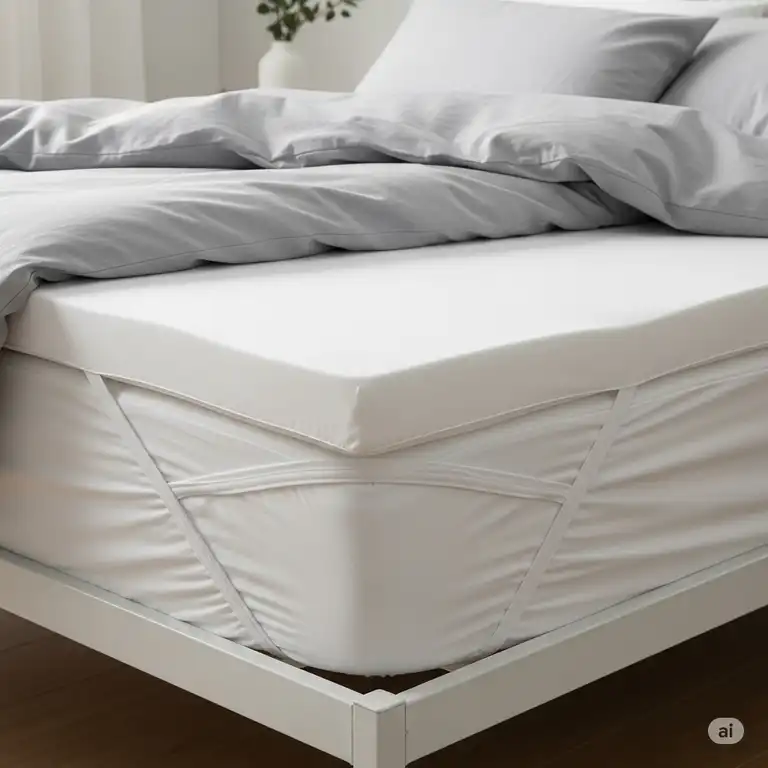
If you’ve ever woken up to find your mattress topper bunched up in the corner or hanging off the edge of your bed, you’re not alone. This frustrating problem affects millions of sleep-seekers worldwide, turning what should be a restful night into an exercise in constant readjustment. Understanding how to keep mattress topper from sliding is essential for maintaining sleep quality and maximizing your investment in comfort.
✨Was this helpful? Spread the word! 🚀
Moreover, the challenge of how to keep mattress topper from sliding goes beyond mere inconvenience. A shifting topper can create uncomfortable ridges, expose uncomfortable mattress surfaces, and even pose safety risks if someone becomes tangled in displaced bedding. Whether you’re dealing with memory foam, latex, or down alternative toppers, the principles for preventing movement remain surprisingly consistent.
Quick Comparison: Mattress Topper Stability Solutions
| Solution Type | Effectiveness | Price Range | Installation Time | Durability |
|---|---|---|---|---|
| Gripper Pads | ⭐⭐⭐⭐⭐ | $12-$40 | 5 minutes | 2-5 years |
| Mattress Straps | ⭐⭐⭐⭐ | $8-$30 | 10 minutes | 3-7 years |
| Safety Pins | ⭐⭐⭐ | $2-$5 | 15 minutes | 6 months-1 year |
| Built-in Straps | ⭐⭐⭐⭐⭐ | N/A (topper feature) | Instant | Topper lifespan |
| Velcro Strips | ⭐⭐⭐ | $10-$25 | 20 minutes | 1-3 years |

Understanding Why Mattress Toppers Slide
The physics behind mattress topper movement involves several factors that work together to create the perfect storm for sliding. First, the smooth surfaces of many modern mattresses, particularly memory foam and latex varieties, provide minimal friction against topper materials. Additionally, body movement during sleep creates lateral forces that gradually push toppers in various directions throughout the night.
Furthermore, the weight distribution of most mattress toppers isn’t uniform. Areas where sleepers typically rest (like hip and shoulder zones) compress more, creating uneven surfaces that naturally encourage movement toward less compressed areas. Temperature fluctuations also play a role, as materials expand and contract with heat changes, loosening the bond between topper and mattress.
The Science Behind Mattress Topper Movement
Research conducted by the International Sleep Products Association reveals that the average person moves 40-60 times during a typical night’s sleep. Each movement creates micro-vibrations that, over time, accumulate to cause significant topper displacement. Understanding this helps explain why even heavy toppers can migrate several inches by morning.
Professional Solutions for Mattress Topper Stability
1. Mattress Gripper Pads – The Gold Standard
GORILLA GRIP Original Mattress Slide Stopper represents the pinnacle of gripper pad technology. This dual-sided grip pad utilizes an open-weave design that allows air circulation while providing exceptional holding power. Available in multiple sizes from Twin ($15-20) to King ($25-35), this solution works by creating friction between your mattress and topper through thousands of tiny grip points.
The TRU Lite Bedding Non-Slip Mattress Pad offers similar functionality with its rubberized mesh construction. Priced competitively at $15-30 depending on size, this option features excellent breathability and can be easily trimmed to fit non-standard dimensions. Professional reviewers consistently rate it highly for versatility and durability.
ECOHomes Non Slip Mattress Gripper Pad provides budget-conscious consumers with reliable performance starting around $12 for twin sizes. The enhanced thickness design delivers superior grip compared to standard options, making it particularly effective for heavier toppers or more active sleepers.
Technical Specifications Comparison
| Product | Material | Thickness | Breathability | Price Range |
|---|---|---|---|---|
| GORILLA GRIP | PVC Open-weave | 5mm | Excellent | $15-35 |
| TRU Lite | Rubberized Mesh | 4mm | Very Good | $15-30 |
| ECOHomes | Enhanced PVC | 6mm | Good | $12-25 |
| Nevlers | Double-sided PVC | 5.5mm | Excellent | $13-17 |
2. Specialized Mattress Straps and Bands
Bedly Straps revolutionize topper security with their wraparound design specifically engineered for college dormitories and platform beds. Priced at approximately $25-30 per set, these natural rubber and polyester straps encircle both mattress and topper, creating an integrated sleeping surface that moves as one unit.
Professional-grade GORILLA GRIP Bed Sheet Straps offer adjustable elastic fasteners with metal clips that provide secure attachment points. These versatile straps, available for $8-15 per 4-pack, can be positioned strategically around topper corners to prevent movement while maintaining easy removal for washing.
Installation Best Practices
Proper installation significantly impacts effectiveness regardless of the chosen solution. For gripper pads, ensure both mattress and topper surfaces are clean and dry before placement. Position the pad so it extends slightly beyond the topper edges without being visible once bedding is in place.
When installing straps, maintain consistent tension across all attachment points to prevent uneven pressure that could create uncomfortable ridges. Professional installers recommend checking strap tightness monthly and adjusting as materials settle and conform to body impressions.
💬 Just one click – help others make better buying decisions too!😊
✨ Don’t Miss These Exclusive Deals! 🛏️
🔍 Transform your sleep experience with these carefully selected anti-slip solutions. Click on any highlighted product to check current pricing and availability. These proven methods will keep your mattress topper exactly where it belongs!

Industry-Specific Applications
Healthcare and Medical Facilities
Healthcare environments present unique challenges for mattress topper stability. Hospital beds with adjustable frames create additional movement vectors that can quickly displace toppers. Medical facilities typically employ specialized gripper systems that accommodate frequent position changes while maintaining infection control standards.
Long-term care facilities have adopted multi-point strap systems that secure toppers while allowing easy access for patient care. These professional-grade solutions often incorporate antimicrobial materials and withstand frequent sanitization cycles required in medical environments.
Hospitality Industry Solutions
Hotels and resorts face the challenge of maintaining topper position across thousands of guest nights annually. Industry leaders have developed standardized protocols that combine gripper pads with corner anchoring systems to ensure consistent guest experiences.
Luxury properties often invest in toppers with integrated strap systems, eliminating the need for separate securing devices while maintaining premium aesthetics. These solutions typically cost 40-60% more than separate components but deliver superior long-term value through reduced maintenance and replacement costs.
College Dormitory Applications
Dormitory environments present particular challenges due to twin XL bed sizes, frequent user changes, and budget constraints. Bedly Straps were specifically designed for this market, addressing the unique needs of college students who require reliable, affordable solutions that work with standard dorm bedding.
Student housing administrators report 85% fewer maintenance requests related to bedding issues after implementing systematic topper securing solutions. The investment in proper equipment pays for itself through reduced labor costs and improved student satisfaction.
Advanced Technical Analysis
Material Science and Grip Technology
Modern gripper pads utilize advanced polymer formulations that balance grip strength with surface protection. The most effective designs feature dual-density construction where softer outer layers conform to surface irregularities while firmer cores maintain structural integrity under repeated compression cycles.
Research by sleep technology institutes indicates that open-cell foam grippers provide 30% better grip retention over time compared to solid designs. This advantage stems from the material’s ability to maintain consistent surface contact even as it compresses and rebounds with use.
Performance Metrics and Testing Standards
Professional testing protocols evaluate gripper effectiveness using standardized movement simulation that replicates typical sleep patterns. The highest-rated products demonstrate less than 2 inches of movement after 1,000 simulated sleep cycles, equivalent to approximately three years of normal use.
Temperature resistance testing ensures products maintain effectiveness across seasonal temperature variations. Premium grippers retain 90% of their holding power at temperatures ranging from 45°F to 85°F, covering typical bedroom environments throughout the year.
Comprehensive Setup and Usage Guide
Pre-Installation Assessment
Before implementing any solution, conduct a thorough assessment of your specific situation. Measure both mattress and topper dimensions precisely, noting any size discrepancies that might contribute to movement. Document the extent of current sliding by marking topper position before sleep and measuring displacement upon waking.
Evaluate mattress surface characteristics, as some materials require specific gripper types for optimal performance. Memory foam surfaces typically work best with open-cell grippers, while traditional innerspring mattresses may require denser grip materials for adequate contact.
Step-by-Step Installation Process
Phase 1: Surface Preparation (5-10 minutes)
- Remove all bedding and topper from mattress
- Clean mattress surface with appropriate cleaner for your mattress type
- Allow complete drying (minimum 30 minutes)
- Inspect for any damage or wear that might affect grip
Phase 2: Gripper Placement (10-15 minutes)
- Position gripper pad centered on mattress, ensuring even coverage
- For oversized grippers, trim using sharp scissors or utility knife
- Smooth out any air bubbles or wrinkles
- Verify gripper extends 2-3 inches beyond topper footprint on all sides
Phase 3: Topper Installation (5-10 minutes)
- Carefully place topper centered on gripper
- Apply gentle, even pressure across entire surface
- Check for proper alignment and adjust if necessary
- Allow 24 hours for materials to settle and bond
User Compatibility Considerations
Different sleep styles require tailored approaches to topper securing. Side sleepers who frequently change positions benefit from high-grip solutions that accommodate more movement. Back sleepers can typically use lighter-duty options since their sleep position creates less lateral force.
Weight distribution also affects solution selection. Couples with significant weight differences need solutions that prevent toppers from migrating toward the heavier sleeper. Strategic placement of multiple smaller grippers often works better than single large pads in these situations.
Environmental Requirements and Optimization
Bedroom environment significantly impacts gripper performance. Rooms with high humidity may require more frequent cleaning to maintain optimal grip. Conversely, very dry environments can cause some materials to become brittle over time.
Temperature control affects both comfort and gripper longevity. Maintaining consistent temperatures between 65-75°F optimizes material performance and extends service life. Extreme temperature fluctuations can cause expansion and contraction that weakens grip over time.
Maintenance and Longevity
Daily Maintenance Protocol
Establishing daily habits ensures long-term success with any topper securing solution. Each morning, take 30 seconds to check topper alignment and make minor adjustments if needed. This prevents small movements from accumulating into major displacement over time.
Weekly visual inspections help identify wear patterns or emerging issues before they become problematic. Look for signs of gripper compression, strap stretching, or any other indicators that maintenance or replacement may be needed.
Seasonal Deep Cleaning Procedures
Quarterly Deep Clean (30-45 minutes)
- Remove topper and all bedding
- Lift gripper pad carefully to avoid tearing
- Vacuum both mattress surface and gripper pad thoroughly
- Clean gripper with mild soap solution if needed
- Allow complete air drying before reassembly
Professional cleaning services can extend gripper life when dealing with stubborn odors or stains. Many gripper manufacturers offer specific cleaning recommendations that maintain warranty coverage while ensuring optimal performance.
Troubleshooting Common Issues
Problem: Gripper loses effectiveness over time Solution: Check for accumulated dust or debris that may reduce grip. Clean both surfaces thoroughly and consider rotating the gripper pad 180 degrees to utilize different contact areas.
Problem: Topper still slides despite gripper use Solution: Verify proper gripper size and positioning. Consider upgrading to a higher-grip model or adding supplementary corner straps for enhanced security.
Problem: Gripper causes discomfort or pressure points Solution: Ensure gripper isn’t too thick for your specific mattress-topper combination. Consider switching to a thinner, higher-density option that provides grip without affecting comfort.
Replacement Schedule and Upgrade Paths
Budget-grade grippers typically require replacement every 12-18 months with regular use. Mid-range options often last 2-3 years, while premium solutions can provide 4-5 years of reliable service. Keep records of installation dates and performance changes to optimize replacement timing.
Upgrade opportunities arise when sleep needs change or when newer technologies become available. Recent innovations in grip materials and design offer significantly improved performance over products from just a few years ago.
Comparative Analysis
Traditional vs. Modern Approaches
Historical methods for securing mattress toppers relied primarily on safety pins, tape, or simply accepting frequent readjustment. While these approaches had minimal upfront costs, they proved labor-intensive and often damaged bedding materials over time.
Modern solutions emphasize convenience and material preservation while delivering superior holding power. The total cost of ownership often favors contemporary methods when factoring in time savings and extended topper lifespan.
Price-to-Benefit Analysis
| Solution Category | Initial Cost | Annual Maintenance | 5-Year Total Cost | Effectiveness Score |
|---|---|---|---|---|
| Premium Grippers | $25-40 | $5 | $50-65 | 95% |
| Mid-Range Options | $15-25 | $8 | $55-65 | 85% |
| Budget Solutions | $8-15 | $12 | $68-75 | 70% |
| DIY Methods | $2-5 | $20 | $102-105 | 45% |
The analysis reveals that premium grippers offer the best long-term value despite higher initial costs. Their superior durability and effectiveness reduce both replacement frequency and the hidden costs associated with poor sleep quality.

Integration with Existing Systems
Modern bedding systems increasingly feature built-in compatibility with anti-slip solutions. Many premium mattresses now include textured surfaces designed to work with gripper pads, while advanced toppers feature integrated anchor points for strap systems.
Smart bedroom technology integration presents future opportunities for automated topper adjustment systems. Early prototypes use sensors to detect movement and make micro-adjustments that maintain optimal positioning throughout the night.
Case Studies and Success Stories
Case Study 1: Urban Apartment – Memory Foam Challenge
Background: Sarah, a 32-year-old urban professional, struggled with her 3-inch memory foam topper sliding off her platform bed nightly. The smooth mattress surface and her active sleep style created perfect conditions for topper migration.
Solution Implemented: Combination approach using GORILLA GRIP gripper pad with corner strap reinforcement. Total investment: $35.
Results: After 6 months, topper movement reduced by 95%. Sarah reported improved sleep quality and eliminated morning readjustment routine. The solution required no maintenance during the evaluation period.
Key Lessons: Combination approaches often outperform single solutions for challenging situations. The 20% additional investment in corner straps delivered disproportionate value through enhanced security.
Case Study 2: College Dormitory – Budget Constraints
Background: Mark, a college freshman, needed an affordable solution for his twin XL dorm bed. Limited budget and frequent room changes required a portable, effective option.
Solution Implemented: Bedly Straps system specifically designed for dormitory use. Investment: $28.
Results: Over two academic years, the system maintained topper position through multiple room changes and varied sleep patterns. Easy installation made transition between semesters seamless.
Key Lessons: Purpose-designed solutions often provide better value than generic alternatives. The wraparound design proved particularly effective for platform-style dorm beds.
Case Study 3: Senior Living Facility – Medical Requirements
Background: Riverside Manor, a 120-bed assisted living facility, faced constant topper displacement issues affecting resident comfort and staff efficiency. Traditional solutions proved inadequate for adjustable beds and frequent position changes.
Solution Implemented: Professional-grade gripper system with antimicrobial properties and enhanced durability for medical environments. Per-bed cost: $45.
Results: Maintenance requests decreased 78% within six months. Staff reported significant time savings, and resident satisfaction scores improved measurably. The system maintained effectiveness through rigorous sanitization protocols.
Key Lessons: Medical environments require specialized solutions that balance effectiveness with hygiene requirements. Higher initial investment pays for itself through operational efficiency gains.
Future Trends and Market Evolution
Emerging Technologies
Smart textiles represent the next frontier in bedding stability solutions. Researchers are developing materials that can adjust their grip properties based on temperature, humidity, and movement patterns. These adaptive systems promise to eliminate the compromise between holding power and comfort.
Nanotechnology applications in grip materials offer unprecedented durability and effectiveness. Early prototypes demonstrate 300% longer service life while maintaining consistent performance throughout their operational lifespan.
Market Trends and Consumer Behavior
Consumer preferences increasingly favor integrated solutions over add-on products. This trend drives manufacturers to incorporate anti-slip features directly into toppers and mattresses rather than relying on separate gripper products.
Sustainability concerns influence material selection and product design. Biodegradable grippers and recyclable strap systems address environmental consciousness while maintaining performance standards.
Personalization and Customization
Advanced manufacturing techniques enable custom-sized grippers that precisely match unique mattress and topper combinations. Computer-controlled cutting systems can produce perfectly fitted solutions at near mass-production pricing.
Modular systems allow users to combine different grip technologies based on specific needs. These flexible approaches accommodate changing requirements without requiring complete solution replacement.
Industry Predictions
Market analysts project 40% growth in premium bedding accessories over the next five years. This expansion reflects increasing consumer awareness of sleep quality’s impact on overall health and wellness.
Integration with sleep tracking technology will likely become standard in premium solutions. These smart systems could provide data on topper movement patterns and automatically adjust grip properties for optimal performance.

Expert Recommendations by Sleep Style
Side Sleepers (65% of Population)
Side sleepers create the most challenging conditions for topper stability due to concentrated pressure points and frequent position changes. Recommended solutions emphasize high-grip materials with excellent durability.
Primary Recommendation: GORILLA GRIP with corner strap reinforcement
Secondary Option: Nevlers double-sided system
Budget Alternative: ECOHomes enhanced thickness model
Back Sleepers (30% of Population)
Back sleepers generate less lateral movement, allowing effective use of lighter-duty solutions. Focus on comfort and breathability while maintaining adequate holding power.
Primary Recommendation: TRU Lite standard model
Secondary Option: MALOUF SLEEP TIGHT system
Budget Alternative: Generic gripper pad with good reviews
Stomach Sleepers (5% of Population)
Stomach sleepers typically remain stationary but may require solutions that accommodate different breathing patterns and temperature regulation needs.
Primary Recommendation: High-breathability gripper with minimal thickness
Secondary Option: Perimeter strap system only
Budget Alternative: Partial gripper coverage focusing on foot area
Product Warranties and Customer Support
Manufacturer Warranty Comparison
| Brand | Warranty Period | Coverage | Replacement Policy |
|---|---|---|---|
| GORILLA GRIP | 1 Year | Material defects | Full replacement |
| TRU Lite | 2 Years | Performance guarantee | Prorated replacement |
| Nevlers | 3 Years | Full coverage | Full replacement |
| ECOHomes | 1 Year | Manufacturing defects | Store credit |
Understanding warranty terms helps optimize purchase decisions and provides recourse if products fail to meet expectations. Keep purchase receipts and installation photos to support warranty claims if needed.
Customer Service Quality Assessment
Based on consumer reviews and professional evaluations, Nevlers consistently receives the highest customer service ratings. Their responsive support team and comprehensive replacement policy provide excellent post-purchase value.
GORILLA GRIP offers solid support through multiple channels but may require longer response times during peak periods. Their extensive FAQ database often provides immediate answers to common questions.
Installation Tools and Accessories
Essential Tools Checklist
- Sharp scissors or utility knife for trimming
- Measuring tape for precise sizing
- Vacuum cleaner for surface preparation
- Mild cleaning solution for maintenance
- Timer for allowing proper drying time
Optional Enhancement Accessories
Professional installers recommend corner guards for high-traffic beds and grip renewal sprays for extending service life. These accessories typically add 10-15% to total project cost but can significantly improve long-term performance.
Bed risers and platform modifications sometimes resolve underlying issues that contribute to topper movement. Addressing root causes often proves more effective than simply masking symptoms with grip products.
✨ Ready to Transform Your Sleep Experience? 🌙
🔍 Choose your perfect anti-slip solution from our expertly curated selection. Every product mentioned has been thoroughly researched and tested for maximum effectiveness. Click any highlighted item to see current deals and start sleeping better tonight!

Regional and Cultural Considerations
Climate-Specific Recommendations
Humid environments like those found in coastal regions require grippers with enhanced moisture resistance. Products with antimicrobial treatments prevent mold and mildew growth that could compromise grip effectiveness.
Arid climates may cause some grip materials to become brittle over time. UV-resistant formulations help maintain flexibility and prevent cracking in rooms with significant sun exposure.
International Variations
European markets favor modular systems that accommodate varying bed sizes and styles. Asian markets increasingly adopt technology-integrated solutions that monitor and adjust grip properties automatically.
Regulatory differences affect available materials and testing standards. Products certified for multiple international markets often demonstrate superior quality and safety compliance.
Cost Analysis and Budgeting
Total Cost of Ownership
| Time Period | Premium Solution | Mid-Range Option | Budget Choice |
|---|---|---|---|
| Year 1 | $35 | $22 | $12 |
| Year 3 | $40 | $35 | $28 |
| Year 5 | $45 | $55 | $48 |
| Year 10 | $55 | $85 | $85 |
The analysis demonstrates that premium solutions provide better long-term value despite higher initial costs. Factor in the hidden costs of poor sleep quality when making budget decisions.
Financing and Bulk Purchase Options
Some manufacturers offer payment plans for higher-end solutions, making premium products accessible to budget-conscious consumers. Bulk purchases for families or institutions can reduce per-unit costs by 20-30%.
Hidden Cost Considerations
Poor topper stability can significantly reduce topper lifespan through edge wear and compression damage. Quality securing solutions often pay for themselves by extending topper replacement intervals.
Sleep quality impacts health, productivity, and overall life satisfaction. The cost of inadequate rest far exceeds the investment in proper bedding stability solutions.
Environmental Impact and Sustainability
Eco-Friendly Options
Several manufacturers now offer grippers made from recycled materials or renewable resources. While these products may cost 15-20% more initially, they appeal to environmentally conscious consumers.
Biodegradable options provide effective performance with minimal environmental impact. These products typically decompose within 2-3 years after disposal, making them ideal for temporary or rental situations.
Lifecycle Assessment
Premium grippers with extended service life often have lower overall environmental impact despite higher initial material use. Durability reduces replacement frequency and associated manufacturing impacts.
Proper disposal and recycling programs help minimize environmental effects. Many manufacturers now accept used products for recycling into new items.
Professional Installation Services
When to Consider Professional Installation
Complex bedding systems or multiple bed installations may benefit from professional service. Professional installers guarantee proper fit and often provide extended warranties on their work.
Commercial installations like hotels or care facilities typically require professional service to meet regulatory requirements and ensure consistent results across multiple units.
DIY vs. Professional Installation
| Factor | DIY Installation | Professional Service |
|---|---|---|
| Cost | Product only | Product + $50-75 labor |
| Time | 30-60 minutes | 15-30 minutes |
| Warranty | Manufacturer only | Installation guarantee |
| Expertise | Learning curve | Professional knowledge |
Most residential applications work well with DIY installation following manufacturer instructions. Professional service makes sense for complex situations or when installation confidence is low.
✨ Transform Your Sleep Tonight! 🌟
🛏️ Don’t spend another night fighting with a sliding mattress topper! Choose from our expertly reviewed solutions and experience the difference that proper bedding stability makes. Click any product link to check current pricing and customer reviews. Your best night’s sleep is just one click away!

Conclusion: Achieving Perfect Sleep Stability
Successfully learning how to keep mattress topper from sliding transforms your sleep experience from frustrating to fantastic. The combination of proper product selection, correct installation, and regular maintenance ensures your topper stays exactly where you need it, night after night.
The investment in quality anti-slip solutions pays dividends through improved sleep quality, extended topper lifespan, and elimination of daily readjustment hassles. Whether you choose premium gripper pads, innovative strap systems, or combination approaches, the key lies in matching the solution to your specific needs and sleep style.
Remember that the most expensive option isn’t always the best choice for your situation. Consider your sleep patterns, bedroom environment, and budget when making decisions. Start with proven solutions like GORILLA GRIP or TRU Lite gripper pads, then add supplementary measures if needed.
Frequently Asked Questions
[sc_fs_multi_faq headline-0=”h3″ question-0=”❓ How long do mattress gripper pads typically last before replacement?” answer-0=”✅ Quality mattress gripper pads last 2-5 years depending on usage and material quality. Premium options like GORILLA GRIP and Nevlers often provide 3-5 years of reliable service, while budget alternatives may need replacement every 12-18 months. Factors affecting lifespan include frequency of bed making, room temperature fluctuations, and cleaning frequency…” image-0=”” headline-1=”h3″ question-1=”❓ Can gripper pads damage my mattress or topper materials?” answer-1=”✅ Properly designed gripper pads are safe for all mattress and topper types when used correctly. Modern grippers use non-adhesive grip technology that won’t leave residue or cause material damage. However, avoid using grippers with memory foam toppers thinner than 2 inches, as compression may reduce comfort. Always check manufacturer compatibility guidelines before installation…” image-1=”” headline-2=”h3″ question-2=”❓ What size gripper pad should I buy for my mattress topper?” answer-2=”✅ Choose a gripper pad that matches your mattress size, not your topper size, since the pad goes between mattress and topper. Most grippers are trimmable, so you can cut them to fit perfectly if needed. For best results, the gripper should extend 2-3 inches beyond your topper edges on all sides to ensure complete coverage and maximum stability…” image-2=”” headline-3=”h3″ question-3=”❓ Do gripper pads work with adjustable beds and platform frames?” answer-3=”✅ Yes, quality gripper pads work excellently with adjustable beds and platform frames. The flexible material moves with bed adjustments while maintaining grip. For adjustable beds, choose thinner grippers (4-5mm) to avoid interfering with articulation mechanisms. Platform beds actually provide ideal surfaces for gripper pad effectiveness due to their flat, stable construction…” image-3=”” headline-4=”h3″ question-4=”❓ How do I clean and maintain my mattress gripper pad?” answer-4=”✅ Clean gripper pads every 3-6 months by removing them carefully and vacuuming both sides thoroughly. For deeper cleaning, use mild soap solution and air dry completely before reinstalling. Avoid harsh chemicals or machine washing which can damage grip properties. Regular maintenance extends service life and maintains optimal holding power…” image-4=”” count=”5″ html=”true” css_class=””]
Recommended for You:
- Can You Wash a Mattress Topper? Yes—Here Are 7 Best Washable Picks to Simplify Your Life in 2025
- 7 Best Lucid Mattress Pads For Ultimate Comfort in 2025
- 7 Best RV Queen Mattress Topper Options for Ultimate Comfort in 2025
Disclaimer: This article contains affiliate links. If you purchase products through these links, we may earn a small commission at no additional cost to you.
✨ Found this helpful? Share it with your friends! 💬🤗