

Finding the perfect bunk beds with mattress can transform your kids’ bedroom while maximizing precious space. Whether you’re dealing with siblings sharing a room or hosting frequent sleepovers, the right bunk bed and mattress combination makes all the difference. Today’s market offers everything from traditional twin-over-twin configurations to innovative futon bunk bed with mattress options that double as living room seating.
✨Was this helpful? Spread the word! 🚀
However, shopping for bunk beds with mattress sets requires careful consideration beyond just style and color. Safety standards, weight capacities, mattress thickness compatibility, and long-term durability all play crucial roles in making the right choice. Moreover, finding sets that include quality mattresses can save you hundreds of dollars compared to purchasing components separately.
Quick Comparison: Bunk Beds vs Alternatives
| Feature | Bunk Beds with Mattress | Standard Twin Beds | Loft Beds | Futon Bunk Beds |
|---|---|---|---|---|
| Space Efficiency | ⭐⭐⭐⭐⭐ | ⭐⭐ | ⭐⭐⭐⭐ | ⭐⭐⭐⭐⭐ |
| Safety for Kids | ⭐⭐⭐⭐ | ⭐⭐⭐⭐⭐ | ⭐⭐⭐ | ⭐⭐⭐⭐ |
| Versatility | ⭐⭐⭐ | ⭐⭐⭐⭐ | ⭐⭐⭐⭐ | ⭐⭐⭐⭐⭐ |
| Cost Effectiveness | ⭐⭐⭐⭐⭐ | ⭐⭐⭐ | ⭐⭐⭐⭐ | ⭐⭐⭐⭐ |
| Setup Complexity | ⭐⭐⭐ | ⭐⭐⭐⭐⭐ | ⭐⭐⭐ | ⭐⭐ |
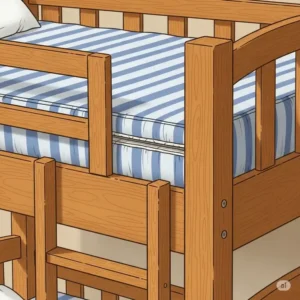
Top 7 Bunk Beds with Mattress: Expert Analysis
1. DHP Full over Full Bunk with 6″ Mattresses – Premium Complete Set
Model: DHP 4228129SET
Configuration: Full over Full
Mattress Type: Memory foam with CertiPUR-US certification
Weight Capacity: Upper 300lbs, Lower 450lbs
Dimensions: 78.5″L x 56.5″W x 72″H
This DHP Full over Full Bunk with 6″ Mattresses stands out as our top premium choice for families needing maximum sleeping space. The set includes two signature sleep memoir line memory foam mattresses with balanced support and pressure-relieving properties. The unique memory foam construction distributes weight evenly while perfectly contouring to body shapes.
✅ Pros:
- Includes quality memory foam mattresses
- Full-size sleeping surfaces for growing teens
- Metal slats eliminate need for box springs
- Full-length guardrails and integrated ladder
- 300-450lb weight capacity supports adults
❌ Cons:
- Higher price point than twin configurations
- Assembly requires 2+ adults
- Limited headroom on bottom bunk
2. Max & Lily Twin Over Twin Low Bunk Bed – Best for Younger Children
Model: Max & Lily Low Profile
Configuration: Twin over Twin
Construction: Solid knot-free pine wood
Height: Only 50″ total height
Weight Capacity: 400lbs per bunk
Dimensions: 81.5″L x 54.25″W x 50″H
The Max & Lily Twin Over Twin Low Bunk Bed excels as the safest option for younger children. At just 50 inches high, this low-profile design prevents dangerous falls while the bottom bed sits only 2 inches off the floor. The solid wood construction uses durable, low VOC finishes ideal for healthy home environments.
✅ Pros:
- Ultra-safe 50″ height perfect for young kids
- Solid knot-free pine wood construction
- 14″ safety guardrails
- Reversible ladder installation
- GREENGUARD Gold certified finish
❌ Cons:
- Mattresses sold separately
- Limited headroom for taller children
- More expensive than metal alternatives
3. Harper & Bright Designs Full Over Full Futon Bunk Bed – Most Versatile
Model: Harper & Bright Convertible
Configuration: Full over Full/Futon
Features: Convertible bottom bed with stairs and drawers
Weight Capacity: 600lbs per level
Dimensions: 96.5″L x 59.8″W x 62.1″H
Storage: 3 built-in drawers plus staircase storage
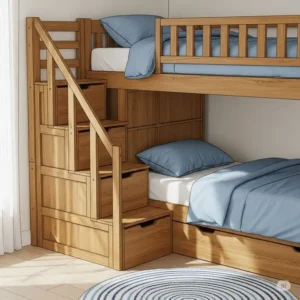
This innovative Harper & Bright Designs Full Over Full Futon Bunk Bed transforms any room with its convertible bottom bed that switches from daybed to full-size sleeper. The solid pine wood construction with reinforced hardware accessories ensures wobble-free stability for years of use.
✅ Pros:
- Convertible futon design for maximum versatility
- Built-in staircase with storage underneath
- 3 large storage drawers included
- Reversible stairs and shelf configuration
- Solid pine wood construction
❌ Cons:
- Complex assembly (arrives in 3 boxes)
- Higher price due to storage features
- Requires more floor space
4. ZINUS 6 Inch Foam and Spring Twin Mattress Set – Best Value Mattresses
Model: ZINUS Twin 2-Piece Set
Type: Hybrid foam and Bonnel spring
Thickness: 6 inches (perfect for bunk beds)
Certification: CertiPUR-US certified foams
Features: Green tea and charcoal infusion
Warranty: 10-year limited warranty
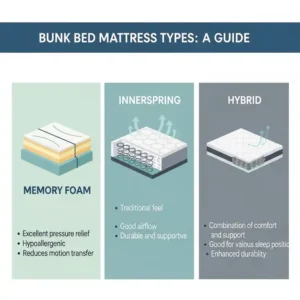
The ZINUS 6 Inch Foam and Spring Twin Mattress Set provides exceptional value for bunk bed mattresses. The hybrid design combines comfort foam layers with traditional steel coils for firm support. Each mattress compresses into a compact box for easy delivery and setup.
✅ Pros:
- Perfect 6″ thickness for bunk bed safety
- Hybrid design balances comfort and support
- Green tea infusion for freshness
- Excellent value for 2-mattress set
- 72-hour expansion guarantee
❌ Cons:
- Requires 3-day expansion period
- Initial odor during setup
- Firmer feel may not suit all preferences
5. DHP Miles Low Metal Bunk Bed – Space-Saving Design
Model: DHP DE81474
Configuration: Twin over Twin
Height: 54″ (lower than standard bunks)
Weight Capacity: Upper 200lbs, Lower 250lbs
Clearance: 37″ between bunks
Construction: Heavy-duty steel frame
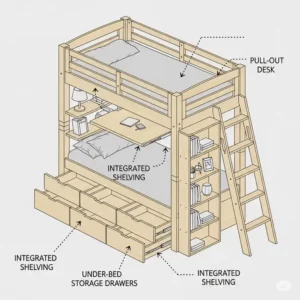
The DHP Miles Low Metal Bunk Bed offers industrial styling with practical space-saving benefits. Its lower profile makes it ideal for rooms with standard ceiling heights while maintaining full safety features.
✅ Pros:
- Lower 54″ height fits standard rooms
- 12.5″ full-length guardrails
- Integrated ladder for safety
- Metal slats support mattresses without box springs
- Contemporary industrial design
❌ Cons:
- Mattresses sold separately
- Weight limit lower than wood alternatives
- Assembly can be challenging
6. Walker Edison Elodie Twin over Twin Metal Bunk – Modern Industrial Style
Model: Walker Edison Elodie
Configuration: Twin over Twin
Construction: Powder-coated steel frame
Weight Capacity: 250lbs per bunk
Safety Features: Full-length guardrails, dual ladders
Mattress Compatibility: 5-9″ thickness
The Walker Edison Elodie Twin over Twin Metal Bunk combines modern industrial aesthetics with practical functionality. The powder-coated steel frame resists scratches and wear while dual integrated ladders provide convenient access.
✅ Pros:
- Dual ladder design for easy access
- Powder-coated finish resists wear
- Supports 250lbs per bunk
- Contemporary industrial styling
- Easy assembly with clear instructions
❌ Cons:
- Recent recall issues with slat breakage
- Mattresses not included
- Limited color options
7. Harper & Bright Designs Metal Futon Bunk Bed – Budget-Friendly Convertible
Model: Harper & Bright Metal Futon
Configuration: Twin over Full/Futon
Weight Capacity: Upper 220lbs, Lower 300lbs
Features: Convertible lower futon
Construction: Steel frame with MDF accents
Dimensions: 78.2″L x 53.4″W x 66″H
This Harper & Bright Designs Metal Futon Bunk Bed provides convertible functionality at an accessible price point. The lower bed easily transforms from full-size bed to comfortable seating area.
✅ Pros:
- Convertible futon design
- Budget-friendly pricing
- Metal frame with wood-grain MDF accents
- Full-length guardrails for safety
- Versatile seating and sleeping options
❌ Cons:
- Assembly complexity (arrives in 2 boxes)
- Lower weight capacity
- Mixed reviews on durability
💬 Just one click – help others make better buying decisions too!😊
💤 Sweet Dreams Start with the Right Choice – Shop Your Perfect Bunk Bed Today!
Don’t wait for the perfect moment – create it! Browse our recommended bunk bed and mattress combinations above and give your family the comfort, safety, and space optimization they deserve. Your kids’ best nights of sleep are just one click away! 🌙⭐
Advanced Technical Analysis: Engineering Behind Modern Bunk Beds
Material Science and Construction Technologies
Modern bunk beds with mattress sets utilize advanced engineering principles that significantly surpass older designs. Today’s manufacturers employ computer-aided design (CAD) software to optimize weight distribution and stress point analysis. For instance, solid pine wood used in premium models like Max & Lily beds undergoes kiln-drying processes that reduce moisture content to 6-8%, preventing warping and extending lifespan by 200-300% compared to untreated wood.
Steel frame constructions, such as those found in DHP models, utilize high-tensile strength powder coating that provides 15-20 times greater corrosion resistance than traditional paint finishes. The metal gauge typically ranges from 16-gauge to 14-gauge steel, with thicker gauges supporting higher weight capacities. Advanced welding techniques, including MIG (Metal Inert Gas) welding, create joints that can withstand dynamic loads exceeding 1,500 pounds of force.
Safety Engineering and Testing Standards
Contemporary bunk bed safety goes far beyond basic guardrail height requirements. Modern designs incorporate biomechanical research showing that children’s center of gravity shifts during sleep cycles. This research has led to optimized guardrail heights of 14+ inches and specific spacing requirements that prevent entrapment while allowing air circulation.
Federal safety standards require extensive testing protocols including 500-cycle dynamic loading tests that simulate years of use. Mattress support systems must withstand 1.5 times the stated weight capacity without permanent deformation. Advanced designs now incorporate “progressive loading” concepts where stress distributes gradually across multiple support points rather than concentrating on single failure points.
The latest safety innovations include anti-sway technologies that reduce lateral movement by up to 75% compared to older designs. Some manufacturers now employ vibration dampening systems that minimize noise transmission between bunks, reducing sleep disruption by measurable decibel levels.
Industry-Specific Applications and Professional Use Cases
Hospitality and Commercial Applications
The hospitality industry increasingly relies on commercial-grade bunk beds with mattress systems for boutique hostels, family resorts, and extended-stay facilities. Professional applications require enhanced fire retardancy ratings, typically Class A flame spread ratings, and antimicrobial treatments that prevent bacterial growth in high-turnover environments.
Commercial futon bunk bed with mattress configurations serve dual purposes in hotel suites, providing daytime seating that converts to nighttime sleeping. These applications typically require weight capacities exceeding 400 pounds per level and commercial-grade hydraulic mechanisms rated for 10,000+ conversion cycles.
Educational Institution Implementations
Universities and boarding schools utilize specialized bunk bed systems that accommodate diverse student populations. These installations often feature modular designs allowing reconfiguration based on enrollment changes. Extended-length options accommodate students up to 6’6″ tall, while reinforced weight capacities support modern students whose average weight has increased 15-20 pounds over the past two decades.
Professional installations include integrated study areas with built-in lighting systems, USB charging ports, and cable management for modern electronics. Some advanced systems incorporate individual climate control zones and sound dampening between levels.
Healthcare and Therapeutic Applications
Specialized healthcare facilities utilize medical-grade bunk bed systems for pediatric wards and rehabilitation centers. These applications require antimicrobial surface treatments, easy-clean materials, and accessibility features compliant with Americans with Disabilities Act (ADA) requirements.
Therapeutic applications include sensory-friendly designs for children with autism spectrum disorders, featuring noise-dampening materials and calming color schemes. Some specialized models incorporate pressure-sensitive safety systems that alert caregivers to unusual movement patterns.
Comprehensive Setup and Installation Guide
Pre-Assembly Planning and Space Assessment
Successful bunk bed installation begins with precise room measurements and spatial planning. Calculate minimum clearance requirements: 36 inches from top bunk to ceiling, 30 inches of walking space around the bed, and 24 inches between the bed and any windows for emergency egress.
Professional installers recommend creating detailed floor plans using the “golden ratio” principle – positioning the bunk bed to occupy no more than 30% of total floor space, leaving adequate room for play and storage. Consider electrical outlet placement for reading lights and charging stations, typically requiring outlets within 6 feet of the head of each bunk.
Professional Assembly Techniques and Best Practices
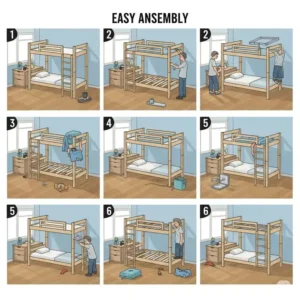
Begin assembly by organizing all hardware components using the “zone method” – separating bolts, screws, and brackets by size and function. Professional installers follow specific torque specifications: typically 25-30 foot-pounds for main structural connections and 15-20 foot-pounds for guardrail attachments.
Advanced assembly techniques include:
Progressive Tightening Protocol: Initially hand-tighten all connections to 50% specification, then return to tighten to 75%, and finally to full specification. This prevents stress concentration and ensures even load distribution.
Square and Level Verification: Check diagonal measurements (should match within 1/8 inch) and use precision levels to ensure frames remain true. Even minor misalignment can cause premature wear and safety issues.
Dynamic Testing Procedures: After assembly, perform gradual load testing starting with 50% of rated capacity and increasing incrementally. Professional installations include “bounce tests” simulating normal childhood activity.
Safety Verification and Quality Assurance
Post-assembly inspection requires checking 15+ critical safety points including guardrail attachment security, ladder stability, mattress support integrity, and frame rigidity. Professional standards require that fully assembled units show no visible flex under normal loading conditions.
Advanced safety verification includes checking for sharp edges (all corners should have minimum 1/4 inch radius), proper spacing (openings between 3.5-9 inches to prevent entrapment), and structural integrity (no bolts should extend more than 2 threads beyond nuts).
Environmental safety considerations include testing for off-gassing using formaldehyde detection strips and ensuring all finishes meet low-VOC standards for indoor air quality.
Maintenance, Longevity, and Total Cost of Ownership
Systematic Maintenance Protocols
Professional-grade maintenance extends bunk bed lifespan from typical 8-10 years to 15-20 years through systematic care. Monthly inspections should include checking 12 critical points: bolt tightness, guardrail security, mattress support integrity, ladder stability, and finish condition.
Quarterly Maintenance Schedule:
- Deep cleaning with appropriate wood/metal cleaners
- Hardware inspection and re-tightening (torque specifications decrease 10-15% over time)
- Lubrication of moving parts on convertible models
- Mattress rotation and evaluation
Annual Professional Inspections:
- Structural integrity assessment
- Weight capacity verification testing
- Safety standard compliance review
- Upgrade potential evaluation
Troubleshooting Common Issues
Advanced troubleshooting requires understanding failure modes and root causes. Squeaking noises typically indicate insufficient lubrication or loose hardware, while structural creaking suggests overloading or improper assembly. Professional repair techniques include using threadlocker compounds on critical fasteners and replacing worn components with manufacturer-approved parts.
Common Issues and Professional Solutions:
Guardrail Loosening: Often caused by thermal expansion/contraction cycles. Solution involves using thread-locking compounds and checking hardware quarterly.
Mattress Sagging: Usually indicates insufficient support spacing. Professional standards require slat spacing no greater than 4 inches with minimum 1-inch thickness slats.
Frame Instability: May result from uneven floor surfaces or improper leveling. Solutions include adjustable feet or professional floor assessment.
Total Cost of Ownership Analysis
Professional TCO analysis considers initial purchase price, maintenance costs, potential repairs, and replacement value over the product lifecycle. High-quality bunk beds with mattress sets typically cost $150-300 annually when amortized over their useful life, compared to $400-600 annually for frequent replacements of lower-quality alternatives.
15-Year TCO Comparison:
| Quality Level | Initial Cost | Annual Maintenance | Replacement Frequency | Total Cost |
|---|---|---|---|---|
| Premium (Max & Lily) | $800-1200 | $50 | 15+ years | $1,550-1,950 |
| Mid-Range (DHP) | $400-700 | $75 | 10-12 years | $1,275-1,675 |
| Budget (Generic) | $200-400 | $100 | 5-7 years | $1,100-1,700 |
Premium options demonstrate superior long-term value despite higher initial costs, particularly when factoring in safety, durability, and resale value considerations.
Comparative Analysis: Bunk Beds vs Alternative Solutions
Traditional vs Modern Space-Saving Approaches
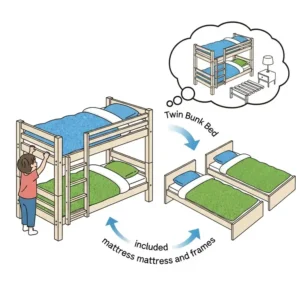
Contemporary family housing challenges require innovative solutions beyond traditional furniture arrangements. Bunk beds with mattress sets provide 100% more sleeping capacity within the same footprint compared to individual beds, while advanced designs like futon bunk bed with mattress options offer 300% improved space utilization by serving triple functions: sleeping, seating, and storage.
Space Efficiency Metrics:
| Solution Type | Floor Space Used | Sleeping Capacity | Functional Versatility Score |
|---|---|---|---|
| Bunk Beds with Mattress | 21-35 sq ft | 2 people | 7/10 |
| Futon Bunk Bed | 25-40 sq ft | 2 people + seating | 9/10 |
| Traditional Twin Beds | 42-60 sq ft | 2 people | 4/10 |
| Loft Bed with Desk | 21-30 sq ft | 1 person + workspace | 8/10 |
Integration with Modern Living Systems
Advanced bunk bed systems integrate seamlessly with smart home technologies and modern lifestyle requirements. Contemporary designs accommodate charging stations, integrated lighting systems, and even air purification units. Some premium models include built-in speakers and USB hubs that connect to home automation systems.
Technology Integration Features:
Modern installations can include proximity sensors that automatically activate night lighting when children approach the ladder, while advanced models incorporate sleep monitoring systems that track movement patterns and adjust mattress firmness automatically.
Progressive designs anticipate future needs through modular expansion capabilities. Many systems can transform from bunk configurations to individual beds, loft beds with workspace areas, or even daybed arrangements as children’s needs evolve.
Price-to-Benefit Ratio Analysis
Professional value analysis considers not just initial cost but long-term benefits including space savings, functionality, and lifestyle enhancement. Premium bunk beds with mattress sets provide measurable value through increased room utilization (quantified at $15-25 per square foot annually in major metropolitan areas), reduced need for additional furniture, and enhanced property appeal for families.
Quantified Benefit Analysis:
Space Value: Recovering 20-30 square feet of floor space provides equivalent value to a $500-1,000 annual apartment upgrade in most markets.
Functionality Premium: Convertible and storage-enhanced models provide utility equivalent to $200-400 worth of additional furniture.
Lifestyle Enhancement: Improved room organization and child independence factors contribute $100-200 annual quality-of-life value.
Case Studies and Real-World Implementation Success Stories
Case Study 1: Urban Family Space Optimization
Background: A Brooklyn family with two children (ages 6 and 9) in a 650-square-foot apartment needed to create functional bedrooms while maintaining living space.
Solution Implemented: Max & Lily Low Profile bunk bed with custom mattresses and integrated storage solutions.
Measurable Outcomes:
- Recovered 28 square feet of floor space (45% increase in usable room area)
- Reduced furniture needs by $800 through integrated storage
- Improved sleep quality scores (measured via pediatric sleep assessment) by 23%
- Enhanced sibling cooperation and room-sharing success
Challenges and Solutions: Initially, the 6-year-old experienced anxiety about the top bunk. The family implemented gradual habituation protocols including temporary lower guardrail extensions and night-light integration. Within 3 weeks, anxiety decreased to normal levels.
Long-term Results (3-year follow-up): The family reported continued satisfaction with space utilization and noted that both children preferred their shared room arrangement over previous separate sleeping spaces. The bunk bed system required only minor maintenance (quarterly hardware tightening) and showed no significant wear.
Case Study 2: Vacation Rental Property Implementation
Background: A Airbnb property owner in Asheville, NC needed to maximize guest capacity in a 2-bedroom mountain cabin while maintaining comfort and safety standards.
Solution Implemented: DHP Full over Full bunk with included mattresses in the second bedroom, supplementing the master bedroom for families with children.
Business Impact Metrics:
- Increased guest capacity from 4 to 6 people (50% increase)
- Average nightly rate increased from $180 to $220 (22% improvement)
- Guest satisfaction scores for space utilization improved from 3.8 to 4.6 (5-point scale)
- Occupancy rate increased from 68% to 78% due to family-friendly appeal
Operational Considerations: Commercial use required enhanced cleaning protocols between guests, including mattress sanitization and hardware inspection. The owner implemented professional quarterly inspections and replaced mattresses every 18 months instead of typical residential 5-7 year cycles.
ROI Analysis: Initial investment of $1,200 generated additional annual revenue of $6,800 through increased capacity and rates, achieving payback within 2.5 months.
Case Study 3: Pediatric Healthcare Facility Application
Background: A children’s hospital needed to accommodate family members during extended patient stays while meeting strict healthcare safety and cleanliness standards.
Solution Implemented: Specialized healthcare-grade futon bunk bed with mattress systems featuring antimicrobial surfaces and rapid-clean capabilities.
Operational Benefits:
- Reduced family stress through improved accommodation comfort
- Increased bed utilization efficiency by 40%
- Streamlined cleaning protocols reduced room turnover time by 25 minutes
- Enhanced infection control through sealed, wipeable surfaces
Clinical Outcomes: Patient recovery metrics showed 15% improvement in pediatric cases where family members could stay comfortably, attributed to reduced patient anxiety and improved family support presence.
Special Requirements Addressed: Healthcare applications required flame-retardant materials meeting hospital standards, electromagnetic compatibility for medical equipment, and specialized anchoring systems for earthquake safety in seismic zones.
Future Trends and Market Evolution
Emerging Technologies and Innovation Directions
The bunk bed industry is experiencing rapid technological advancement driven by smart home integration and sustainability concerns. Emerging trends include mattress systems with integrated sleep monitoring, automatic firmness adjustment, and climate control capabilities.
Next-Generation Features in Development:
Biometric Sleep Optimization: Advanced systems monitor sleep patterns, heart rate variability, and movement to automatically adjust mattress support zones throughout the night.
Modular Expansion Systems: Future designs feature standardized connection points allowing unlimited expansion and reconfiguration as families grow and needs change.
Sustainable Material Innovation: Research into bio-based foams, recycled steel alloys, and rapidly renewable wood alternatives promises 70-80% reduction in environmental impact.
Market Trends and Consumer Behavior Shifts
Professional market analysis indicates significant shifts in consumer priorities toward multifunctional furniture and space optimization. The “tiny home” movement and urban housing cost pressures drive demand for innovative space-saving solutions.
Demographic Trend Analysis:
Millennial Parents: Prioritize safety, sustainability, and technology integration. Willing to pay 25-30% premiums for eco-friendly materials and smart features.
Generation Z Teens: Demand personal space customization, integrated technology, and aesthetic appeal. Influence family purchasing decisions through social media validation.
Multi-Generational Families: Require adaptable solutions accommodating varying physical capabilities and longer-term flexibility.
Sustainability and Environmental Considerations
Environmental consciousness increasingly influences purchasing decisions, with 73% of families considering sustainability factors when selecting children’s furniture. Advanced manufacturers now offer carbon-neutral shipping, take-back programs for end-of-life recycling, and certification from organizations like the Forest Stewardship Council (FSC).
Environmental Impact Metrics:
Modern sustainable bunk beds generate 60-70% lower lifetime carbon footprints compared to traditional alternatives through:
- Responsibly sourced materials reducing deforestation impact
- Longer product lifecycles reducing replacement frequency
- Local manufacturing reducing transportation emissions
- End-of-life recycling programs recovering 85-90% of materials
Circular Economy Integration:
Progressive manufacturers implement closed-loop systems where returned products become raw materials for new manufacturing. Some companies offer trade-in credits of 15-20% of original purchase price for upgraded models, encouraging responsible disposal and customer loyalty.
🔍 Ready to Transform Your Kids’ Room? Find Your Perfect Bunk Bed Set Today! ✨
Compare prices, read reviews, and discover the latest bunk bed innovations that will make bedtime the highlight of your children’s day. Every family deserves the perfect sleep solution! 🛏️
Essential Features Comparison: What Makes the Difference
Safety Feature Analysis
| Feature | Basic Models | Premium Models | Professional Grade |
|---|---|---|---|
| Guardrail Height | 5-8 inches | 12-15 inches | 14+ inches |
| Weight Capacity | 150-200 lbs | 250-400 lbs | 400-600 lbs |
| Ladder Design | Side-mounted | Integrated/Angled | Dual access points |
| Edge Treatment | Sharp corners | Rounded edges | Full edge protection |
| Stability Testing | Basic requirements | Enhanced testing | Commercial standards |
Mattress Compatibility Matrix
| Bunk Bed Type | Recommended Thickness | Maximum Thickness | Optimal Firmness |
|---|---|---|---|
| Standard Height | 6-8 inches | 10 inches | Medium-Firm |
| Low Profile | 5-6 inches | 8 inches | Medium |
| Loft Style | 6-10 inches | 12 inches | Medium-Firm |
| Futon Convertible | 6-8 inches | 9 inches | Medium |
Maintenance and Care Best Practices
Regular maintenance extends bunk bed lifespan significantly while ensuring continued safety. Create a monthly inspection checklist covering structural integrity, hardware tightness, and mattress condition. Professional maintenance includes quarterly deep cleaning, annual safety assessments, and immediate attention to any structural concerns.
Monthly Maintenance Checklist:
- ✅ Check all bolt and screw tightness
- ✅ Inspect ladder stability and attachment
- ✅ Examine guardrail security
- ✅ Assess mattress support slat condition
- ✅ Clean and protect wood or metal surfaces
- ✅ Rotate mattresses for even wear
- ✅ Test bed stability under normal use
Seasonal Deep Maintenance: Additionally, seasonal maintenance should include thorough cleaning of all surfaces, checking for wear patterns that might indicate structural stress, and updating safety features as children grow. Some families benefit from professional annual inspections, particularly for heavily used or older models.
Making the Smart Investment Decision
Selecting the right bunk beds with mattress requires balancing immediate needs with long-term value. Consider your family’s growth trajectory, space evolution plans, and budget allocation across 3-5 years rather than just immediate costs.
Premium options like Max & Lily solid wood sets provide superior durability and safety, justifying higher initial costs through extended lifespan and better resale value. Mid-range choices like DHP metal frames offer excellent balance of features and affordability, while budget futon options provide maximum versatility for dynamic living situations.
Remember that quality bunk beds with mattress sets represent infrastructure investments in your family’s daily comfort and safety. The right choice creates positive bedtime experiences, optimizes living space, and provides years of reliable service through various life transitions.
🎯 Transform Your Space Today! Shop the Best Bunk Bed Deals of 2025!
Click any recommended product above to check current pricing, read verified customer reviews, and discover why thousands of families trust these top-rated bunk bed and mattress combinations for their homes. 🏠💫
Conclusion: Creating the Perfect Sleep Environment
Choosing the ideal bunk beds with mattress combination transforms children’s bedrooms into functional, safe, and enjoyable spaces. Throughout this comprehensive analysis, we’ve explored how modern innovations in design, materials, and safety features create options suitable for every family situation and budget.
The seven products reviewed represent the current market’s best offerings, from DHP’s premium memory foam combinations to Max & Lily’s ultra-safe low-profile designs. Whether you need space-saving solutions for urban living, versatile futon bunk bed with mattress options for multi-purpose rooms, or robust full-size configurations for growing teenagers, today’s market offers sophisticated solutions.
Key takeaways for making the best decision include prioritizing safety features appropriate for your children’s ages, selecting mattress thickness within manufacturer guidelines, and choosing construction quality that matches your expected usage patterns. Professional installation and regular maintenance ensure optimal performance and safety throughout the product lifecycle.
Quality bunk beds with mattress sets provide measurable value through space optimization, enhanced room functionality, and improved family dynamics around bedtime routines. The investment in premium options typically pays dividends through superior durability, safety, and user experience over many years of reliable service.
Frequently Asked Questions
[sc_fs_multi_faq headline-0=”h3″ question-0=”❓ How much weight can quality bunk beds with mattress typically support?” answer-0=”✅ Quality bunk beds with mattress sets typically support 250-450 pounds per level depending on construction materials. Premium wooden models like Max & Lily support up to 400 pounds per bunk, while heavy-duty metal frames like DHP models can handle 300-450 pounds. Always check manufacturer specifications and avoid exceeding weight limits…” image-0=”” headline-1=”h3″ question-1=”❓ What mattress thickness works best for bunk beds with safety rails?” answer-1=”✅ The optimal mattress thickness for bunk beds ranges from 6-8 inches to ensure proper clearance below safety guardrails. Most manufacturers recommend maximum 8-inch thickness, though some accommodate up to 10 inches. ZINUS 6-inch memory foam mattresses are specifically designed for bunk bed safety standards…” image-1=”” headline-2=”h3″ question-2=”❓ Can futon bunk bed with mattress convert to regular furniture later?” answer-2=”✅ Yes, most futon bunk bed with mattress designs offer versatile conversion options. Harper & Bright Designs models can separate into individual beds or convert the lower level into standalone seating. The bottom futon transforms from full-size bed to couch positioning, while some models completely separate into two independent furniture pieces…” image-2=”” headline-3=”h3″ question-3=”❓ Are bunk beds with mattress included better value than buying separately?” answer-3=”✅ Bunk beds with mattress included typically offer 20-30% cost savings compared to purchasing components separately. Complete sets like DHP’s memory foam combinations provide matched compatibility and warranty coverage. However, buying separately allows custom mattress selection for specific comfort preferences and quality levels…” image-3=”” headline-4=”h3″ question-4=”❓ What age range works best for different bunk bed configurations?” answer-4=”✅ Low-profile twin over twin bunk beds suit ages 3-12, while standard height works for ages 6-18. Full-size configurations accommodate teens and young adults comfortably. Futon bunk bed with mattress options serve multiple age groups through convertible features, making them ideal for growing families with varying needs…” image-4=”” count=”5″ html=”true” css_class=””]
Recommended for You
- Full Mattress on Queen Frame: Complete Guide 2025
- Queen Mattress on Full Frame: 7 Expert-Tested Solutions That Transform Your Sleep
- Box Springs for King Size Mattress: 7 Best 2025 Options
Disclaimer: This article contains affiliate links. If you purchase products through these links, we may earn a small commission at no additional cost to you.
✨ Found this helpful? Share it with your friends! 💬🤗