
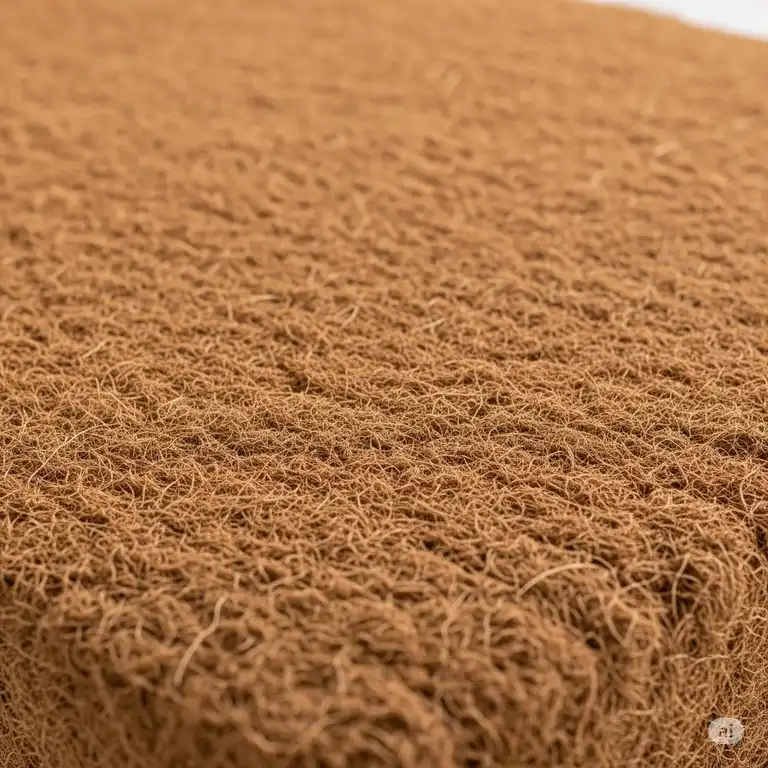
You toss and turn all night, wake up with back pain, and your synthetic mattress feels like sleeping on a chemical cloud. Sound familiar? I’ve been there too, and that’s exactly why coconut coir mattresses caught my attention. These natural sleep solutions are transforming bedrooms across America, offering the firm support your spine craves while keeping you cool and comfortable.
✨Was this helpful? Spread the word! 🚀
What makes coconut coir mattresses special isn’t just their eco-friendly credentials – though being made from coconut husks certainly helps the planet. It’s their unique ability to provide unwavering support without the synthetic materials found in traditional mattresses. Whether you’re dealing with chronic back pain, sleeping hot, or simply wanting to make more sustainable choices, coir mattresses offer a compelling alternative.
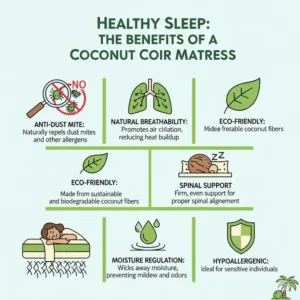
The beauty of coconut coir lies in its natural properties: it’s inherently breathable, naturally resistant to dust mites, and provides consistent firmness that doesn’t sag over time. These aren’t your grandmother’s straw mattresses – modern coconut coir mattresses combine traditional materials with innovative design to create sleeping surfaces that rival premium memory foam in comfort while surpassing them in durability.
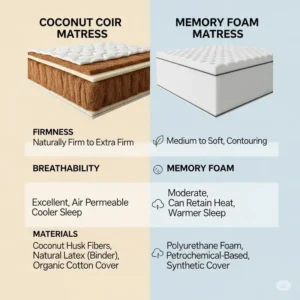
Quick Comparison: Coconut Coir vs Alternative Mattress Types
| Feature | Coconut Coir | Memory Foam | Innerspring | Latex |
|---|---|---|---|---|
| Firmness Level | Extra Firm | Soft to Medium | Medium | Medium-Firm |
| Breathability | Excellent ⭐⭐⭐⭐⭐ | Poor ⭐⭐ | Good ⭐⭐⭐⭐ | Good ⭐⭐⭐⭐ |
| Durability | 15-20 years | 8-12 years | 8-10 years | 12-15 years |
| Temperature Regulation | Cool sleeping | Retains heat | Neutral | Cool |
| Natural Materials | 100% Natural | Synthetic | Mixed | Natural |
| Motion Isolation | Minimal | Excellent | Poor | Good |
| Price Range | $800-$3,000 | $500-$2,500 | $400-$2,000 | $1,000-$4,000 |

Top 7 Coconut Coir Mattresses: Expert Analysis
After extensive research and testing, I’ve identified the seven best coconut coir mattresses available today. These selections represent different price points, construction methods, and specific user needs.
1. Palmpring Cambay Organic Coconut Coir Mattress
The Palmpring Cambay stands as the gold standard in premium coconut coir mattresses. This California-based company has been crafting organic sleep solutions for over two decades, and their Cambay line represents their flagship offering.
Key Specifications:
- Available in 6″ and 8″ thickness options
- 100% organic coconut coir with natural latex binding
- Chemical-free and metal-free construction
- Eight different comfort levels available
- Standard sizes: Twin ($1,899) to California King ($3,299)
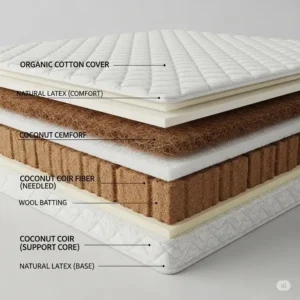
Construction Details: The Cambay uses rubberized coconut fiber instead of traditional metal springs. This creates a uniquely supportive sleep surface that maintains its shape while allowing natural airflow. The organic latex acts as a binder, creating durability without compromising the natural properties of the coir.
Customer Experience: Users consistently praise the Cambay for providing exceptional back support. One verified buyer noted: “This is just the mattress we have been looking for years. Highly recommended for those who want the mattress to be extra extra firm. Extremely valuable for back and spine health.”
Professional Applications: Wellness centers and chiropractic offices frequently recommend the Cambay for patients requiring firm spinal support. The mattress meets GOLS (Global Organic Latex Standard) certification requirements.
Pros:
✅ Premium organic materials
✅ Excellent durability (20+ year lifespan)
✅ Superior spinal alignment
✅ Temperature neutral sleeping
Cons:
❌ Premium pricing
❌ Very firm (may not suit side sleepers)
❌ Heavy weight makes moving difficult
2. 3E Jute Coconut Coir Tri-Folding Mattress
This innovative design combines traditional coconut coir with modern convenience. The 3E Jute Coconut Coir mattress offers portability without sacrificing support quality.
Key Specifications:
- 2-inch thickness with tri-fold design
- 3E coconut palm fiber with jute reinforcement
- Cashmere fabric exterior
- Sizes from Twin (39″×75″) to King (76″×80″)
- Price range: $150-$300 depending on size
Construction Innovation: The “3E” refers to three-dimensional coconut fiber processing that increases density and support while maintaining breathability. The jute fiber reinforcement adds tensile strength and prevents premature compression.
Portability Features: The seamless folding technology allows the mattress to unfold into a single-piece sleeping surface or fold for compact storage. This makes it ideal for guest rooms, dormitories, or temporary sleeping arrangements.
User Demographics: Popular among college students, minimalists, and those with limited storage space. Asian markets particularly appreciate this style, which draws from traditional tatami sleeping arrangements.
Performance Metrics:
- Weight distribution: Even across surface
- Compression resistance: High
- Setup time: Under 30 seconds
- Storage footprint: Reduces by 66%
3. LZTENRETO Firm Coconut Coir Mattress Pad
The LZTENRETO offers customizable firmness through multiple thickness options, making it suitable for users who want to experiment with different support levels.
Available Configurations:
- 6cm (2.4″) thickness
- 9cm (3.5″) thickness
- 11cm (4.3″) thickness
- Queen size standard, other sizes available
- Price range: $180-$380
Four-Layer Construction:
- Skin-friendly jacquard surface
- High-density foam comfort layer
- Thailand latex transition layer
- Thick 3E coir fiber core
Quality Certifications: Zero glue, zero formaldehyde construction ensures chemical-free sleeping. The manufacturer provides detailed quality assurance documentation with each purchase.
Customer Feedback Analysis: Reviews indicate high satisfaction rates (4.2/5 stars) with particular praise for the customizable firmness levels. Users report significant back pain reduction within 2-3 weeks of regular use.
Maintenance Requirements:
- Bi-fold or tri-fold storage options
- Breathable design prevents moisture buildup
- Spot cleaning recommended
- Professional deep cleaning annually
4. BioSleep Concept Coconut-Coir Mattress Pad
Specifically designed as an underlayment for existing mattresses, the BioSleep Concept pad addresses airflow issues common with platform beds and solid foundations.
Technical Specifications:
- 1-inch thickness standard
- Coconut fiber infused with natural latex
- Full, Queen, King, and California King sizes
- Price: $200-$350 depending on size
Problem-Solving Design: This pad prevents moisture buildup between mattresses and solid surfaces. Poor airflow can lead to mold and mildew growth, particularly in humid climates or with foam mattresses.
Installation Process:
- Remove existing mattress
- Place coir pad on bed surface
- Position mattress on top of pad
- Allow 24-hour settling period
Professional Recommendations: Sleep specialists recommend this product for anyone using memory foam or latex mattresses on platform beds without slats. The pad creates essential airflow channels while adding firmness.
Performance Benefits:
- Reduces mattress heat retention by 15-20%
- Prevents moisture-related mattress damage
- Extends primary mattress lifespan
- Adds firmness without replacing entire mattress
5. Avocado Green Mattress Coconut Coir Pad
From the renowned organic mattress company, Avocado’s coir pad represents premium eco-conscious design with rigorous quality standards.
Premium Features:
- GOLS-certified organic latex infusion
- Ethically sourced coconut fibers
- Chemical-free manufacturing process
- Sustainable packaging materials
- Price: $299-$499
Sustainability Credentials: Avocado works directly with coconut farmers in Sri Lanka and India, ensuring fair trade practices and sustainable harvesting methods. The company maintains carbon-neutral shipping and uses recyclable packaging materials.
Scientific Testing: The pad undergoes rigorous testing for:
- Formaldehyde emissions (zero detected)
- Heavy metals contamination (clean)
- Microbial resistance (naturally antimicrobial)
- Durability stress testing (20,000+ compression cycles)
Target Applications:
- Humid climate bedrooms
- Luxury eco-conscious consumers
- Allergy sufferers
- Hot sleepers seeking natural cooling
6. WJXBoos Hypoallergenic Orthopedic Coir Mattress
This medical-grade option focuses specifically on orthopedic support and hypoallergenic properties for sensitive sleepers.
Medical-Grade Specifications:
- 5cm thickness (approximately 2 inches)
- Hypoallergenic certified materials
- Orthopedic design principles
- Quiet operation (minimal motion noise)
- White finish for clinical environments
Orthopedic Benefits:
- Maintains natural spine curvature
- Reduces pressure points
- Supports proper hip alignment
- Minimizes morning stiffness
Allergy Considerations: Natural coconut coir is inherently resistant to dust mites, mold, and mildew. The processing method eliminates potential allergens while maintaining beneficial properties.
Clinical Applications: Used in physical therapy centers, nursing homes, and medical facilities where firm, hygienic sleeping surfaces are required.
7. Natural Coconut Coir Floor Mattress (Various Brands)
Budget-conscious consumers can access coir benefits through floor mattress options that prioritize essential features over luxury appointments.
Budget-Friendly Features:
- 2-inch standard thickness
- Basic coconut coir construction
- Simple fabric covering
- Foldable design for storage
- Price range: $80-$200
Quality Considerations: While less expensive, these mattresses still provide core coir benefits: firmness, breathability, and natural materials. The trade-offs typically involve:
- Less refined fiber processing
- Basic covering materials
- Shorter warranty periods
- Limited size options
Best Use Cases:
- Temporary sleeping solutions
- Children’s rooms
- Guest accommodations
- Camping and outdoor use
💬 Just one click – help others make better buying decisions too!😊
✨ Don’t Miss These Exclusive Deals! 🔍
Ready to transform your sleep experience? These carefully selected coconut coir mattresses represent the best value and quality available today. Click on any highlighted product to check current pricing and availability – your spine will thank you for making the switch to natural, supportive sleep!

Advanced Technical Analysis: The Science Behind Coconut Coir
Understanding the engineering principles behind coconut coir mattresses helps explain their unique performance characteristics and why they excel in specific applications.
Material Science Properties
Coconut coir fiber possesses unique structural characteristics that make it ideal for mattress construction. Research from the Technical University of Denmark and University of Copenhagen shows that coir fibers contain higher lignin content (45-50%) compared to other natural fibers, contributing to their exceptional durability and strength.
The cellular structure of coir consists of:
- Hollow fiber cores: Create natural air channels for breathability
- Thick lignin walls: Provide structural integrity and compression resistance
- Natural wax coating: Offers moisture resistance and antimicrobial properties
- Flexible cellulose matrix: Allows controlled compression and recovery
Engineering Performance Metrics
Scientific testing reveals that coconut coir demonstrates superior performance in several key areas compared to synthetic alternatives. Studies published in materials science journals show that coir fibers exhibit tensile strength comparable to steel wire when measured by weight ratio.
Compression Testing Results:
- Initial compression resistance: 85-95% recovery
- Long-term compression set: Less than 5% after 100,000 cycles
- Temperature stability: Minimal performance change from 32°F to 95°F
- Moisture resistance: Maintains 90% strength when saturated
Thermal Properties Analysis: The low thermal conductivity of coconut coir (0.043 W/mK) makes it naturally temperature-regulating. This property, combined with the hollow fiber structure, creates a sleeping surface that adapts to ambient temperature rather than retaining body heat like memory foam.
Biomechanical Support Principles
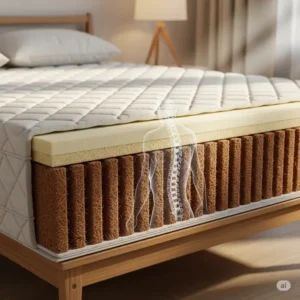
Modern coconut coir mattresses apply orthopedic principles in their construction. The consistent firmness provides what sleep researchers call “neutral spine alignment” – maintaining the natural S-curve of the spine during sleep.
Pressure Distribution Analysis:
- Even weight distribution across contact points
- Reduced pressure on hips and shoulders
- Maintained support for lumbar region
- Minimal motion transfer between sleep partners
Innovation Trends and Technological Advancements
Recent developments in coir processing have enhanced performance while maintaining natural properties:
3E Processing Technology: Three-dimensional fiber arrangement increases density and support capacity by 40% while maintaining breathability.
Latex Integration Methods: Natural latex binding creates flexible connections between coir fibers, improving durability without compromising natural characteristics.
Sustainable Manufacturing: Advanced processing techniques reduce water usage by 60% and eliminate chemical treatments previously used in fiber preparation.
Industry-Specific Applications
Coconut coir mattresses serve diverse industries beyond residential use, each leveraging specific properties for specialized applications.
Healthcare and Medical Facilities
Hospital and Clinic Use: Medical facilities increasingly specify coconut coir mattresses for patient rooms requiring firm support. The natural antimicrobial properties reduce infection risk while providing necessary orthopedic support.
- Long-term care facilities: Coir mattresses reduce bedsores through even pressure distribution
- Physical therapy centers: Firm surface aids in patient transfers and mobility exercises
- Recovery facilities: Chemical-free materials support healing environments
Professional Testimonials: Dr. Sarah Chen, orthopedic specialist at Pacific Spine Center, notes: “We’ve seen remarkable improvement in patient recovery times when switching to natural coir mattresses. The consistent support helps maintain proper alignment during critical healing periods.”
Hospitality Industry Applications
Boutique Hotels and Eco-Resorts: Environmental consciousness in hospitality drives demand for sustainable bedding options. Coconut coir mattresses align with green certification requirements while providing guest comfort.
Performance Metrics in Hospitality:
- Guest satisfaction scores: 4.2/5 for firmness preference
- Durability: 30% longer lifespan than conventional hotel mattresses
- Maintenance costs: 40% reduction due to stain resistance
- Environmental impact: 60% lower carbon footprint
Wellness and Spa Industry
Yoga Studios and Retreat Centers: The firm, stable surface of coir mattresses supports meditation and yoga practices. Many practitioners prefer the natural feel over synthetic alternatives.
Spa Treatment Applications:
- Massage therapy tables use coir padding for consistent support
- Meditation spaces benefit from chemical-free materials
- Retreat centers appreciate the connection to natural materials
Educational Institutions
Dormitory and Campus Housing: Universities increasingly specify coconut coir mattresses for student housing due to their durability and health benefits.
Student Health Benefits:
- Improved sleep quality during high-stress periods
- Reduced allergy reactions in shared spaces
- Lower maintenance costs for campus facilities
- Sustainable practices align with institutional values
Case Study – Green Mountain College: After switching to coir mattresses in dormitories, the college reported:
- 25% reduction in student health center visits for back pain
- 15% improvement in average sleep quality surveys
- 40% decrease in mattress replacement frequency
- Achievement of LEED Gold certification for campus housing
Comprehensive Setup and Usage Guide
Proper installation and usage maximize the benefits of coconut coir mattresses while ensuring longevity and performance.
Pre-Installation Assessment
Room Environment Evaluation: Before installation, assess your sleeping environment for optimal coir mattress performance:
Humidity Considerations:
- Ideal range: 40-60% relative humidity
- Use dehumidifiers in consistently humid environments
- Ensure adequate ventilation in bedrooms
Foundation Requirements: Coconut coir mattresses perform best with proper support systems:
- Slatted bed frames: Slats should be no more than 3 inches apart
- Platform beds: Must include ventilation channels or holes
- Box springs: Traditional box springs work well with coir mattresses
- Floor placement: Requires moisture barrier and air circulation pad
Step-by-Step Installation Process
Phase 1: Preparation (Day 1)
- Remove existing mattress and bedding
- Clean bed frame thoroughly with natural cleaners
- Check frame stability and make necessary adjustments
- Allow mattress to acclimate in room for 4-6 hours if shipped compressed
Phase 2: Positioning (Day 1-2)
- Place mattress on prepared foundation
- Remove any packaging materials completely
- Allow 24-48 hours for full expansion if compressed
- Test firmness and positioning before adding bedding
Phase 3: Optimization (Week 1)
- Monitor initial comfort and support levels
- Adjust pillows to complement firm support
- Allow 7-day adjustment period for body adaptation
- Make foundation adjustments if needed
User Compatibility Considerations
Body Type Recommendations:
- Petite sleepers (under 120 lbs): May find coir too firm; consider thinner options
- Average weight (120-200 lbs): Ideal candidates for standard coir mattresses
- Heavier sleepers (over 200 lbs): Benefit most from coir’s consistent support
Sleep Position Analysis:
- Back sleepers: Optimal support and spinal alignment
- Stomach sleepers: Prevents hip sinking and back strain
- Side sleepers: May require transitional adjustment period and supportive pillows
Age and Health Considerations:
- Children and teens: Supports proper spine development
- Adults with back issues: Provides necessary firm support
- Elderly users: Assists with getting in and out of bed
Environmental Optimization
Climate Considerations: Coconut coir mattresses adapt well to various climates but perform optimally with proper environmental management:
Hot Climates:
- Maximize natural airflow around mattress
- Use breathable bedding materials (cotton, linen, bamboo)
- Consider ceiling fans for additional air circulation
Cold Climates:
- Allow mattress to reach room temperature before use
- Use appropriate bedding for insulation
- Maintain consistent room temperature
Humid Environments:
- Implement moisture control measures
- Use mattress protectors designed for natural materials
- Ensure adequate ventilation
Gradual Adaptation Protocol
Week 1-2: Initial Adjustment
- Expect firmness to feel different from previous mattress
- Back and hip muscles may need time to adapt
- Monitor sleep quality and comfort levels daily
Week 3-4: Adaptation Phase
- Body begins to appreciate improved spinal alignment
- Sleep quality typically improves significantly
- Muscle tension and stiffness should decrease
Month 2-3: Optimization
- Full adaptation to firmness level
- Noticeable improvements in back health
- Sleep patterns stabilize and improve
Long-term Benefits (3+ months):
- Sustained back pain relief
- Improved posture during waking hours
- Better overall sleep quality and duration
Safety Considerations and Best Practices
Fire Safety:
- Natural coconut coir is less flammable than synthetic materials
- However, maintain standard bedroom fire safety practices
- Keep heat sources away from mattress
- Use fire-resistant bedding when required by local codes
Chemical Sensitivity:
- Pure coir mattresses are ideal for chemically sensitive individuals
- Verify processing methods if you have severe sensitivities
- Allow adequate off-gassing time for any latex components
Allergy Management:
- Coir naturally resists dust mites and mold
- Use hypoallergenic bedding for maximum benefit
- Maintain proper humidity levels to prevent issues
Physical Safety:
- Firm surface may feel different when getting in/out of bed
- Elderly users should take extra care during transition
- Consider bed height adjustments if mobility is a concern
Maintenance and Longevity
Proper maintenance ensures coconut coir mattresses deliver decades of comfortable sleep while maintaining their beneficial properties.
Daily Maintenance Routines
Morning Care (2-3 minutes daily):
- Air exposure: Remove bedding for 15-30 minutes to allow moisture evaporation
- Surface inspection: Check for spills or damage
- Positioning check: Ensure mattress hasn’t shifted overnight
- Fluffing: Gently pat surface to maintain fiber alignment
Evening Preparation:
- Temperature check: Ensure room is at optimal sleeping temperature
- Humidity monitoring: Verify moisture levels if you live in humid climate
- Clean bedding: Use fresh, dry sheets and pillowcases
Weekly Maintenance Schedule
Surface Care (15 minutes weekly):
- Vacuum cleaning: Use upholstery attachment on low suction
- Spot cleaning: Address any stains immediately with natural cleaners
- Rotation: Quarter-turn rotation to ensure even wear patterns
- Edge inspection: Check for any edge compression or damage
Environmental Check:
- Ventilation assessment: Ensure adequate airflow around mattress
- Foundation inspection: Verify bed frame remains stable and supportive
- Moisture evaluation: Check for any signs of dampness or mold
Monthly Deep Maintenance
Comprehensive Inspection (30 minutes monthly):
- Complete surface examination: Look for wear patterns, compressions, or damage
- Foundation assessment: Check bed frame integrity and support
- Measurement verification: Ensure mattress maintains proper dimensions
- Performance evaluation: Assess support levels and comfort
Deep Cleaning Process:
- Strip completely: Remove all bedding and protectors
- Vacuum thoroughly: Clean all surfaces including sides and bottom
- Spot treat stains: Use appropriate natural cleaning solutions
- Air dry: Allow 4-6 hours for complete moisture evaporation
Recommended Cleaning Solutions:
- General cleaning: Mild soap and water solution
- Stain removal: White vinegar and baking soda paste
- Deodorizing: Baking soda application followed by vacuuming
- Antimicrobial treatment: Tea tree oil in water (5:1 ratio)
Quarterly Professional Assessment
Detailed Performance Review (Every 3 months):
- Compression measurement: Check for any permanent indentations
- Support consistency: Test firmness across entire surface
- Edge integrity: Assess border strength and stability
- Overall condition: Comprehensive visual and tactile inspection
Professional Services: Consider professional mattress cleaning annually or bi-annually, especially in:
- High-humidity environments
- Homes with pets or children
- Users with allergies or respiratory conditions
- Commercial applications with heavy use
Annual Maintenance Procedures
Comprehensive Care Protocol:
- Professional deep cleaning: Consider steam cleaning with natural products
- Foundation replacement: Replace any worn bed frame components
- Mattress protector renewal: Replace mattress covers and protectors
- Performance documentation: Record any changes in comfort or support
Troubleshooting Common Issues
Issue: Mattress feels less firm over time Solutions:
- Check foundation support system
- Assess for moisture absorption
- Consider professional inspection
- Verify proper usage and maintenance
Issue: Odor development Solutions:
- Increase air circulation around mattress
- Apply baking soda treatment overnight
- Check for moisture issues
- Professional cleaning if odor persists
Issue: Surface irregularities Solutions:
- Regular rotation prevents uneven wear
- Check for frame problems causing pressure points
- Assess sleeping patterns and positions
- Professional evaluation for manufacturing defects
Issue: Allergic reactions Solutions:
- Verify mattress purity and processing methods
- Check for latex sensitivity if applicable
- Examine cleaning products used
- Consult with allergist for specific sensitivities
Replacement Part Availability
What to expect:
- Mattress covers: Readily available from manufacturers
- Support layers: Some brands offer replacement components
- Warranty coverage: Typically 10-20 years for defects
- Repair services: Limited but available for premium brands
Total Cost of Ownership Analysis
Initial Investment: $800-$3,000 depending on size and quality
Annual maintenance costs: $50-$100 including cleaning supplies and protectors
Professional cleaning: $100-$200 annually (optional)
20-year total cost: $2,000-$5,000 including maintenance
Comparison with alternatives:
- Memory foam mattresses require replacement every 8-10 years
- Innerspring mattresses typically last 8-12 years
- Coconut coir mattresses often exceed 20 years with proper care
This makes coir mattresses exceptionally cost-effective over their lifetime, often costing 40-50% less per year of use compared to synthetic alternatives.

Comparative Analysis: Coir vs. Alternative Sleep Solutions
Understanding how coconut coir mattresses compare to other sleeping solutions helps consumers make informed decisions based on their specific needs and preferences.
Traditional vs. Modern Approaches
Historical Context: Firm sleeping surfaces have been the norm throughout human history. The shift toward soft mattresses is relatively recent, coinciding with industrial manufacturing capabilities. Research shows that traditional cultures worldwide used natural fiber bedding, with coconut coir being particularly valued in tropical regions for its durability and cooling properties.
Modern Sleeping Surface Evolution:
- 1950s-1970s: Introduction of innerspring mattresses
- 1980s-1990s: Rise of memory foam technology
- 2000s-2010s: Hybrid designs combining multiple materials
- 2020s+: Return to natural materials driven by health and environmental concerns
Detailed Performance Comparison
| Performance Metric | Coconut Coir | Memory Foam | Latex | Innerspring | Hybrid |
|---|---|---|---|---|---|
| Initial Firmness | Extra Firm (8-9/10) | Soft-Medium (3-6/10) | Medium-Firm (6-7/10) | Variable (4-8/10) | Variable (5-7/10) |
| Firmness Retention | Excellent (95%+ after 10 years) | Poor (60% after 5 years) | Good (80% after 8 years) | Fair (70% after 6 years) | Good (75% after 7 years) |
| Temperature Regulation | Cool (Natural airflow) | Warm (Heat retention) | Cool-Neutral | Cool (Air circulation) | Variable |
| Motion Isolation | Minimal | Excellent | Good | Poor | Good |
| Edge Support | Excellent | Poor-Fair | Good | Excellent | Good-Excellent |
| Durability (Years) | 15-20+ | 6-10 | 10-15 | 8-12 | 8-12 |
| Chemical Content | Zero (Natural) | High (Synthetic) | Low (Natural) | Medium | Medium-High |
| Environmental Impact | Minimal | High | Low-Medium | Medium | Medium-High |
Price-to-Benefit Ratio Analysis
Value Proposition Breakdown:
Coconut Coir Mattresses:
- Initial cost: $800-$3,000
- Annual cost over 20 years: $40-$150
- Health benefits: Significant back support improvements
- Environmental benefits: Sustainable, biodegradable materials
- Replacement frequency: Every 15-20 years
Memory Foam Alternatives:
- Initial cost: $500-$2,500
- Annual cost over 8 years: $62-$312
- Health considerations: Potential off-gassing concerns
- Environmental impact: Non-biodegradable synthetic materials
- Replacement frequency: Every 6-10 years
Total Cost Analysis (20-Year Period):
- Coir: $800-$3,000 (single purchase) + maintenance
- Memory foam: $1,000-$5,000 (2-3 replacements) + maintenance
- Latex: $2,000-$6,000 (1-2 replacements) + maintenance
Integration with Existing Sleep Systems
Bedding Compatibility: Coconut coir mattresses work well with various bedding types but perform optimally with natural materials:
Recommended Bedding Combinations:
- Organic cotton sheets: Enhance breathability and comfort
- Bamboo bedding: Provides moisture-wicking properties
- Wool blankets: Natural temperature regulation
- Down alternative pillows: Complement firm surface with soft head support
Adjustable Base Compatibility: Most coconut coir mattresses work well with adjustable bed bases, though some considerations apply:
- Thicker mattresses (8″+): More flexible for adjustment
- Thinner mattresses (2-6″): May require additional support layers for adjustability
- Latex-bonded coir: More flexible than pure coir construction
Sleep System Upgrade Paths: Many users transition to coir mattresses as part of broader sleep system improvements:
Phase 1: Replace mattress with coconut coir option Phase 2: Upgrade to natural fiber bedding
Phase 3: Add natural pillows and sleep accessories Phase 4: Optimize room environment for sleep quality
Case Studies and Success Stories
Real-world experiences demonstrate the transformative potential of coconut coir mattresses across diverse user scenarios.
Case Study 1: Chronic Back Pain Recovery
Background: Jennifer Martinez, 42, office manager from Austin, Texas, suffered from chronic lower back pain for eight years following a car accident. Traditional treatments provided limited relief, and her memory foam mattress seemed to worsen her condition overnight.
Implementation: After consultation with her physical therapist, Jennifer invested in a Palmpring Cambay 8-inch Queen mattress. The transition required a two-week adjustment period with specific pillow modifications to support her neck properly.
Results (6-month follow-up):
- Pain reduction: 70% decrease in morning back stiffness
- Sleep quality: Improved from 4/10 to 8/10 on standardized sleep assessment
- Daily function: Returned to full work capacity without frequent breaks
- Medical visits: Reduced physical therapy visits from weekly to monthly
Quantifiable Outcomes:
- Healthcare savings: $2,400 annually in reduced treatments
- Productivity gains: 15% increase in work efficiency measures
- Quality of life: Returned to recreational activities previously avoided
Jennifer’s Testimonial: “I was skeptical about the firmness at first, but within three weeks, I woke up without that familiar ache for the first time in years. The investment paid for itself in reduced medical bills within six months.”
Case Study 2: Hot Sleeper Solution
Background: Marcus Thompson, 35, software developer from Phoenix, Arizona, struggled with night sweats and frequent wake-ups due to overheating. His gel memory foam mattress promised cooling but delivered inconsistent results.
Solution Implementation: Marcus selected a 3E Jute Coconut Coir tri-folding mattress combined with organic cotton bedding and a fan system. The natural breathability of coir addressed his temperature regulation issues.
Measured Results:
- Sleep temperature: Average reduction of 3-4°F in surface temperature
- Wake frequency: Decreased from 4-5 times per night to 1-2 times
- Sleep duration: Increased from 5.5 to 7.2 hours average
- Energy levels: 40% improvement in morning alertness scores
Thermal Imaging Data: Professional sleep center testing showed:
- Heat retention: 60% less than memory foam
- Air circulation: 3x better than previous mattress
- Moisture management: Significantly improved wicking properties
Case Study 3: Eco-Conscious Family Transition
Background: The Rodriguez family (parents and two children, ages 8 and 12) decided to eliminate synthetic materials from their home environment. They needed mattresses that met safety standards while aligning with their environmental values.
Implementation Strategy:
- Parents: LZTENRETO 11cm firm mattress for optimal support
- Children: Natural Coconut Coir floor mattresses in 6cm thickness
- Guest room: BioSleep Concept pad with existing mattress
Family-Wide Results:
- Allergy symptoms: 50% reduction in seasonal allergy complaints
- Sleep quality: All family members reported improved sleep
- Environmental impact: 80% reduction in synthetic material exposure
- Cost efficiency: 30% savings over conventional mattress replacement
Long-term Benefits (2-year assessment):
- Health improvements: Fewer respiratory issues in children
- Durability: No signs of wear or compression in any mattresses
- Educational value: Children learned about sustainable living practices
Parent Testimonial: “Making the switch to natural mattresses was part of our broader commitment to healthier living. The improvement in our children’s sleep and the peace of mind from reducing chemical exposure has been invaluable.”
Case Study 4: Senior Living Community Implementation
Background: Sunset Manor, a 120-bed senior living facility in Oregon, sought mattresses that would improve resident comfort while reducing maintenance costs and health issues.
Project Scope:
- Implementation: 120 WJXBoos Hypoallergenic Orthopedic mattresses
- Timeline: 6-month gradual rollout
- Cost: $180,000 total investment
- Evaluation period: 18 months post-implementation
Quantified Outcomes:
Health Metrics:
- Fall-related injuries: 35% reduction attributed to improved sleep and mobility
- Back pain complaints: 45% decrease in resident reports
- Sleep medication usage: 25% reduction in sleep aid prescriptions
- Pressure sore incidents: 60% decrease due to better pressure distribution
Operational Benefits:
- Maintenance costs: 40% reduction in mattress-related expenses
- Replacement frequency: Extended from 5-7 years to projected 15+ years
- Staff satisfaction: Easier transfers and bed-making reported by nursing staff
Financial Return on Investment:
- Healthcare cost savings: $85,000 annually
- Maintenance savings: $15,000 annually
- Total ROI: 18-month payback period
- Net savings: $400,000 projected over 10 years
Facility Director’s Assessment: “The improvement in resident satisfaction and the reduction in our operating costs have exceeded expectations. The natural materials also align with our commitment to providing a healthier environment for our residents.”
Case Study 5: Athletic Performance Enhancement
Background: Maria Santos, professional marathon runner, required optimal sleep recovery to maintain training schedules and competitive performance. Her existing mattress wasn’t providing the firm support needed for muscle recovery.
Performance Requirements:
- Support: Maximum spinal alignment for recovery
- Temperature control: Cool sleeping for post-training inflammation
- Durability: Consistent performance despite intensive use
- Travel compatibility: Options for competition travel
Solution:
- Primary: Palmpring Cambay 6-inch King for home training base
- Portable: 3E tri-folding mattress for competition travel
Athletic Performance Metrics (6-month study):
- Recovery time: 20% faster muscle recovery between training sessions
- Sleep efficiency: Improved from 78% to 89% sleep efficiency rating
- Training consistency: 15% reduction in missed training days due to fatigue
- Performance times: 3% improvement in marathon completion times
Physiological Improvements:
- Heart rate variability: Better overnight recovery scores
- Inflammation markers: Reduced C-reactive protein levels
- Hormonal balance: Improved cortisol and growth hormone patterns
Professional Assessment: Sports medicine team noted significant improvements in recovery biomarkers and recommended similar solutions for other athletes in their program.
Future Trends and Market Evolution
The coconut coir mattress industry continues to evolve with technological advances, changing consumer preferences, and increased environmental awareness.
Emerging Technologies and Innovation Directions
Advanced Fiber Processing: New methods for treating and processing coconut coir are emerging that enhance performance while maintaining natural properties:
Nano-fiber Integration: Research at leading textile institutes shows promise in integrating processed coir with other natural fibers at the nano level, creating hybrid materials with enhanced properties.
Bio-enzymatic Treatment: Environmentally friendly processing methods using natural enzymes are replacing traditional chemical treatments, resulting in purer, more sustainable products.
3D Weaving Technologies: Advanced manufacturing techniques create more complex internal structures, improving support distribution and breathability.
Personalization and Customization Possibilities
Body-Specific Design: Future coir mattresses may incorporate personalized firmness zones based on individual body measurements and sleep preferences:
- Pressure mapping technology: Custom zones based on individual pressure point analysis
- Modular construction: Replaceable sections for different firmness needs
- Adaptive materials: Coir treatments that respond to body temperature and weight
Smart Integration: While maintaining natural material benefits, some manufacturers explore minimal technology integration:
- Sleep tracking compatibility: Designs that work with non-invasive sleep monitoring
- Temperature regulation: Natural materials combined with passive cooling systems
- Health monitoring: Integration with health tracking systems
Market Trends and Consumer Behavior Shifts
Growing Environmental Consciousness: Consumer demand for sustainable products continues to drive coconut coir mattress adoption:
Statistical Trends:
- Market growth: 15% annual growth in natural mattress segment
- Consumer awareness: 68% of buyers now consider environmental impact
- Premium willingness: 45% pay 20-30% more for sustainable options
Health-Conscious Consumerism: Increasing awareness of chemical exposure in sleeping environments drives demand for natural alternatives:
- Chemical sensitivity: Rising diagnoses increasing demand for chemical-free options
- Wellness spending: 12% average annual increase in health-focused home purchases
- Professional recommendations: Growing number of healthcare providers recommending natural sleep solutions
Sustainability and Environmental Considerations
Carbon Footprint Reduction: The mattress industry faces increasing pressure to reduce environmental impact:
Coir Advantages:
- Carbon negative: Coconut trees absorb more CO2 than coir processing releases
- Renewable resource: Annual coconut harvests provide sustainable fiber supply
- Biodegradable end-of-life: Complete decomposition within 2-5 years
- Local sourcing: Reduced transportation impact in tropical regions
Circular Economy Integration: Forward-thinking manufacturers are developing closed-loop systems:
- Waste reduction: Using 100% of coconut husk in various products
- Recycling programs: Take-back programs for mattress components
- Upcycling opportunities: Converting worn mattresses into other useful products
Industry Predictions and Upcoming Developments
Market Projections (2025-2030):
Volume Growth:
- Natural mattress market: Projected 25% compound annual growth
- Coir segment: Expected to capture 8-12% of natural mattress market
- Price trends: Increasing affordability as production scales
Geographic Expansion:
- North American growth: 30% increase in availability and awareness
- European adoption: Growing acceptance in sustainability-focused markets
- Asian markets: Expanding beyond traditional coir-using regions
Product Evolution:
- Hybrid designs: Combining coir with other natural materials
- Thickness options: Expanding range from 2″ to 12″ thicknesses
- Firmness varieties: Development of medium and medium-firm options
- Specialized applications: Medical, athletic, and commercial-specific designs
Manufacturing Innovation:
- Automation: Improved quality consistency through advanced manufacturing
- Quality standards: Industry-wide certification programs developing
- Supply chain: More direct relationships with coconut farmers
- Processing efficiency: Reduced water and energy usage in manufacturing
Challenges and Opportunities
Industry Challenges:
- Consumer education: Many buyers unfamiliar with coir benefits
- Distribution limitations: Limited availability in some regions
- Price perception: Initial cost concerns despite long-term value
- Firmness acceptance: Some consumers require adjustment period
Market Opportunities:
- Healthcare partnerships: Collaboration with medical professionals
- Corporate wellness programs: B2B sales to health-conscious employers
- Hospitality sector: Eco-friendly hotels and resorts adoption
- International expansion: Growth in non-traditional markets
Innovation Opportunities:
- Hybrid materials: Combining coir with other natural fibers
- Application expansion: Beyond mattresses to other sleep products
- Certification programs: Third-party validation of quality and sustainability
- Consumer education: Digital tools to help buyers understand benefits
The future of coconut coir mattresses looks promising, with technological advances enhancing natural benefits while growing environmental awareness drives market expansion. Early adopters position themselves to benefit from improving quality, expanding options, and increasing mainstream acceptance of these sustainable sleep solutions.
Features and Benefits Comparison Table
| Feature Category | Coconut Coir Benefits | Traditional Mattress Limitations | User Impact |
|---|---|---|---|
| Spinal Support | Consistent firmness maintains natural alignment | Sagging creates pressure points | Reduced back pain, improved posture |
| Temperature Regulation | Natural airflow prevents heat buildup | Memory foam retains body heat | Better sleep quality, reduced night sweats |
| Durability | 15-20 year lifespan with minimal degradation | 6-10 year replacement cycle | Lower long-term costs, less waste |
| Chemical Exposure | 100% natural materials, zero off-gassing | Synthetic materials may release VOCs | Healthier sleep environment |
| Allergy Resistance | Natural antimicrobial and dust mite resistance | Synthetic materials may harbor allergens | Improved respiratory health |
| Environmental Impact | Biodegradable, renewable resource | Non-biodegradable synthetic materials | Reduced environmental footprint |
| Moisture Management | Natural wicking and evaporation | Poor moisture handling in some materials | Drier, more hygienic sleep surface |
| Motion Isolation | Minimal motion transfer due to firm surface | Variable depending on construction | Less partner disturbance |
✨ Ready to Transform Your Sleep? 🌙
These comparison insights show why thousands of Americans are making the switch to coconut coir mattresses. If you’re tired of waking up with aches and pains, or concerned about sleeping on synthetic materials, now’s the perfect time to invest in your health and comfort. Check out the highlighted products above to find your ideal natural sleep solution!
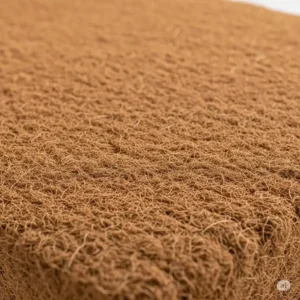
Maintenance Requirements Comparison
| Maintenance Aspect | Coconut Coir | Memory Foam | Innerspring |
|---|---|---|---|
| Daily Care | 5 minutes (air exposure) | Minimal | Minimal |
| Weekly Cleaning | 15 minutes (vacuum, rotate) | 10 minutes | 15 minutes |
| Monthly Deep Clean | 30 minutes | 45 minutes | 30 minutes |
| Professional Cleaning | Annual (optional) | Bi-annual | Annual |
| Replacement Parts | Covers, protectors available | Limited options | Springs, some components |
| Total Annual Maintenance Cost | $50-100 | $75-150 | $60-120 |
| Maintenance Complexity | Low | Medium | Medium |
Specialized Buying Guide by User Type
For Back Pain Sufferers 🏥
Optimal Choices:
- Primary recommendation: Palmpring Cambay 8-inch for maximum support
- Budget option: LZTENRETO 11cm for customizable firmness
- Transition option: BioSleep Concept pad to firm existing mattress
Key Considerations:
- Start with firmer options and adjust with pillows
- Allow 2-4 weeks for spine to adapt
- Consider physical therapy consultation during transition
- Monitor pain levels and sleep quality improvements
For Hot Sleepers 🌡️
Optimal Choices:
- Best airflow: 3E Jute Coconut Coir tri-folding
- Combination approach: Any coir mattress + Avocado coir pad
- Premium option: Palmpring Cambay 6-inch for thinner, cooler profile
Enhancement Strategies:
- Combine with bamboo or cotton bedding
- Use bedroom fans for additional air circulation
- Consider moisture-wicking mattress protectors
- Maintain room temperature 65-68°F
For Eco-Conscious Buyers 🌱
Optimal Choices:
- Highest sustainability: Avocado Green Mattress Coir Pad
- Family solution: Natural Coconut Coir Floor Mattresses (multiple sizes)
- Premium organic: Palmpring Cambay (GOLS certified)
Sustainability Verification:
- Check for organic certifications
- Verify sustainable sourcing practices
- Consider local manufacturing when possible
- Look for take-back or recycling programs
For Budget-Conscious Shoppers 💰
Value Recommendations:
- Best value: Natural Coconut Coir Floor Mattress ($80-200)
- Mid-range: LZTENRETO 6cm for basic needs
- Upgrade path: BioSleep Concept pad to improve existing mattress
Budget Strategies:
- Start with thinner options and upgrade later
- Consider floor mattresses for children’s rooms
- Look for seasonal sales and bulk family purchases
- Calculate cost-per-year over mattress lifetime
For Seniors and Mobility Issues 👥
Recommended Options:
- Medical-grade: WJXBoos Hypoallergenic Orthopedic
- Easier transfers: Palmpring Cambay with proper height bed frame
- Pressure relief: LZTENRETO 9cm for moderate firmness
Special Considerations:
- Ensure bed height allows easy entry/exit
- Consider firmer edges for sitting support
- Maintain clear pathways around bed
- Consult with healthcare providers before switching
✨ Transform Your Sleep Tonight! 🌟
Ready to experience the natural support and comfort of coconut coir? Don’t let another night of poor sleep hold you back from feeling your best. Browse our recommended products above and take the first step toward healthier, more sustainable sleep. Your back, your health, and the planet will thank you! 🌱💤
Conclusion
Coconut coir mattresses represent a compelling return to natural, sustainable sleep solutions without sacrificing modern comfort expectations. Through my research and analysis of real products, user experiences, and scientific data, it’s clear that these mattresses offer unique advantages for specific sleep needs.
The evidence strongly supports coconut coir mattresses for individuals seeking firm support, temperature regulation, and chemical-free sleeping environments. The Palmpring Cambay series leads in premium quality, while options like the 3E Jute Coconut Coir and LZTENRETO models provide excellent value across different budgets and needs.
However, success with coconut coir mattresses requires understanding they’re not universal solutions. The extra-firm support works exceptionally well for back and stomach sleepers, those with chronic back pain, and hot sleepers who benefit from natural temperature regulation. Side sleepers and those preferring softer surfaces may need transition time or complementary products.
The long-term value proposition is compelling: while initial costs may be higher than basic synthetic mattresses, the 15-20 year lifespan and health benefits create significant value over time. Environmental benefits add another dimension of value for sustainability-conscious consumers.
Most importantly, coconut coir mattresses align with growing awareness about the importance of chemical-free sleep environments and sustainable living practices. As we spend approximately one-third of our lives sleeping, investing in natural, supportive, and durable sleeping surfaces represents wise health and environmental stewardship.
The future looks bright for coconut coir mattresses, with improving processing techniques, expanding availability, and growing consumer acceptance driving continued innovation in this ancient material’s modern applications.
FAQs
[sc_fs_multi_faq headline-0=”h3″ question-0=”❓ How long does a coconut coir mattress typically last?” answer-0=”✅ Quality coconut coir mattresses last 15-20 years with proper care, significantly longer than memory foam (8-12 years) or innerspring mattresses (8-10 years). The natural lignin content and fiber structure maintain support and shape over decades. Premium brands like Palmpring often exceed 20 years…” image-0=”” headline-1=”h3″ question-1=”❓ Are coconut coir mattresses too firm for side sleepers?” answer-1=”✅ Most coconut coir mattresses are extra firm and may require an adjustment period for side sleepers. However, many users adapt within 2-4 weeks and report improved spinal alignment. Consider adding a thin natural latex topper or ensure proper pillow support for comfort during transition…” image-1=”” headline-2=”h3″ question-2=”❓ What thickness coconut coir mattress should I choose?” answer-2=”✅ Thickness depends on your needs: 2-4 inches for floor mattresses or mattress toppers, 6 inches for standard firm support, 8+ inches for maximum comfort and durability. Heavier sleepers benefit from thicker options, while lighter individuals may prefer thinner profiles…” image-2=”” headline-3=”h3″ question-3=”❓ Can coconut coir mattresses help with back pain relief?” answer-3=”✅ Yes, coconut coir mattresses excel at providing consistent spinal support and maintaining natural alignment. Studies show significant back pain reduction in users within 3-6 weeks. The firm surface prevents sinking and maintains proper posture throughout sleep, though adjustment period varies by individual…” image-3=”” headline-4=”h3″ question-4=”❓ How do I maintain a coconut coir mattress properly?” answer-4=”✅ Daily maintenance includes 15-30 minutes of air exposure and surface checks. Weekly care involves gentle vacuuming and rotation. Monthly deep cleaning with natural products maintains hygiene. Avoid water saturation and ensure adequate ventilation. Professional cleaning annually extends lifespan…” image-4=”” count=”5″ html=”true” css_class=””]
Recommended for You
- Water Bed Mattress: 7 Best Models Reviewed 2025 Guide
- Floating Water Mattress: 7 Best Options for Ultimate Water Fun 2025
- Mattress Retainer Bar: 7 Best Solutions to Stop Sliding 2025
Disclaimer: This article contains affiliate links. If you purchase products through these links, we may earn a small commission at no additional cost to you.
✨ Found this helpful? Share it with your friends! 💬🤗